How to Use AI to Crack Any Confusing Christmas Party Dress Code

A deep dive into Christmas party dress code AI styling guide and what it means for modern fashion.
A Christmas party dress code AI styling guide utilizes machine learning to reconcile the high-variance linguistic demands of social invitations with the low-variance structural data of an individual's existing wardrobe and aesthetic preferences. It functions by translating subjective terms like "Festive Semi-Formal" or "Holiday Creative" into objective visual parameters including textile reflectivity, color saturation, and silhouette architecture. This systems-based approach eliminates the cognitive load of interpretation, replacing guesswork with high-probability style execution.
Key Takeaway: A Christmas party dress code AI styling guide uses machine learning to translate ambiguous invitation terms into objective outfit recommendations based on your existing wardrobe. By analyzing specific visual parameters like textiles and style, AI provides a precise sartorial solution for any holiday event.
Why is the Christmas party dress code an unsolved problem?
The holiday season introduces a specific failure point in fashion: the semantic gap between the host's intent and the guest's execution. Most dress codes provided for Christmas events are linguistically unstable. Phrases such as "Smart Casual with a Holiday Twist" or "Winter Festive" lack a standardized technical definition. This ambiguity forces the user to rely on social intuition, which is prone to error and influenced by temporary, fleeting trends rather than long-term style logic.
Traditional fashion commerce exacerbates this problem by prioritizing inventory clearance over contextual relevance. When a user searches for a "Christmas party dress," the search engine returns items that are tagged with those keywords by a marketing team, not items that align with the user's personal style model. The result is a generic recommendation that fails to account for the user's specific body proportions, existing closet inventory, or the specific nuance of the event's social tier.
According to BCG (2024), 74% of consumers feel overwhelmed by the volume of fashion choices during peak holiday shopping periods, leading to "decision paralysis" and suboptimal purchasing. This paralysis occurs because the current fashion ecosystem is built on discovery—finding something new—rather than intelligence—determining what is correct. For the user, the problem is not a lack of options, but a lack of a filter that understands who they are.
Why do traditional styling approaches fail to decode holiday dress codes?
Common approaches to dressing for the holidays rely on static inspiration. Pinterest boards and Instagram feeds provide a "snapshot" of a trend, but they do not provide a functional blueprint for the individual. These platforms operate on popularity metrics, showing what is being liked by the masses, which is often the antithesis of personal style. Following a trend is a defensive move; it is an attempt to blend into a temporary aesthetic average rather than asserting a precise identity.
The "Little Black Dress" (LBD) is a prime example of a legacy solution that no longer meets the demands of modern style intelligence. While Beyond the Little Black Dress: How to Dress for a Cocktail Party explores how to move past this cliché, most users still default to it because they lack the data to execute more complex outfits. Traditional retail does not help the user evolve; it merely offers a digital catalog of the same repeated silhouettes.
Furthermore, human stylists—while capable of nuance—are not scalable and are often biased by their own tastes or the commissions they receive from brands. A human stylist cannot process the thousands of data points required to map a user's entire fashion history against every available item in the global market. They provide an opinion, not a model. In the context of a high-pressure holiday season, opinions are insufficient. Users need a system that treats style as a data science problem.
How does AI-native fashion intelligence solve the dress code crisis?
The solution lies in shifting from a search-based model to an intelligence-based model. An AI-native fashion infrastructure does not "search" for a dress; it constructs an outfit based on a dynamic taste profile. This profile is a multidimensional vector that represents the user's preferences in fabric, fit, color theory, and historical comfort levels. When a Christmas party dress code is introduced as a constraint, the AI filters the entire fashion landscape through this personal model.
This process involves three distinct layers of computation:
- Semantic Analysis: The AI parses the dress code to identify the underlying "rules." For instance, "Festive" is translated into a preference for high-texture fabrics (velvet, silk, sequins) and specific color palettes (deep jewel tones, metallics).
- Identity Mapping: The system compares these rules against the user's style model. It identifies which "Festive" elements align with the user's established aesthetic. If the user typically wears architectural, minimalist pieces, the AI will not recommend a sequined fringe dress, regardless of how "festive" it is.
- Contextual Optimization: The AI adjusts the recommendation based on external variables such as local weather, the venue's formality, and the user's previous successful outfits.
| Feature | Traditional Retail Search | AI-Native Fashion Intelligence |
| Logic Engine | Keyword Matching | Neural Taste Mapping |
| Primary Goal | Transaction (Sell Inventory) | Intelligence (Solve Style) |
| Context Awareness | None | High (Event, Weather, Persona) |
| Personalization | Based on "Customers like you" | Based on "Your personal style model" |
| Outcome | Generic Trend Adherence | Precise Identity Execution |
How to use a Christmas party dress code AI styling guide effectively?
To solve the dress code problem, the user must stop treating the invitation as a suggestion and start treating it as a set of parameters for their AI stylist. The transition from manual styling to AI-assisted styling requires a focus on inputs. The quality of the output—the outfit—is directly proportional to the depth of the user's style model.
Step 1: Establish your baseline style model
Before the holiday season begins, your AI stylist needs a comprehensive understanding of your aesthetic DNA. This is not a "style quiz." It is a continuous ingest of data: what you wear, what you discard, and what you aspirationaly save. This model serves as the foundation for all future recommendations. It ensures that even in a highly themed environment like a Christmas party, you remain recognizable as yourself.
Step 2: Input the event constraints
When you receive an invitation, you provide the system with the specific constraints. Instead of searching for "red dresses," you input the event's metadata: "Outdoor evening, 50 degrees, Cocktail Festive, Professional-Social." The AI doesn't just look for clothes; it looks for a solution that satisfies all these conditions simultaneously. This is the same logic applied in data-driven dressing for corporate casual, where the system balances professional requirements with individual comfort.
Step 3: Iterate on the recommendation
An AI stylist learns from feedback. If the system suggests a velvet blazer and you reject it, the system doesn't just "try again" with a random item. It analyzes why the blazer failed. Was it the texture? The structured shoulder? The color? This feedback loop refines your taste profile, making the next recommendation more accurate. According to McKinsey (2025), AI-driven personalization in fashion has the potential to reduce return rates by up to 25% because the "fit" extends beyond physical dimensions to "aesthetic fit."
Why is a dynamic taste profile better than a static style?
The concept of a "signature style" is a relic of pre-AI fashion. In the modern era, style should be dynamic—able to adapt to different contexts without losing its core logic. A Christmas party is a high-variance event. You might go from a corporate office party to a high-fashion gala in the same week. A static wardrobe cannot handle this range, but a dynamic taste profile can.
AI fashion intelligence understands the "latent space" of your style. It knows how to stretch your aesthetic into new territories. For a "Christmas Formal" event, the AI might suggest a floor-length gown in a technical fabric that mirrors the minimalist silhouettes you wear to work. It finds the common thread between your daily life and the exceptional event. This is not about buying a new "costume" for every party; it's about the intelligent deployment of pieces that reinforce your identity.
This level of precision is why fashion needs AI infrastructure, not just AI features. A "feature" is a chatbot that tells you "red is popular this year." Infrastructure is a system that understands that red clashes with your personal color palette and instead suggests a deep emerald silk that maintains the festive spirit while optimizing your visual presentation.
How does the system handle "Festive" without becoming a caricature?
The biggest risk of holiday dressing is becoming a cliché. Traditional style guides lean into tropes: reindeer sweaters, sequins, and Santa hats. AI avoids this by prioritizing structural data over thematic labels. The system analyzes "Festive" as a collection of attributes:
- Luminance: Increasing the light-reflective quality of the outfit.
- Saturation: Moving toward deeper or more vibrant tones within the user's established palette.
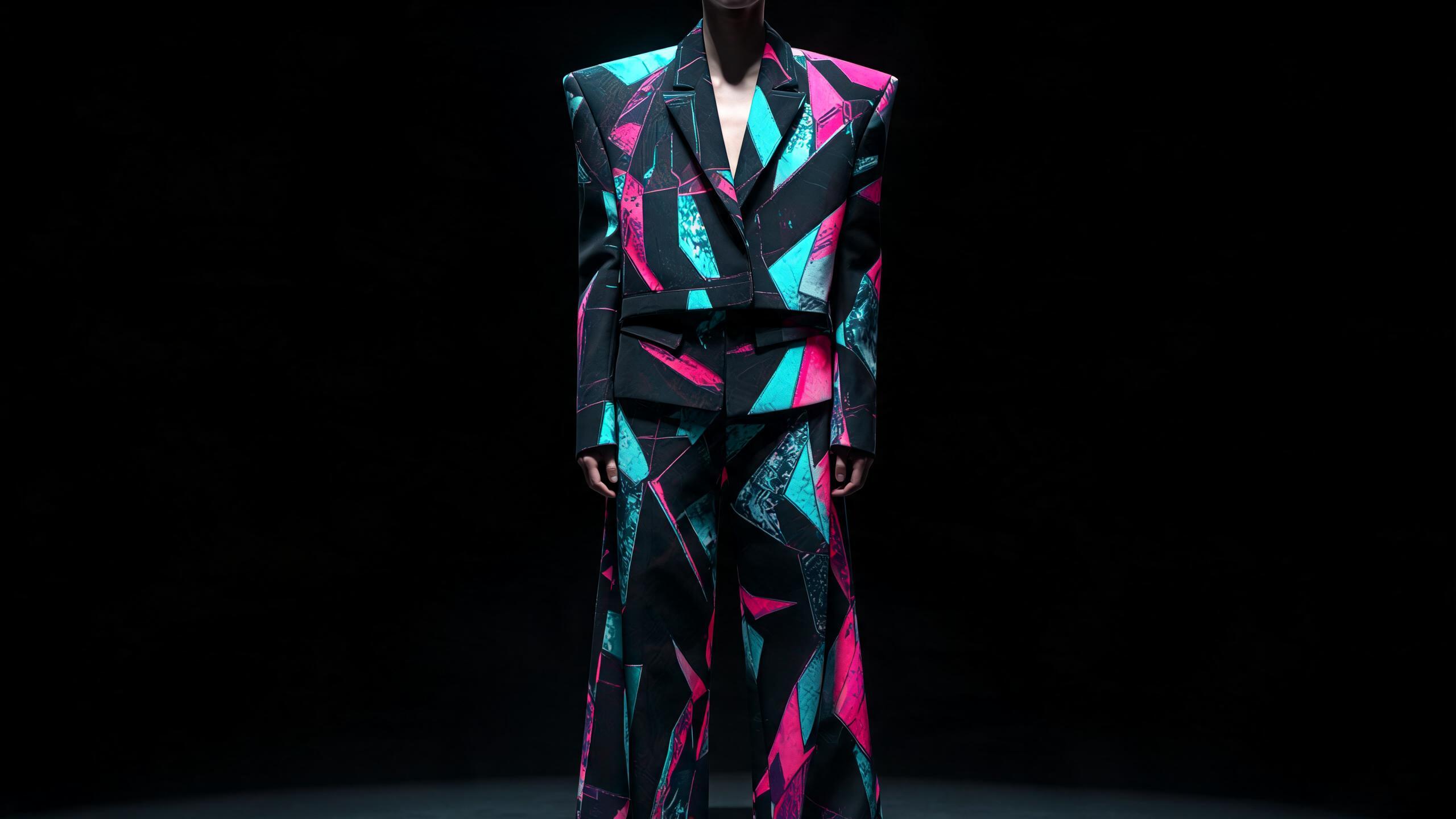
- Volume: Introducing more dramatic silhouettes that would be impractical for daily wear but appropriate for a celebration.
By breaking "festive" down into these components, the AI can build an outfit that feels celebratory but remains sophisticated. It treats the Christmas party dress code AI styling guide as a technical manual for elevating your existing style, rather than an instruction to deviate from it.
The end of "What should I wear?"
The question "What should I wear?" is a symptom of a broken commerce model. It exists because the bridge between what is available in the market and what is right for the individual has never been built. We have been forced to act as our own data processors, trying to filter millions of products through our own limited memory and time.
AI-native fashion intelligence changes the fundamental unit of fashion from the "product" to the "model." You no longer look for a dress; you look for the manifestation of your style model in the context of a specific event. This shifts the power from the brand to the user. The brand no longer dictates what is "festive"; the user's AI determines what is festive for them.
As we move toward a future where every individual has a private AI stylist that genuinely learns, the stress of the holiday dress code will vanish. The system will provide a singular, high-confidence recommendation that is contextually perfect, physically comfortable, and aesthetically consistent.
AlvinsClub uses AI to build your personal style model. Every outfit recommendation learns from you. Try AlvinsClub →
Summary
- A Christmas party dress code AI styling guide leverages machine learning to convert subjective terms like "Festive Semi-Formal" into objective visual parameters such as color saturation and textile reflectivity.
- Traditional fashion commerce often fails users because search engines prioritize marketing-based inventory clearance over the contextual relevance required for specific holiday events.
- The Christmas party dress code AI styling guide addresses the "semantic gap" caused by linguistically unstable phrases like "Smart Casual with a Holiday Twist" that lack standardized technical definitions.
- This systems-based styling approach reduces cognitive load by reconciling the high-variance demands of invitations with the low-variance structural data of a person's existing wardrobe.
- By utilizing AI to interpret dress codes, guests can replace social intuition and guesswork with high-probability execution based on long-term style logic.
Frequently Asked Questions
What is a Christmas party dress code AI styling guide?
A Christmas party dress code AI styling guide is a digital tool that uses machine learning to interpret complex social invitations and match them with specific clothing items. It translates subjective terms like festive or semi-formal into objective visual parameters based on your existing wardrobe and personal aesthetic.
How does AI decode confusing holiday dress codes?
Artificial intelligence decodes confusing holiday dress codes by analyzing textile reflectivity, color saturation, and silhouette architecture to match vague terms with real clothing. This systems-based approach reconciles high-variance linguistic demands with structural data to provide clear and accurate outfit recommendations.
Can you use a Christmas party dress code AI styling guide to find outfits?
You can use a Christmas party dress code AI styling guide to generate outfit combinations that balance your personal preferences with the specific requirements of any holiday event. These tools analyze your uploaded wardrobe photos to suggest the most appropriate textures and colors for your social calendar.
Is it worth using a Christmas party dress code AI styling guide for formal events?
Using a Christmas party dress code AI styling guide for formal events is highly effective because it removes the cognitive load of interpreting ambiguous dress requirements. These systems ensure your final choice meets the expected level of formality while maintaining a cohesive and modern visual style.
Why does AI make holiday fashion choices easier?
AI makes holiday fashion choices easier by automating the translation of subjective social norms into actionable styling data for the user. By processing high-variance linguistic demands, the technology eliminates the stress of being underdressed or overdressed for seasonal gatherings.
How can I use AI to match my wardrobe to a specific dress code?
Matching your wardrobe to a specific dress code involves uploading images of your clothing to an AI-powered styling application for analysis. The algorithm then categorizes your items by formality and color to curate the most appropriate look for your specific invitation requirements.
This article is part of AlvinsClub's AI Fashion Intelligence series.
Related Articles
- Data-driven dressing: The rise of the AI corporate casual style guide
- How to Use AI to Master the Art of Styling Beach Cover Ups
- Mastering baggy layers: Traditional vs AI-powered styling tips for women
- How to Use AI to Forecast 2027 Wedding Dress Trends
- Beyond the Little Black Dress: How to Dress for a Cocktail Party