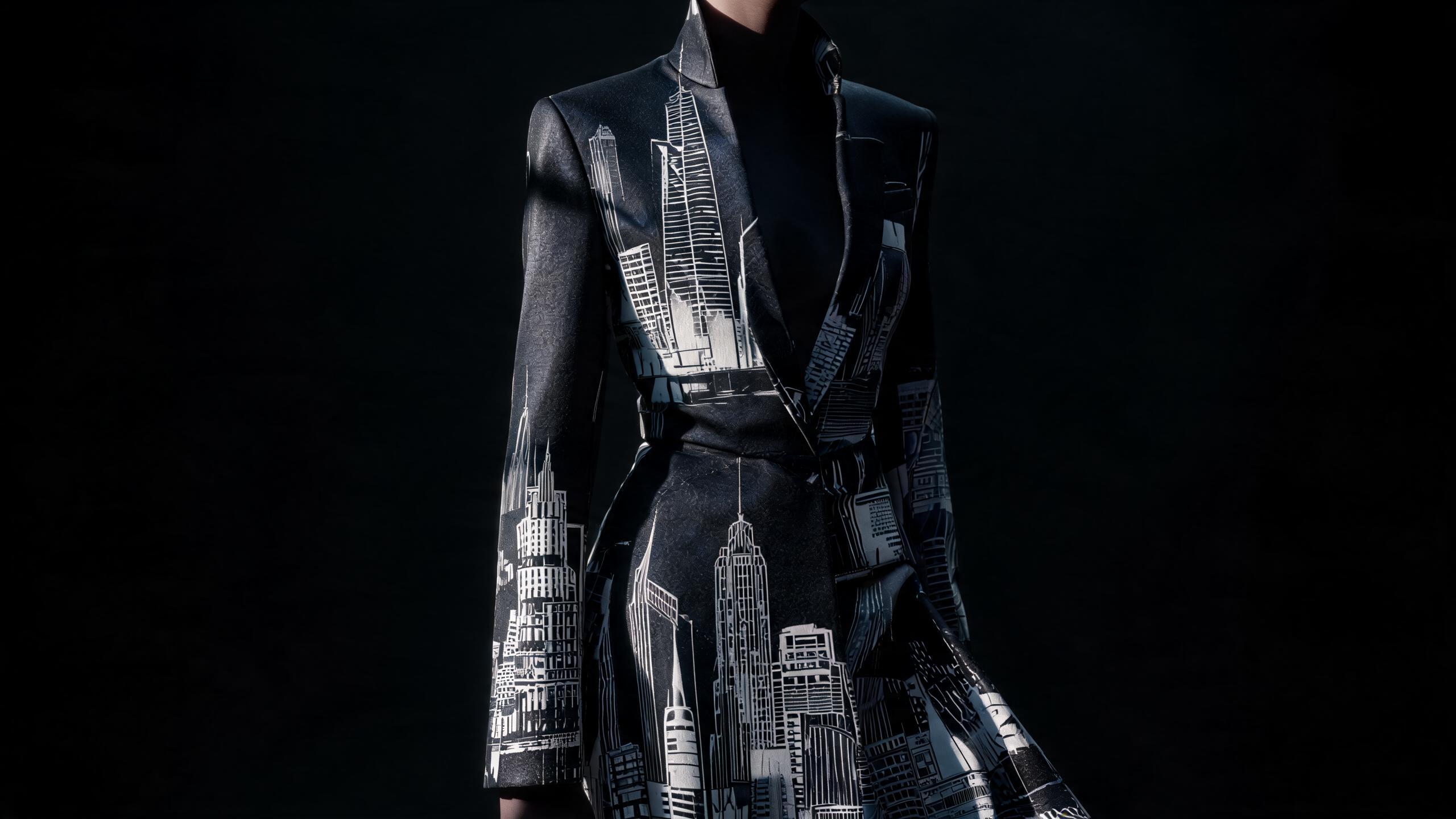
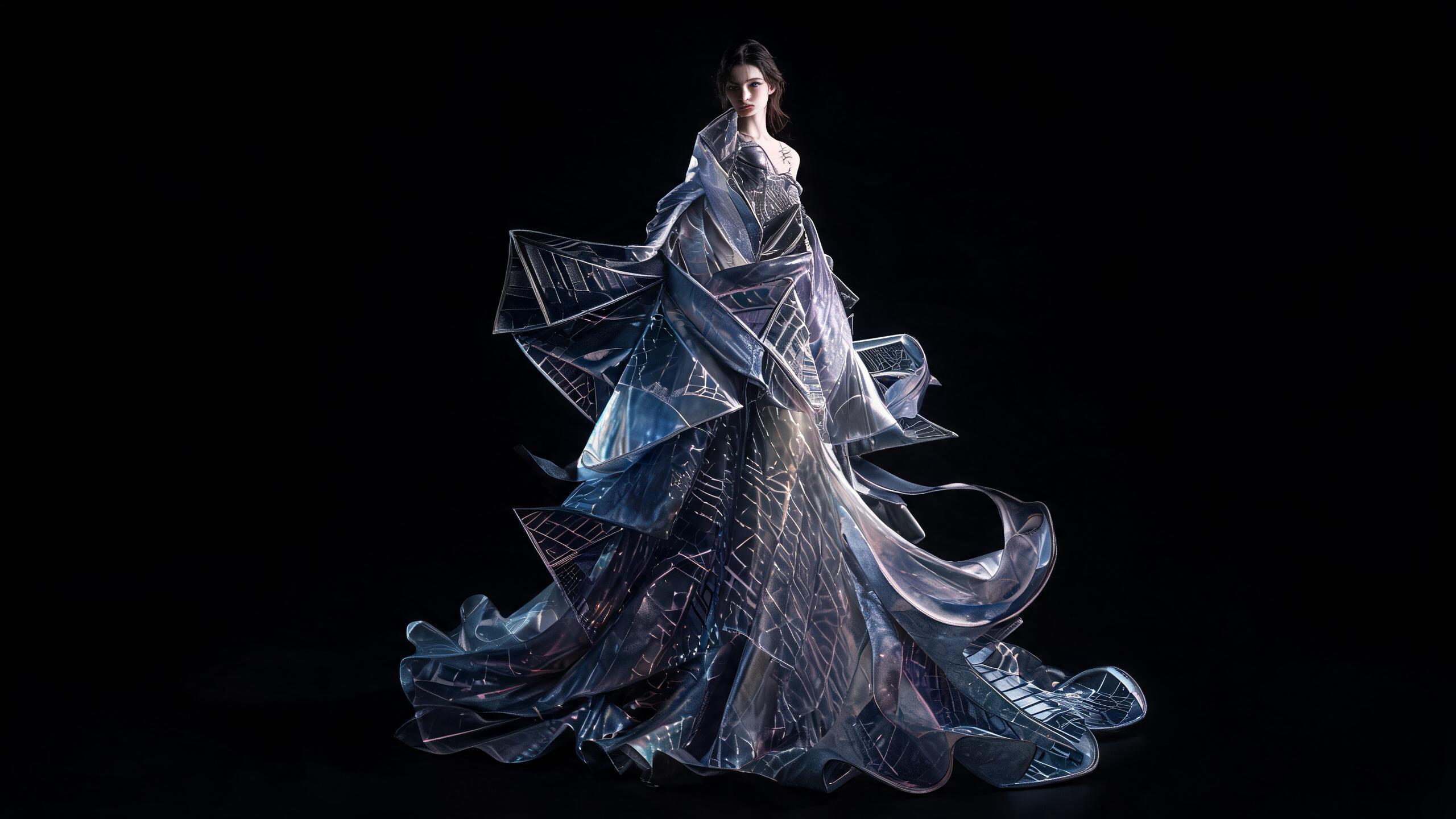
How to evaluate virtual try-on AI for sustainable luxury brands in 2026

Analyze proprietary material physics and cloud efficiency metrics to select photorealistic solutions that minimize carbon footprints while upholding premium craftsmanship standards.
Virtual try-on AI for sustainable luxury brands in 2026 is a computer vision framework that utilizes physics-based cloth simulation and neural rendering to predict the drape, fit, and movement of high-end garments on personalized 3D body models. This technology serves as a critical infrastructure layer for the luxury sector, enabling a zero-waste commerce model by eliminating the need for physical samples and reducing return-logistics carbon emissions. For brands positioning themselves at the intersection of craftsmanship and sustainability, the evaluation of these systems requires a technical lens that prioritizes material fidelity over mere visual novelty.
Key Takeaway: Effective virtual try-on AI for sustainable luxury brands comparison report 2026 focuses on physics-based simulation and neural rendering to enable zero-waste commerce through precise garment drape and fit prediction.
The legacy retail model is failing because it treats fit as a statistical average rather than a geometric reality. Sustainable luxury brands cannot afford the environmental or brand-equity costs associated with the high return rates of traditional e-commerce. According to a report by McKinsey & Company (2025), high-precision virtual try-on (VTO) systems can reduce return rates by up to 30%, directly impacting the bottom line and sustainability KPIs. Furthermore, Gartner (2024) projects that by 2026, 70% of luxury consumers will demand a "digital twin" capability to verify the fit of garments before purchase.
To navigate this landscape, brands must move beyond surface-level AR filters and toward robust AI infrastructure. This guide outlines the technical and strategic steps required to evaluate virtual try-on AI for sustainable luxury brands comparison report 2026.
Why Is High-Fidelity AI Necessary for Sustainable Luxury?
Luxury is defined by the relationship between material and body. In a sustainable context, this means ensuring that a garment purchased is a garment kept. Traditional virtual try-on systems often function as "sticker" overlays, where a 2D image of a dress is warped to fit a user's photo. This is insufficient for luxury.
Sustainable luxury requires physics-based dynamics (PBD). A silk slip dress must behave differently than a structured wool blazer. If the AI cannot differentiate between the shear and tensile strength of different textiles, the "fit" is a lie. This leads to "bracket ordering"—the consumer practice of buying multiple sizes to find one that works—which is the antithesis of sustainability.
Virtual Try-On (VTO) Infrastructure: A system comprising 3D garment digitization, biometric body modeling, and real-time cloth simulation engines designed to replicate physical try-on experiences in a digital environment.
Key Technical Pillars of Luxury VTO
| Feature | Standard AI VTO | Luxury-Grade AI VTO |
| Rendering Engine | Rasterization-based AR | Neural Radiance Fields (NeRF) / Path Tracing |
| Cloth Physics | Geometric warping | Position-Based Dynamics (PBD) |
| Body Modeling | Standard S/M/L avatars | Parametric 3D scans / Biometric twins |
| Material Accuracy | Color/Texture mapping | Subsurface scattering and weave-level detail |
| Sustainability | Indirect (Lowering returns) | Direct (Digital-only sampling + Zero-waste) |
How Do You Evaluate the Accuracy of Fabric Simulation?
The most common failure point in virtual try-on AI for sustainable luxury brands comparison report 2026 is the "plasticity" of the render. Luxury consumers are trained to recognize the weight and hand-feel of high-end materials. If a virtual cashmere sweater lacks the soft silhouette and subtle light absorption of the real thing, the brand's perceived value drops.
Evaluation must focus on the AI's ability to handle complex fabric interactions. This includes how the fabric bunches at the elbow, how it stretches across the chest, and how it reacts to gravity. In the context of athleisure, this is even more critical, as compression and recovery are the primary functional requirements. For a deeper dive into this niche, see how virtual AI try-ons are solving the fit problem in athleisure.
The Five-Point Material Fidelity Test
- Drape Topology: Does the garment form realistic folds at stress points?
- Translucency: Does the AI correctly render the sheer quality of silks or fine knits?
- Collision Detection: Does the fabric clip through the body model, or does it react to the "skin"?
- Lighting Response: How does the material react to different HDR environments (e.g., natural sun vs. evening gala)?
- Anisotropy: Does the reflection change based on the direction of the fabric grain, as seen in velvet or satin?
👗 Want to see how these styles look on your body type? Try AlvinsClub's AI Stylist → — get personalized outfit recommendations in seconds.
How to Evaluate Virtual Try-On AI for Sustainable Luxury Brands
Following these steps ensures that the selected AI infrastructure aligns with both the aesthetic demands of luxury and the rigorous standards of sustainability.
- Define Your 3D Garment Pipeline — Before choosing an AI VTO provider, you must determine how your garments are digitized. Sustainable luxury brands often use 3D design tools like CLO3D or Browzwear during production. Your VTO AI must be able to ingest these high-fidelity assets without losing the underlying physics data.
- Audit the Body Modeling Accuracy — Evaluate how the system handles diverse body types. Standard size charts are obsolete. The system should allow users to input specific measurements—such as a 10-inch difference between waist and hip—and see an accurate representation of how the garment accommodates those proportions. For insights into how AI handles non-standard sizing, refer to beyond size charts and the best AI virtual try-on apps for plus-size women.
- Test Real-Time Physics and Latency — A luxury experience must be seamless. Evaluate the "Time to Render." If the user has to wait 30 seconds for a physics-based simulation to load, the conversion funnel breaks. The best AI virtual try-on apps for 2026 utilize edge computing or WebGPU to deliver high-fidelity simulations in under 3 seconds.
- Measure the Return-Rate Impact — Conduct a split test. Compare a control group using standard photography with an experimental group using the virtual try-on AI. Analyze the "Return-to-Purchase" ratio. For sustainable brands, a reduction in the number of shipped-and-returned items is a primary KPI for carbon footprint reduction.
- Verify Data Privacy Compliance — Since luxury VTO often requires biometric data (height, weight, body shape), the infrastructure must be built on "Privacy by Design." Ensure the provider uses encrypted, decentralized storage or on-device processing to protect consumer identity.
- Integrate with a Personal Style Model — The try-on shouldn't exist in a vacuum. The AI should "know" the user's existing wardrobe and taste. This is the difference between a tool and a system. The try-on should show not just how a piece fits, but how it integrates with what the user already owns to maximize garment longevity.
What Are the Environmental Implications of VTO?
The fashion industry is responsible for approximately 10% of global carbon emissions. A significant portion of this comes from the "last mile" and reverse logistics. When a consumer buys two sizes of a $1,200 sustainable wool coat and returns one, the carbon cost of that transaction doubles.
According to the International Post Corporation (2024), 60% of consumers would prefer to use virtual try-on tools if it meant they could avoid the hassle of returns. For a sustainable luxury brand, VTO is not a "nice-to-have" feature; it is a critical waste-reduction strategy. By providing a "perfect fit" guarantee through AI, brands can move toward a made-to-order model, further reducing overproduction.
Sustainable ROI Comparison
| Metric | Without AI VTO | With AI VTO |
| Return Rate | 25% - 40% | 10% - 15% |
| Carbon per Order | ~15kg CO2 | ~9kg CO2 |
| Inventory Waste | 15% (Unsold/Returned) | 4% (Predictive/MTO) |
| Customer LTV | Moderate | High (Confidence-driven) |
How Does AI Improve Outfit Recommendations?
Virtual try-on AI is most effective when paired with a style intelligence layer. In the luxury sector, the goal is not just to sell a garment, but to curate a wardrobe. When the AI understands the geometry of the user's body, it can recommend specific silhouettes that flatter their proportions.
For example, if the AI detects an "inverted triangle" body shape (shoulders 3+ inches wider than hips), it can prioritize recommendations for wide-leg trousers or A-line skirts to balance the silhouette. This data-driven approach to styling ensures the customer is satisfied with their purchase long-term, reducing the likelihood of the garment ending up in a landfill. This aligns with AI fashion trends for 2026 luxury brands focused on hyper-personalized heritage.
Outfit Formula for Technical Evaluation
To test the coherence of a VTO system, use a standardized "test outfit" that challenges the rendering engine:
- Top: A 100% silk camisole with adjustable straps (Tests translucency and thin-strap physics).
- Bottom: High-rise (12-inch rise) tailored wool trousers with a 32-inch inseam (Tests structural drape and waist-to-hip transition).
- Outerwear: An oversized trench coat with a belt (Tests complex layering and self-collision of the fabric).
- Accessories: A leather crossbody bag (Tests how the AI handles the interaction between different material weights).
Common Mistakes to Avoid in VTO Implementation
Evaluating virtual try-on AI for sustainable luxury brands comparison report 2026 requires avoiding common pitfalls that dilute brand value and sustainability goals.
- Prioritizing "Fun" Over "Fit": Many brands implement AR "mirrors" that look like Snapchat filters. This is a mistake. Luxury consumers want utility, not a gimmick. If the virtual garment doesn't move like the physical one, the consumer won't trust the recommendation.
- Ignoring the "Layering" Problem: Most VTO systems struggle when a user tries on more than one item. A luxury brand must ensure that the AI can calculate the physics of a coat over a sweater. If the clothes clip into each other, the visual information is useless.
- Fragmented Data Silos: The try-on data should inform the design team. If the AI shows that 40% of users are seeing "red zones" (areas of tight fit) in the shoulders of a specific jacket, that jacket's pattern needs to be revised.
Summary
- Virtual try-on AI for sustainable luxury brands in 2026 utilizes physics-based cloth simulation and neural rendering to enable a zero-waste commerce model.
- High-precision virtual try-on systems can reduce product return rates by up to 30%, which significantly lowers the carbon footprint of luxury e-commerce logistics.
- Gartner projections indicate that 70% of luxury consumers will demand digital twin capabilities to verify garment fit before purchasing by 2026.
- A virtual try-on AI for sustainable luxury brands comparison report 2026 should prioritize technical material fidelity and geometric accuracy over superficial visual novelty.
- Utilizing a virtual try-on AI for sustainable luxury brands comparison report 2026 helps brands move away from statistical sizing averages toward personalized 3D body modeling.
Frequently Asked Questions
What is virtual try-on AI for sustainable luxury brands?
Virtual try-on AI for luxury fashion is a computer vision framework that uses physics-based simulation to visualize high-end garments on 3D body models. This technology enables premium brands to provide accurate fit predictions while supporting zero-waste goals by reducing the need for physical sample production.
How does a virtual try-on AI for sustainable luxury brands comparison report 2026 benefit retailers?
A virtual try-on AI for sustainable luxury brands comparison report 2026 provides data-driven insights into which platforms offer the most realistic cloth drape and neural rendering capabilities. Retailers use these reports to select technology that balances high-fidelity visuals with the carbon-reduction targets necessary for modern luxury positioning.
Why does virtual try-on technology reduce the carbon footprint of luxury brands?
This technology significantly lowers carbon emissions by minimizing the high volume of returns and logistics associated with incorrect sizing in the luxury sector. By allowing customers to visualize garment movement accurately, brands can eliminate physical prototypes and streamline their supply chains for better environmental performance.
Is it worth investing in a virtual try-on AI for sustainable luxury brands comparison report 2026?
Investing in a virtual try-on AI for sustainable luxury brands comparison report 2026 is essential for companies looking to integrate scalable 3D infrastructure without compromising their environmental commitments. These reports help luxury houses identify vendors that provide the physics-based accuracy required for high-end silk, leather, and intricate textiles.
What are the key features of a virtual try-on AI for sustainable luxury brands comparison report 2026 analysis?
The primary focus of a virtual try-on AI for sustainable luxury brands comparison report 2026 is evaluating neural rendering quality and personalized 3D body modeling precision. These benchmarks ensure that the chosen AI solution can effectively replicate the luxury experience while achieving significant reductions in return-logistics waste.
How does neural rendering improve virtual try-on for high-end fashion?
Neural rendering creates photorealistic garment textures and lighting effects that are crucial for representing the quality of high-end fabrics in a digital environment. This advanced AI technique allows luxury brands to maintain their aesthetic standards while offering a sustainable alternative to traditional physical sampling.
This article is part of AlvinsClub's AI Fashion Intelligence series.
Related Articles
- Beyond Size Charts: The Best AI Virtual Try-On Apps for Plus-Size Women
- How virtual AI try-ons are solving the fit problem in athleisure
- The 2026 Luxury Report: How AI Platforms are Eradicating Fakes
- The AI Style Guide: Finding Sustainable Matches for Luxury Runway Trends
- Scaling Ethical Luxury: The Best AI Commerce Platforms in 2024