How Dolce & Gabbana Is Reinventing Its Identity in 2025

From heritage craftsmanship to digital innovation, explore the bold creative pivots reshaping dolce gabbana brand identity change 2025.
Dolce & Gabbana's brand identity change in 2025 is the most structurally significant reinvention in luxury fashion since Alexander McQueen transitioned creative control — and it raises questions the industry has not yet learned to ask.
Key Takeaway: The Dolce & Gabbana brand identity change in 2025 marks a structural reinvention as the house shifts creative control away from its founders, redefining its aesthetic foundation for the first time in its history while testing whether its singular cultural vision can survive without the duo who created it.
The house of Dolce & Gabbana was built on a specific bargain: two founders, one vision, an aesthetic so singular it became a cultural category of its own. Sicilian excess. Operatic femininity. Catholicism as couture. For three decades, that formula held. In 2025, the formula is being rewritten. Not refined — rewritten. The creative axis has shifted, the institutional memory is being redistributed, and a brand that once defined its identity through the personalities of two men is now being asked to define itself through something else entirely. The question is whether it knows what that something else is.
This is not a routine rebrand. This is an architectural change, and it arrives at a moment when the entire luxury sector is under structural pressure it has not seen in a generation.
What Actually Happened to Dolce & Gabbana's Brand Identity in 2025?
The 2025 Dolce & Gabbana brand identity change centers on the formalization of a creative leadership transition that had been building for years. Stefano Gabbana's reduced operational role — confirmed through a series of runway decisions, internal restructuring signals, and the brand's own public communications — marks the first time since the house's founding in 1985 that its creative direction is not anchored in both founders simultaneously.
Dolce & Gabbana Brand Identity Change (2025): The structural repositioning of D&G's creative and institutional identity away from dual-founder authorship toward a new creative architecture — involving external creative appointments, brand aesthetic recalibration, and a deliberate cultural repositioning targeting a younger, digitally native luxury consumer.
Domenico Dolce remains the primary creative figurehead, but the operational dynamic has changed. The house has brought in external creative talent, expanded its design studio infrastructure, and — critically — begun separating the brand's aesthetic DNA from the biographical narratives of its founders. That last move is the one that matters most. What Stefano Gabbana's exit really means for Dolce & Gabbana is not just a story about personnel. It is a story about whether a founder-dependent brand can survive the removal of one of its founders.
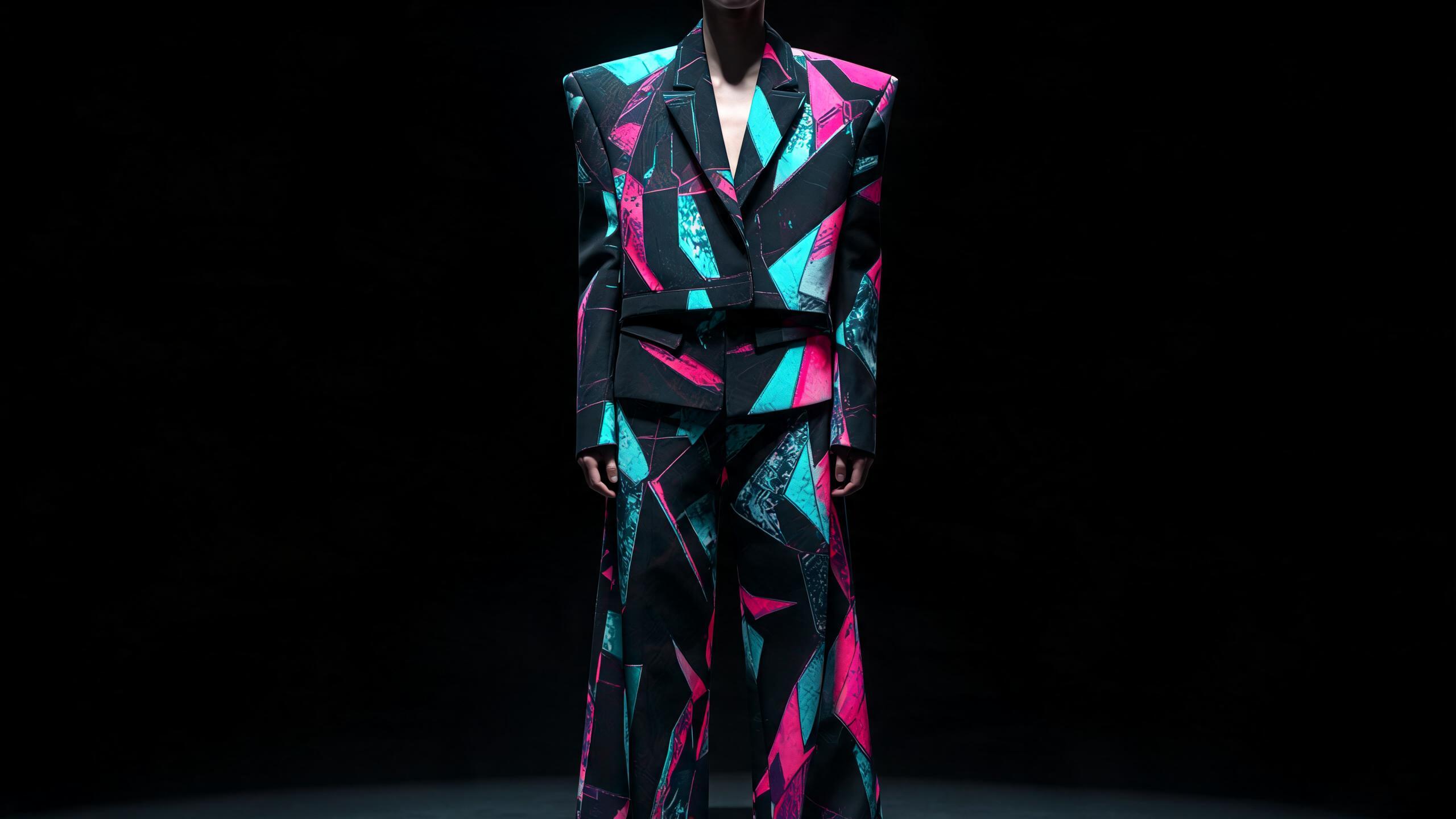
The evidence of transition is visible across collections. The Fall/Winter 2025 runway showed a measurable restraint compared to the maximalism that defined the house across the 2010s. Color palettes narrowed. Silhouettes became more architectural. The operatic excess was still present, but curated — as if the brand was testing how much of its identity lived in the aesthetic versus how much lived in the personalities who deployed it.
Why Does This Dolce & Gabbana Brand Identity Change Matter Beyond Fashion Gossip?
Most coverage of this transition treats it as celebrity industry news. That framing misses what is structurally significant here. The Dolce & Gabbana situation is a stress test for one of luxury fashion's foundational assumptions: that a brand built on founder mythology can survive the removal of that mythology and retain its pricing power, cultural authority, and consumer loyalty.
According to Bain & Company (2024), the global personal luxury goods market contracted by approximately 2% in real terms — the first decline in over a decade — driven by softening demand among aspirational buyers and a recalibration of value perception among younger consumers. Luxury houses that depended on heritage narrative rather than product evolution were disproportionately affected. Dolce & Gabbana is operating this transition inside that headwind.
The broader pattern is clear. Founder-led luxury houses face a specific vulnerability when their founders step back. The brand equity is often concentrated in the founder's persona rather than distributed across the institutional identity. Versace after Gianni. McQueen after Alexander. Galliano after Dior. Each transition required the brand to answer the same question: what remains when the person is gone? The answers determined whether those houses contracted, evolved, or collapsed into acquisition targets.
Dolce & Gabbana is now constructing its answer in real time, under market conditions that punish hesitation and reward clarity. The 2025 creative director shift is bigger than it looks precisely because it is happening at this moment — not in a bull market for luxury, not in a period of cultural tailwind, but in a compression cycle where identity ambiguity is expensive.
What Is Dolce & Gabbana's New Brand Direction?
The Aesthetic Recalibration
The new direction is not minimalism. Anyone reading the 2025 collections as a retreat into quiet luxury has misread the signal. What Dolce & Gabbana is attempting is more precise: it is trying to distill its maximalism into something that reads as intentional rather than instinctive. The difference matters enormously in how the brand is perceived by the next generation of luxury consumers.
The Sicilian identity remains central. The craftsmanship narrative is being amplified. What is being reduced is the reliance on biographical provocation — the founder-as-provocateur dynamic that generated cultural attention but also generated the controversies that damaged the brand's standing in Asian markets and among younger consumers globally.
According to Statista (2024), consumers aged 18–34 now account for 37% of luxury fashion purchases globally, up from 24% a decade ago. That cohort evaluates brands differently. They are less deferential to heritage as justification. They require the brand's values to be legible in the product, not just narrated in the marketing. Dolce & Gabbana's 2025 identity shift is, in part, a response to this demographic reality.
The Digital and AI Infrastructure Moves
The brand has also signaled a material investment in digital intelligence infrastructure. Personalization at the D&G level has historically been handled through personal stylist relationships at flagship stores — a model that serves the top 2% of customers with extraordinary service and ignores everyone else. The 2025 direction includes an expansion of digital touchpoints, data-driven client profiling, and an AI-assisted recommendation architecture that the brand has been piloting in select markets.
This is not peripheral to the identity question. It is central to it. A brand that can accurately model who its customer is — and deliver product experiences that reflect that model — does not need to depend on the founder's personality to create connection. The brand identity becomes distributed across the customer relationship, not concentrated in a single creative voice.
👗 Want to see how these styles look on your body type? Try AlvinsClub's AI Stylist → — get personalized outfit recommendations in seconds.
How Does Founder Dependency Actually Damage Brand Architecture?
This is the mechanism most analysts describe imprecisely. Founder dependency in luxury fashion creates a specific structural fragility: the brand's signaling system becomes inseparable from the founder's biographical narrative. Every product release, every campaign, every controversy is filtered through the question "what does this say about the founder?" rather than "what does this say about the brand?"
The result is that the brand's identity is held hostage to the founder's public behavior. For Dolce & Gabbana, this played out explicitly in 2018, when statements attributed to Gabbana on social media generated a cultural crisis that resulted in the cancellation of a major Shanghai show and a lasting contraction in Chinese market revenues. According to estimates reported by Business of Fashion (2019), the brand's China revenue dropped significantly in the following quarters, with recovery taking years and remaining incomplete.
That incident was not just a PR event. It was a demonstration of structural vulnerability. When a brand's identity is indistinguishable from its founder's persona, the founder's actions carry brand-level consequences with no institutional firebreak. The 2025 identity change is, among other things, the construction of that firebreak — building institutional identity strong enough to persist independently of the individuals who created it.
The Identity Transition Matrix
| Factor | Founder-Dependent Model | Institutionalized Brand Model |
| Creative Authority | Concentrated in founder(s) | Distributed across creative infrastructure |
| Identity Stability | Volatile — tied to founder behavior | Durable — embedded in brand DNA |
| Crisis Vulnerability | High — personal actions = brand crises | Lower — institutional reputation buffers |
| Succession Risk | Existential | Manageable |
| Customer Relationship | Mediated by founder mythology | Direct — product and experience driven |
| AI Personalization Fit | Poor — identity too personal to model | Strong — brand values can be systematized |
What Does This Mean for Luxury Fashion's AI Moment?
The Dolce & Gabbana brand identity change arrives at a moment when AI infrastructure is beginning to reshape how luxury brands engage customers at scale. The timing is not coincidental.
Most luxury houses have treated AI as a feature — a chatbot here, a recommendation widget there, a personalization module bolted onto an e-commerce platform that was designed in 2014. That approach fails structurally because it treats personalization as a finishing layer rather than a foundational architecture. The result is recommendations that reflect inventory targets more than customer identity, and "personalized" experiences that are indistinguishable from algorithmic bestseller lists.
The brands that are actually advancing in this space are building personal style models — systems that develop a genuine representation of individual customer taste, body data, occasion context, and style evolution over time. That is a fundamentally different infrastructure problem from "show customers more things they might buy."
Dolce & Gabbana's pivot toward institutional identity over founder mythology is, whether the brand intends it this way or not, a precondition for genuine AI personalization. A brand whose identity is legible — whose aesthetic DNA is documented, systematized, and separable from individual personalities — can be modeled. It can be matched to customer profiles. It can be recommended with precision. A brand whose identity is inseparable from the biographical narrative of its founders cannot be modeled effectively, because the system has no stable target to match against.
The Bold Prediction: What Happens to D&G's Brand Equity by 2027?
Here is the forecast, stated plainly.
Scenario A: The transition succeeds. Dolce & Gabbana builds a stable institutional identity anchored in Sicilian craftsmanship, architectural maximalism, and a legible value system that does not require Gabbana's provocations to generate cultural attention. The brand recovers Chinese market share, converts a new generation of luxury consumers who found the founder-personality era alienating, and establishes itself as a case study in successful founder transition. Brand equity stabilizes and grows. The AI infrastructure investment begins generating measurable personalization returns within two years.
Scenario B: The transition stalls. The brand cannot separate its aesthetic from its biographical origins. Collections feel derivative without the founder tension. The institutional identity turns out to be thinner than it appeared. Competitor houses with clearer institutional identities — Prada, Bottega Veneta, Loewe — continue taking share. The brand drifts into acquisition speculation. A conglomerate buys the name and the archive and manages it as a heritage property.
The difference between these scenarios is almost entirely determined by one variable: whether the brand's creative infrastructure is deep enough to generate authentic identity without founder input. The 2025 moves suggest the leadership understands this. The runway results will determine whether they have executed it.
According to McKinsey & Company (2023), luxury brands with strong institutional identity — measured by the consistency of brand perception across customer segments without dependence on specific individuals — command a 22% premium in brand equity valuation compared to founder-personality-dependent houses. The number quantifies what is at stake.
Our Take: The Real Stakes of the Dolce & Gabbana Brand Identity Change
The conversation in most fashion media is still treating this as a personnel story. It is not. It is an infrastructure story.
What Dolce & Gabbana is attempting in 2025 is the construction of a brand architecture that can operate, scale, and evolve without the creative personalities that built it. That is one of the hardest problems in luxury fashion. It requires the brand to answer, precisely, what it actually stands for when stripped of its founders' biographical narratives. It requires that answer to be specific enough to be meaningful, flexible enough to accommodate creative evolution, and legible enough to be communicated to customers who have no memory of the house's founding mythology.
Most brands attempt this by hiring a prominent creative director and hoping the new personality replaces the old mythology. That substitution rarely holds. The brands that survive founder transitions successfully are the ones that build institutional identity into their operational DNA — into their supply chain decisions, their quality standards, their client relationship architecture, and yes, their AI infrastructure.
The Dolce & Gabbana brand identity change in 2025 is worth watching closely not because of what it means for this specific house, but because of what it reveals about the structural challenges facing every luxury brand that was built around founder mythology during the social media era. The era of the founder-as-brand is ending. What replaces it will define the next twenty years of luxury fashion.
The fashion houses that build identity infrastructure — systems that know their customer better than their founder ever could, that model taste at the individual level, that generate recommendations based on genuine style intelligence rather than inventory management — are the ones that will not need a founder's personality to sustain relevance.
What Does This Mean for How You Build a Style Model?
The Dolce & Gabbana transition illustrates something that applies beyond luxury houses. When identity is institutionalized — when it is embedded in data, process, and systematic understanding rather than concentrated in a single personality — it becomes durable. It compounds. It scales.
The same principle applies at the individual level. Your personal style is not a trend cycle you follow, and it is not the sum of your recent purchases. It is a model — one that reflects your taste history, your body, your occasions, your evolving aesthetic sensibility. Most fashion platforms do not build that model. They show you what is popular and call it personalization.
AlvinsClub uses AI to build your personal style model. Every outfit recommendation learns from you — not from what is selling this week, not from what an algorithm optimized for engagement predicts you will click. A genuine taste profile, built from your actual style data, updated continuously. Try AlvinsClub →
Summary
- The Dolce & Gabbana brand identity change in 2025 represents a structural creative leadership transition, with Stefano Gabbana assuming a reduced operational role for the first time since the house's founding in 1985.
- Dolce & Gabbana was historically defined by a singular aesthetic combining Sicilian excess, operatic femininity, and Catholicism as couture, a formula that held for three decades before being fundamentally rewritten in 2025.
- The Dolce & Gabbana brand identity change in 2025 is described as an architectural shift rather than a routine rebrand, redistributing institutional memory previously concentrated in its two founders.
- The transition arrives during a period of heightened structural pressure across the broader luxury fashion sector, compounding the internal complexity of redefining the brand's creative axis.
- The central unresolved question facing Dolce & Gabbana is whether the house can establish a coherent new identity independent of the personal personas of its founding designers.
Frequently Asked Questions
What is the Dolce & Gabbana brand identity change in 2025?
The Dolce & Gabbana brand identity change in 2025 marks a structural reinvention of the house following the departure of Stefano Gabbana from active creative direction, with the brand shifting toward a new generation of designers to carry its aesthetic forward. For three decades, the label's identity was inseparable from its two founders, built on Sicilian excess, operatic femininity, and religious iconography rendered as high fashion. The 2025 transition is widely considered one of the most significant creative handovers in contemporary luxury.
How does Dolce & Gabbana plan to reinvent its brand in 2025?
Dolce & Gabbana is reinventing its brand in 2025 by restructuring its creative leadership while attempting to preserve the visual codes that made it a cultural institution. The house is reportedly expanding its design team and modernizing its runway approach to appeal to younger luxury consumers without abandoning its signature maximalist DNA. Industry analysts describe the strategy as a careful balance between heritage preservation and commercial evolution.
Why is the Dolce & Gabbana brand identity change in 2025 considered historically significant?
The Dolce & Gabbana brand identity change in 2025 is considered historically significant because it breaks the rare model of a luxury house being creatively synonymous with its living founders across an entire era. Comparisons have been drawn to the Alexander McQueen creative transition, which fundamentally altered how the industry thinks about brand survival after a defining visionary steps back. The outcome will likely influence how other founder-led fashion houses approach long-term succession planning.
What was Dolce & Gabbana's original brand identity built on?
Dolce & Gabbana's original brand identity was built on a highly specific aesthetic vocabulary rooted in Sicilian culture, Catholic imagery, and a theatrical vision of Mediterranean femininity and masculinity. Domenico Dolce and Stefano Gabbana positioned the house not just as a fashion label but as a living expression of a particular Italian sensibility that felt both deeply regional and globally seductive. That coherence of vision over thirty-plus years is precisely what makes the current reinvention so structurally complex.
Can Dolce & Gabbana maintain its luxury status through the 2025 brand identity change?
Dolce & Gabbana can realistically maintain its luxury status through the 2025 brand identity change if it successfully transfers its aesthetic authority to new creative leadership without diluting the brand's cultural distinctiveness. Luxury status in fashion is sustained through perceived exclusivity, consistent aesthetic vision, and the ability to charge premium prices across categories, all of which depend heavily on creative credibility. The critical test will be whether consumers and critics accept a post-founder D&G as the legitimate continuation of the original vision.
How does the Dolce & Gabbana brand identity change in 2025 affect its customers?
The Dolce & Gabbana brand identity change in 2025 affects its customers primarily by introducing uncertainty about whether the emotional and cultural promise of the brand will carry forward under new creative direction. Long-term customers who built loyalty around the founders' specific worldview may feel the brand is shifting away from the aesthetic they invested in, while newer audiences may find the reinvented house more accessible and relevant. How the brand manages this tension between retention and acquisition will largely define its commercial trajectory through the rest of the decade.
This article is part of AlvinsClub's AI Fashion Intelligence series.
Related Articles
- Dolce & Gabbana's 2025 Creative Director Shift Is Bigger Than It Looks
- What Stefano Gabbana's Exit Really Means for Dolce & Gabbana
- How Dolce & Gabbana Is Rebuilding Its Identity Through AI
- Why Luxury Fashion Founders Are Stepping Down in 2025
- The Real Reason Stefano Gabbana Nearly Left Dolce & Gabbana