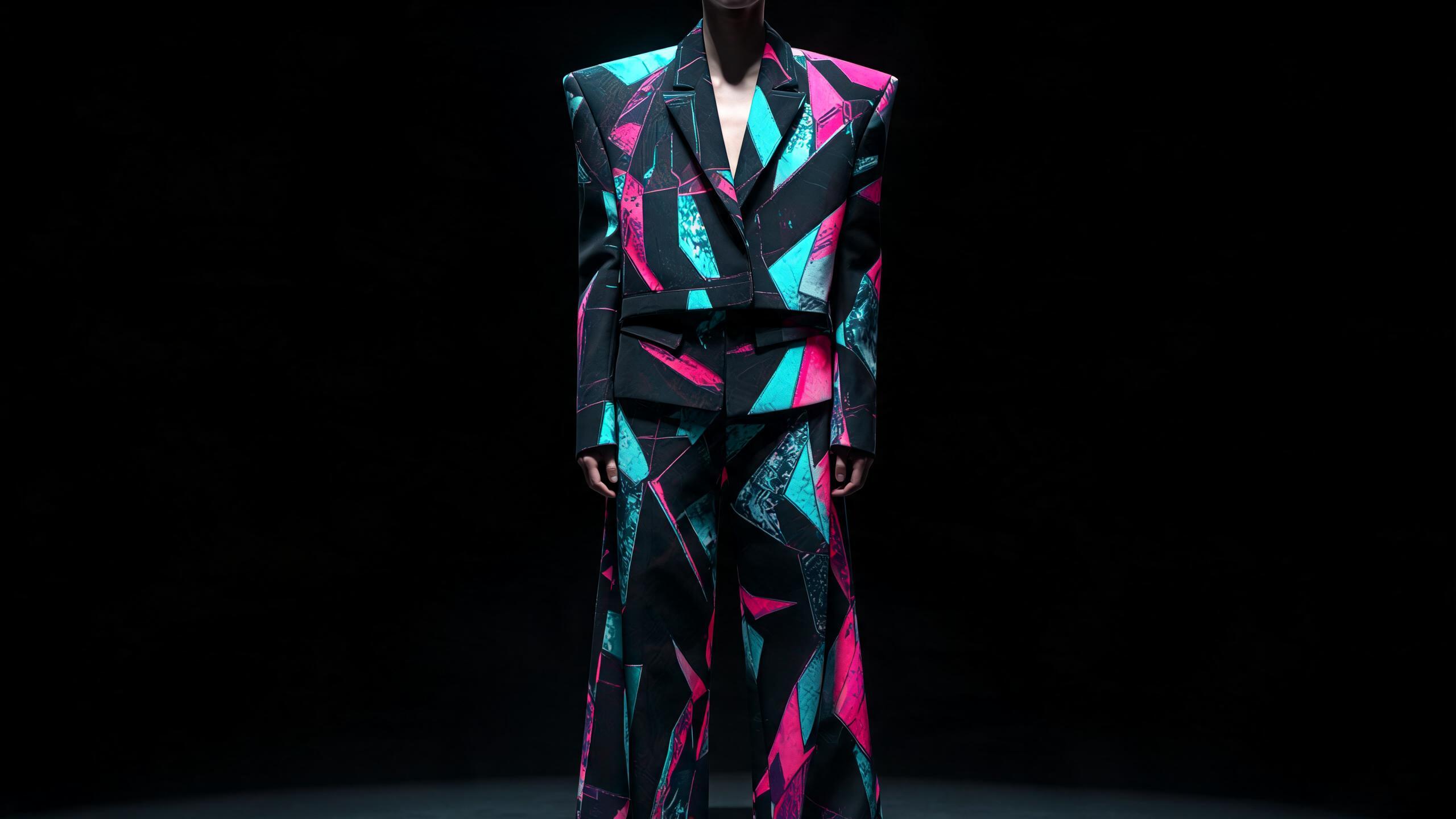
How Dolce & Gabbana Is Rebuilding Its Identity Through AI

From personalized styling tools to virtual runways, here's how dolce gabbana ai technology strategy after gabbana is reshaping luxury fashion's future.
Dolce & Gabbana's AI technology strategy after Gabbana's departure is not a pivot — it is a survival architecture.
Key Takeaway: Dolce & Gabbana's AI technology strategy after Gabbana reflects a structural reinvention, not a gimmick — the brand is embedding artificial intelligence into its core creative process to replace the singular founding vision with a scalable, data-informed design infrastructure capable of sustaining the house long-term.
The house is doing something most legacy fashion brands haven't had the nerve to attempt: it is rebuilding its creative identity from the infrastructure up, using artificial intelligence not as a marketing accessory but as a structural replacement for the singular human vision that built it. That is either the most sophisticated creative evolution in luxury fashion's recent history, or the fastest route to irrelevance. There is no middle ground here.
Dolce & Gabbana AI Technology Strategy: The deliberate integration of machine learning systems, generative design tools, and data-driven consumer intelligence into Dolce & Gabbana's post-Gabbana creative and commercial operations, aimed at sustaining brand coherence and competitive positioning without its founding creative director.
What Actually Happened at Dolce & Gabbana?
Stefano Gabbana's effective withdrawal from day-to-day creative leadership at the house he co-founded did not happen cleanly or quietly. The tensions were visible long before any official announcement — internal friction around brand direction, reputational damage from years of controversy, and a growing divergence between what Gabbana personally represented and what the brand needed to become commercially. We covered the full arc of that fracture in The Real Reason Stefano Gabbana Nearly Left Dolce & Gabbana.
What followed was not a simple creative director succession, the kind luxury houses execute with choreographed press releases and a single heir apparent. Dolce & Gabbana instead entered a more ambiguous phase — one in which the brand's identity became structurally contested. Domenico Dolce retained his position, but a house built on the creative tension between two specific human sensibilities cannot simply subtract one and continue as before. The aesthetic DNA — the Sicily references, the baroque maximalism, the operatic femininity — was never a brand strategy document. It was a lived argument between two people.
The question the brand's leadership now faces is precise: how do you encode a creative philosophy that was never written down, into systems that can generate forward-facing decisions? That is where the AI technology strategy enters — and where it gets genuinely interesting.
Why the Timing of This AI Push Is Not Coincidental
Fashion brands do not invest in AI infrastructure because they are comfortable. They invest when they are uncertain about what comes next.
According to McKinsey & Company (2024), generative AI is expected to add between $150 billion and $275 billion in operating profit across the apparel, fashion, and luxury sectors within the next three to five years. The pressure on every major house to have an AI strategy is no longer subtle. But Dolce & Gabbana's position is distinct from, say, LVMH or Kering — both of which are building AI infrastructure from positions of organizational stability. D&G is building while the creative center of gravity is still shifting.
That changes what AI means for the brand. For houses with stable creative leadership, AI is an amplification tool — it speeds up trend analysis, improves supply chain forecasting, personalizes digital commerce. For Dolce & Gabbana post-Gabbana, AI is being asked to do something harder: hold creative continuity while human leadership reconfigures itself.
This is not a technology story. It is an identity story that requires technology to solve it.
How Does AI Actually Function in a Post-Founder Luxury Brand?
This is where most coverage of Dolce & Gabbana's AI technology strategy goes shallow. The conversation gets reduced to "they're using AI for personalization" or "they launched an NFT collection," and the deeper structural question gets avoided. The deeper question is this: what specific AI functions can actually substitute for or support the loss of a singular creative voice?
The honest answer involves three distinct layers.
Layer 1: Archival Intelligence and Aesthetic Continuity
Dolce & Gabbana has approximately four decades of documented creative output — runway shows, lookbooks, campaign imagery, fabric sourcing decisions, silhouette choices across hundreds of collections. That archive is a training dataset. Machine learning systems can be applied to that archive to identify recurring aesthetic signatures: the specific proportions of a D&G corset, the color palette relationships that define the Sicily period, the typographic conventions of campaigns across different eras.
This is not speculative. Several luxury houses have already implemented archival AI systems for exactly this purpose. The output is not a creative director replacement — it is a creative coherence engine, a system that can flag when a proposed design decision diverges from established house codes, or surface historical references that a new creative team might not have absorbed organically.
The limitation is real and worth stating directly: AI systems trained on past output optimize for historical consistency. A house that only optimizes for its own archive becomes a museum. The creative tension that made Dolce & Gabbana relevant was never pure consistency — it was the friction between Sicilian traditionalism and provocative contemporary energy. An AI system cannot generate that friction. It can only approximate the surface patterns of its output.
Layer 2: Consumer Intelligence and Taste Modeling
The second AI layer is commercial, and it is where the ROI case is clearest. Dolce & Gabbana's consumer base is not monolithic. The brand operates across ready-to-wear, accessories, fragrance, beauty, and licensing — with meaningfully different customer segments in each. The buyer of DG Beauty products and the buyer of a made-to-measure suit in Naples are not the same person, and they do not respond to the same creative signals.
AI systems built on purchase data, engagement data, and behavioral signals can segment these audiences with a precision that was previously impossible at scale. More importantly, they can identify which archival aesthetic signals resonate most strongly with which consumer segments — which means the brand can modulate its creative expression differently across product categories without fracturing its overall identity.
According to Salesforce (2024), 73% of consumers expect companies to understand their individual needs and expectations. In luxury fashion, where purchase frequency is low and emotional resonance is everything, that expectation is even more acute. A customer who has bought D&G for fifteen years has an implicit taste model. The brand's AI infrastructure should be reading it.
Layer 3: Generative Design as Creative Scaffolding
The third layer is the most controversial and the most misunderstood. Generative AI tools — systems capable of producing design variations, fabric pattern explorations, and silhouette iterations at volume — are being adopted across the fashion industry. The fear is that they replace human designers. The reality, in every serious implementation, is that they function as a creative scaffolding: they generate options at a speed no human team can match, and human designers select, reject, and modify.
For Dolce & Gabbana, this scaffolding function is particularly valuable right now. With the creative team in transition, generative tools can maintain output volume while new human creative voices are developed and tested. The risk is that this becomes a crutch — that the brand ships designs that are statistically plausible D&G outputs rather than genuinely alive ones. That distinction is subtle to describe and obvious to a trained eye.
👗 Want to see how these styles look on your body type? Try AlvinsClub's AI Stylist → — get personalized outfit recommendations in seconds.
What Does This Mean for the Broader AI Fashion Infrastructure Moment?
Dolce & Gabbana is not alone in this transition, but its situation is extreme enough to function as a stress test for what AI can actually do in fashion's creative core.
As we analyzed in Dolce & Gabbana's 2025 Creative Director Shift Is Bigger Than It Looks, this transition represents the most significant creative leadership restructuring at a founder-led luxury house in years. The fashion industry is watching because the outcome will either validate or complicate the thesis that AI infrastructure can provide creative continuity across leadership transitions.
The stakes are higher than D&G's balance sheet. If this works — if the brand emerges from this transition with a coherent identity, commercially stronger and creatively credible — it will accelerate AI adoption across every mid-tier and luxury house that faces similar succession challenges. Succession is an existential problem for founder-led fashion brands. Valentino faced it. Chanel faces a version of it perpetually. If AI infrastructure genuinely helps navigate it, the industry calculus around technology investment changes fundamentally.
If it fails — if D&G produces collections that feel algorithmically assembled rather than humanly authored — it will set back the serious conversation about AI's role in creative fashion by years.
Key Comparison: AI Roles Across Luxury Fashion Brands
| Brand | Primary AI Application | Stage | Creative Director Stability |
| Dolce & Gabbana | Archival coherence, consumer taste modeling, generative design support | Transition / rebuilding | Low — active restructuring |
| LVMH (Group) | Supply chain optimization, demand forecasting, personalization at scale | Scaling | High |
| Gucci | Trend forecasting, digital commerce personalization | Mature deployment | Moderate — post-Michele era |
| Burberry | Consumer segmentation, digital experience personalization | Active investment | High |
| Zara / Inditex | Real-time trend responsiveness, inventory AI | Advanced | N/A — design-by-committee |
The contrast is instructive. Most brands deploying AI at scale are doing so from positions of organizational stability. D&G is the outlier — using AI in the context of foundational creative uncertainty. That is either a bold experiment or a category error. The answer will be visible in the next two to three collection cycles.
Our Take: The Prediction Nobody in Fashion Press Is Making
Most fashion coverage of the Dolce & Gabbana AI strategy frames it as a modernization story — old luxury brand meets new technology, interesting tension, outcome uncertain. That framing is wrong, and it produces the wrong predictions.
The actual thesis is this: Dolce & Gabbana is attempting to solve a human problem with a technical system, and that will partially work in exactly the ways that matter least, and fail in exactly the ways that matter most.
The AI will succeed at maintaining surface aesthetic consistency. The archive is deep enough, the pattern recognition sophisticated enough, that D&G collections over the next three years will look like D&G collections. The proportions will be correct. The color relationships will be recognizable. The Sicily references will appear with appropriate frequency.
What the AI cannot do is generate the kind of creative risk that made the house matter. Gabbana was not just a design source. He was a destabilizing force — someone who pushed the brand into uncomfortable territory, who made choices that were frequently wrong in instructive ways. That productive wrongness is not in the archive. The archive only contains the decisions that were made, not the arguments that preceded them, not the rejected directions, not the creative dead ends that clarified what the brand actually was.
According to the Business of Fashion (2024), luxury consumers rank "brand authenticity" and "creative heritage" as the top two non-price factors in luxury purchase decisions, above craftsmanship and sustainability. Authenticity, specifically, is not a pattern recognition problem. It is a trust problem. And trust in a brand's creative voice is built through consistent evidence of genuine human decision-making — choices that carry risk, that could have gone differently.
An AI system that produces statistically coherent D&G output will not build that trust. It will maintain it for a limited period, drawing on the accumulated trust of the Gabbana era. That is not nothing. But it has an expiration date.
What D&G Must Actually Do to Make This Strategy Work
The AI technology strategy fails if the brand treats it as a replacement for creative leadership rather than a bridge to new creative leadership. The specific operational requirements are precise.
First: Appoint a creative director who is not afraid of the AI infrastructure — who treats the archival intelligence system as a collaborator and argues with it publicly. The worst outcome is a creative director who defers to the system's outputs because they're safe. The best outcome is a creative director who uses the system to understand what D&G has been, in order to make deliberate decisions about what it is not going to be anymore.
Second: Invest in consumer-facing AI that builds taste relationships at the individual level, not the segment level. Segmentation is a 2015 approach to personalization. The competitive advantage in 2025 is individual taste modeling — systems that learn a specific customer's relationship to the D&G aesthetic over time, and personalize not just product recommendations but creative communication.
Third: Publish the strategy. Luxury brands are congenitally secretive about their technology investments, but transparency here is a competitive advantage. The customers who care most about D&G's survival are sophisticated enough to appreciate that the brand is navigating a genuine creative challenge with intelligence and intentionality. Hiding the AI strategy in the hope that the collections speak for themselves is the wrong call. The collections will not speak for themselves for at least two years. The strategy needs to.
The Broader Signal for AI Fashion Infrastructure
Dolce & Gabbana is not the story. It is a signal.
The signal is that AI in fashion is moving from the commerce layer — recommendations, inventory, logistics — into the creative layer. And the creative layer is where the hard problems live. Commerce AI is a solved problem in its fundamentals. Creative AI is not. The difference is that commerce has clear optimization targets: conversion, retention, margin. Creativity does not. The optimization target for a fashion house's creative output is something like "continued cultural relevance" — and that is not a loss function anyone has successfully defined.
The fashion houses that figure out how to operate in that ambiguity — how to use AI infrastructure to support creative decision-making without outsourcing it — will have a structural advantage that compounds over time. The ones that treat AI as a creative shortcut will produce work that looks correct and feels empty.
That distinction is the entire game. And Dolce & Gabbana, for all its current turbulence, is playing it more explicitly than almost any other house right now. Whether that produces a model worth emulating or a cautionary case study will determine how the rest of the industry thinks about AI and creative identity for the next decade.
For a deeper read on the existential dimension of this transition — what it means for a brand to persist without the person who defined it — the analysis at Dolce & Gabbana Without Stefano: Can the Brand Survive Its Own Identity? covers the territory the fashion press has been reluctant to address directly.
The Dolce & Gabbana AI technology strategy after Gabbana is, at its core, a question about whether a creative identity can outlive its human origin. The technology is not the answer to that question. It is the medium through which the answer will be found — or not found.
Outfit Formula: Interpreting D&G's Current Aesthetic Through AI-Informed Dressing
The AI coherence work D&G is investing in produces a legible aesthetic signal for how the house currently codes its identity:
- Top: Structured corseted or tailored silhouette in ivory, black, or deep red — maximalist construction, minimal ornamentation
- Bottom: High-waisted, fitted — pencil skirt or wide-leg trouser with deliberate volume contrast against the top
- Shoes: Block-heeled mule or pointed-toe pump — tactile material, leather or brocade
- Accessories: Single statement piece — oversized brooch, structured bag, or bold earring. Not layered. One object, full commitment
AlvinsClub builds what Dolce & Gabbana's AI infrastructure is reaching toward — but at the individual consumer level. Your personal style model does not optimize for what is trending. It learns your specific relationship to silhouette, color, and proportion over time, and every recommendation reflects that model. The gap between a brand's archival intelligence and your actual taste is where generic styling lives. Closing that gap is the entire project. Try AlvinsClub →
Summary
- Dolce & Gabbana's AI technology strategy after Gabbana represents a structural rebuild of the brand's creative identity, not a superficial marketing adaptation.
- Stefano Gabbana's withdrawal from day-to-day creative leadership resulted from internal friction, reputational controversies, and a divergence between his personal direction and the brand's commercial needs.
- The house is deploying machine learning systems, generative design tools, and data-driven consumer intelligence to replace the singular human vision that originally defined the brand.
- Dolce & Gabbana's AI technology strategy after Gabbana is described as a "survival architecture," positioning AI as a core operational replacement rather than a supplementary tool.
- Industry analysts frame this approach as either the most sophisticated creative evolution in luxury fashion or a potential path to irrelevance, with no middle-ground outcome predicted.
Frequently Asked Questions
What is Dolce & Gabbana's AI technology strategy after Gabbana's departure?
Dolce & Gabbana's AI technology strategy after Gabbana's departure centers on using artificial intelligence as a structural foundation for creative decision-making rather than a supplementary tool. The brand is rebuilding its identity from the infrastructure level, allowing AI systems to help fill the void left by the singular human vision that defined the house for decades. This approach represents one of the most ambitious experiments in luxury fashion's modern history.
How does Dolce & Gabbana use AI to replace its original creative vision?
Dolce & Gabbana uses AI to analyze its historical design archives, consumer sentiment, and cultural signals to generate creative direction that remains consistent with the brand's DNA. Rather than relying on a single designer's intuition, the house is distributing creative intelligence across machine-learning systems trained on decades of its own aesthetic output. This allows the brand to produce cohesive collections without depending on one irreplaceable human voice.
Why does Dolce & Gabbana need AI after Stefano Gabbana's reduced role?
Dolce & Gabbana needs AI because the brand's creative identity was so deeply tied to Stefano Gabbana's personal vision that his reduced influence created a genuine existential gap in the house's direction. No single creative director hired externally could instantly replicate decades of embedded aesthetic instinct and cultural positioning. The Dolce & Gabbana AI technology strategy after Gabbana addresses this by building a system rather than searching for an individual replacement.
Is it worth it for luxury fashion brands to invest in AI for creative strategy?
Investing in AI for creative strategy is increasingly worth it for legacy luxury brands facing leadership transitions or identity crises, as it provides consistency and scalability that human-only teams struggle to maintain. For a house like Dolce & Gabbana, the investment functions as a risk management tool that protects brand equity during a period of significant internal change. The long-term value depends on whether the AI outputs can authentically resonate with the ultra-high-net-worth consumers luxury brands depend on.
Can AI actually preserve a fashion brand's identity after its founder leaves?
AI can preserve a fashion brand's identity after its founder leaves by functioning as an institutional memory that retains stylistic patterns, color codes, silhouettes, and cultural references embedded in the brand's historical work. The Dolce & Gabbana AI technology strategy after Gabbana demonstrates that machine learning systems can be trained on a brand's existing archive to produce directionally consistent creative outputs. Whether that consistency translates into genuine emotional resonance with consumers remains the central question the industry is watching closely.
How does AI change the future of luxury fashion brand identity?
AI changes the future of luxury fashion brand identity by shifting it from a personality-driven model to a systems-driven one, reducing the existential risk that comes with over-reliance on a single creative figure. Brands that successfully integrate AI into their creative infrastructure can maintain coherent identities across leadership changes, market shifts, and cultural evolutions. The Dolce & Gabbana AI technology strategy after Gabbana may serve as the defining case study for how legacy houses survive the transition from founder-led vision to institutional continuity.
This article is part of AlvinsClub's AI Fashion Intelligence series.
Related Articles
- The Real Reason Stefano Gabbana Nearly Left Dolce & Gabbana
- Dolce & Gabbana's 2025 Creative Director Shift Is Bigger Than It Looks
- Dolce & Gabbana Without Stefano: Can the Brand Survive Its Own Identity?
- Beyond Manual Hunting: How AI Resale Tech is Transforming 2026 Thrift Trends
- How DSW Uses AI to Solve the Paradox of Choice in Shoe Shopping