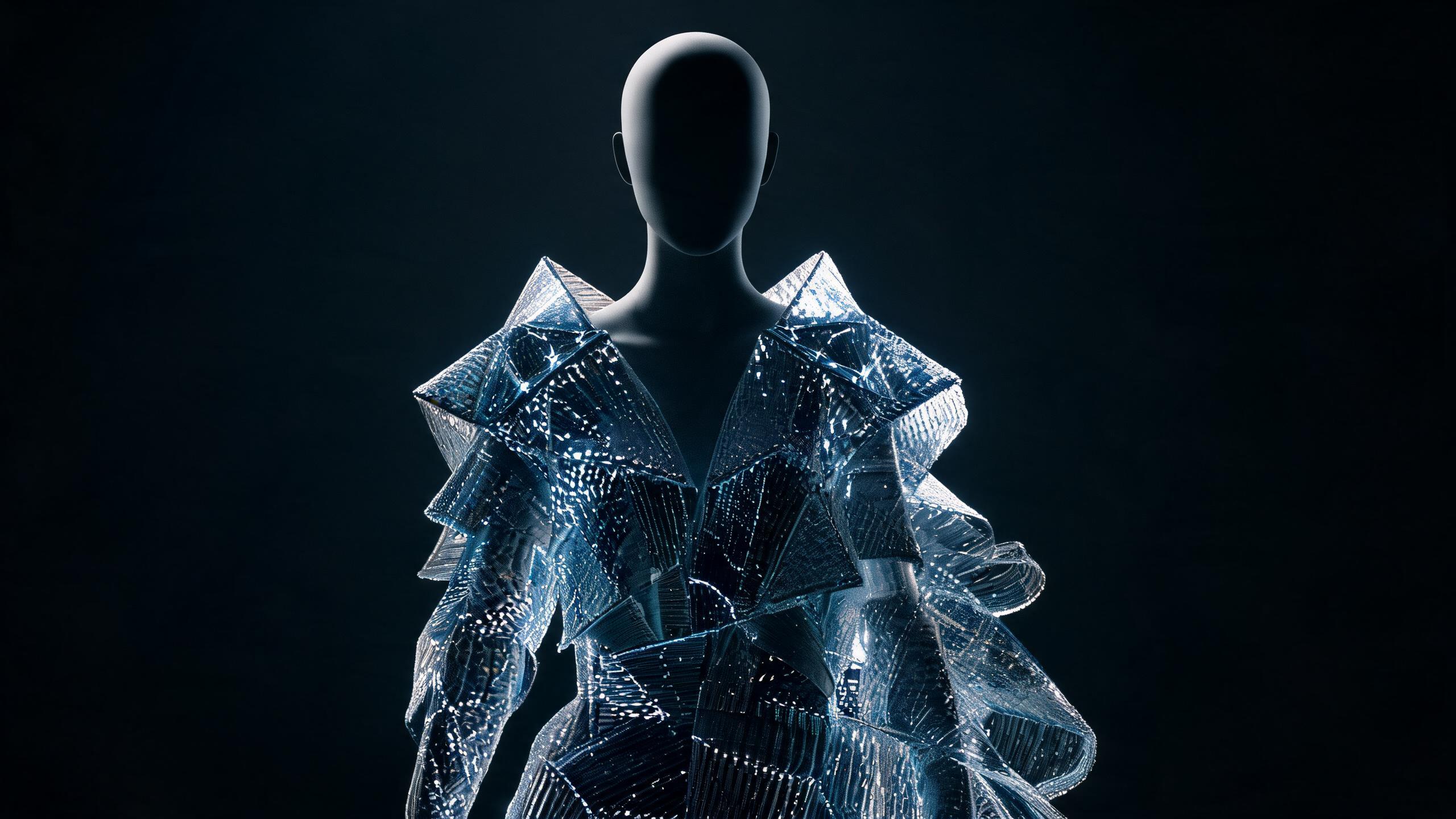
How AI is solving the biggest workwear struggles for tall women

A deep dive into AI driven fashion tips for tall women workwear and what it means for modern fashion.
Standard sizing is an engineering failure for the tall woman. For decades, the fashion industry has operated on a logic of "grading"—the process of scaling a base size up or down based on a set of mathematical averages. This model assumes that as a body gets taller, it expands uniformly. It does not. The result for professional women over 5'9" is a persistent struggle: hemlines that hover at awkward lengths, waistlines that sit too high, and sleeves that end inches before the wrist. This is not a lack of style; it is a lack of infrastructure.
The legacy retail model treats "Tall" as a niche sub-category rather than a structural requirement. In the context of workwear, where precision is the baseline for authority, these fit failures are amplified. A blazer that pulls at the shoulder or trousers that create an unintentional crop do more than just look off—they undermine the wearer's professional presence. We are currently seeing a shift where AI-driven fashion tips for tall women workwear are moving past simple search filters and into the realm of architectural style intelligence.
The Structural Incompatibility of Mass Market Workwear
The core problem is that the fashion industry uses a "one-size-fits-most" algorithm that ignores vertical complexity. Most brands design for a 5'5" fit model. When they create a "Tall" version, they typically add two inches to the hem and one inch to the sleeve. This ignores the reality of human anatomy. Tall women often have longer torsos, lower natural waistlines, or specific limb-to-body ratios that standard grading cannot capture.
In a professional setting, these discrepancies are fatal to an outfit. A shift dress designed for a 5'5" woman becomes a micro-mini on a 6'0" woman. A double-breasted blazer's buttons land at the ribcage instead of the waist. This is the truncated silhouette problem. It forces tall women into a defensive mode of dressing—choosing clothes because they "fit well enough" rather than because they align with their personal taste.
The industry's reliance on "Tall" sections is a Band-Aid. These sections are often relegated to online-only inventories, featuring a fraction of the core collection's styles. The message is clear: if you are outside the standard deviation, your style options are a secondary concern. This is where the old model of commerce breaks. It cannot handle the data density required to dress a diverse range of heights with professional precision.
Why Legacy Recommendation Engines Fail Tall Professionals
Most "personalization" in fashion is a lie. When a website suggests a pair of trousers because you looked at a similar pair, it isn't using intelligence; it is using basic pattern matching. These systems do not understand the three-dimensional reality of your body. They see a "Tall" tag in the metadata and serve you everything with that tag, regardless of whether the proportions actually work for your specific frame.
This is the Metadata Mirage. A pair of "Extra Long" trousers might have a 36-inch inseam but a rise that is too short for a long-waisted woman. A "Tall" blazer might have the length but lacks the shoulder breadth required for a larger frame. Legacy systems cannot differentiate between these nuances. They lack the style model necessary to understand how fabric interacts with height.
Furthermore, these engines are built on trend-chasing. They prioritize what is "popular" or "trending" over what is mathematically compatible with the user. For a tall professional, a trend like "oversized tailoring" can easily transition from "chic" to "ill-fitting" if the proportions aren't calculated correctly. The industry needs a move away from keyword-based search and toward vector-based style intelligence, where AI understands the nuances between a true tall fit and generic oversizing.
Engineering the Solution: AI Driven Fashion Tips for Tall Women Workwear
Solving the tall workwear crisis requires a fundamental rebuild of how we match garments to bodies. This isn't about better filters; it's about Personal Style Models. An AI-native system doesn't just look at your height; it builds a dynamic profile of your proportions, your aesthetic preferences, and the specific requirements of your professional environment.
1. Proportional Mapping Over Size Selection
The first step in utilizing AI driven fashion tips for tall women workwear is to stop thinking in sizes and start thinking in proportions. Modern AI systems can analyze garment construction data—the specific measurements of the rise, the shoulder-to-waist ratio, and the sleeve pitch—and compare them against your unique model.
For example, if you have a long torso, the AI will deprioritize standard "Tall" jumpsuits that don't offer an elongated rise. Instead, it might suggest high-waisted wide-leg trousers paired with a cropped blazer to create a balanced vertical line. This is data-driven styling. It moves the conversation from "Does this come in Tall?" to "Does this garment's architecture support my frame?"
2. The Power of Monochromatic Verticality
One of the most effective AI-driven strategies for tall workwear is the optimization of the monochromatic column. While traditional advice suggests breaking up a tall frame to "reduce" height, AI intelligence suggests the opposite: lean into it. A single-color suit or a tonal knit-and-trouser combination creates an unbroken vertical line that projects authority and cohesion.
AI models can analyze the "weight" and "drape" of different fabrics to ensure a monochromatic look doesn't appear flat. It might suggest a charcoal wool trouser paired with a slate silk blouse. The difference in texture provides depth, while the consistent hue maintains the structural integrity of the silhouette.
3. Dynamic Taste Profiling for Professional Environments
Your style is not a static set of rules; it is a dynamic model that evolves. An AI stylist learns that while you may prefer structured blazers for board meetings, you opt for softer, elongated cardigans or knit blazers for "Power Casual" days. AI helps mature women and professionals refresh their look by adapting recommendations based on context and evolving preferences.
The AI looks at the "latent space" of your wardrobe—the gaps between what you own and what you need. For a tall woman, this often means finding the "perfect" mid-layer. Most mid-layers are too short, creating a visual break at the widest part of the hip. AI intelligence identifies garments with a "long-line" cut that maintains the professional silhouette without the "shrunken" look of standard retail offerings.
The Framework: How to Build Your Tall Workwear System
To move beyond the limitations of standard retail, you must treat your wardrobe as an infrastructure project. Here is how to apply AI-driven logic to your daily workwear selection.
Identify Your "Vertical Anchor"
Every tall professional needs a vertical anchor—a piece that defines the long line of the body. Usually, this is a high-quality pair of trousers with a minimum 34-36" inseam or a midi-length skirt that actually hits mid-calf rather than the knee. Once the AI identifies your anchor, every other recommendation is built to complement that specific geometry.
Optimize the Blazer Architecture
For tall women, the blazer is the most difficult piece to master. The solution is to look for "Longline" or "Boyfriend" cuts that are intentionally designed with extra length. However, the AI distinguishes between "oversized" (which can look sloppy) and "extended" (which is tailored for length). Look for blazers where the vent starts at the lower back, not the mid-back, to ensure the garment moves with you.
Footwear as a Structural Component
The conversation around tall women and heels is outdated. AI-driven fashion tips for tall women workwear focus on the toe shape and vamp height rather than heel height. A pointed-toe loafer or a sleek boot with a low vamp extends the leg line, even in flats. The AI model understands that the goal isn't to be shorter; it's to ensure the footwear doesn't "cut off" the momentum of the outfit.
Why Fashion Needs AI Infrastructure, Not AI Features
The fashion industry loves "features"—a chatbot here, a virtual try-on there. But features don't solve the structural problem of dressing a 6'1" lawyer who needs a suit that doesn't look like a costume. This requires infrastructure.
An AI-native fashion system rebuilds the relationship between data and the user. It treats your "Tall" requirement not as a filter, but as a core parameter of your style model. It understands that your height changes how light hits fabric, how a coat moves when you walk, and how a collar should sit against your neck. Just as AI-driven design is transforming high fashion through digital draping and precision, the same intelligence can be applied to workwear that actually fits your frame.
Most fashion apps recommend what's popular. We recommend what's yours. The goal of AI in this space is to remove the "friction of fit" entirely. When the system understands your proportions perfectly, the "Tall" struggle disappears. You are no longer searching for clothes that are "long enough"; you are selecting pieces that reflect your taste, knowing the technical compatibility is already handled.
The End of the "Tall Section"
The future of fashion commerce has no "Tall" section. In a world of AI-driven intelligence, every section is your section. The system filters the entire world of inventory through the lens of your personal style model. It ignores the labels and looks at the vectors. It sees a dress that is marketed as "Maxi" for a standard size and recognizes it as the perfect "Midi" for your 5'11" frame.
This is the shift from reactive shopping to proactive style engineering. You are no longer at the mercy of a buyer's decision to stock a certain number of "Tall" SKUs. You are leveraging a system that understands the physics of fashion.
Data-driven style intelligence is the only way to close the gap between the clothes that exist and the clothes that actually work for tall women. It turns the "struggle" of height into a calculated advantage. When your clothes fit your frame with mathematical precision, your style is no longer a compromise. It is a statement of intent.
AlvinsClub uses AI to build your personal style model. Every outfit recommendation learns from you, ensuring that "Tall" is never an afterthought, but a core component of your professional identity. Try AlvinsClub →
Related Articles
- The Future of Office Style: AI Stylists vs. Traditional Personal Styling
- Solving the Style Slump: How AI Helps Mature Women Refresh Their Look
- Digital Draping: The Rise of AI-Driven Design in High Fashion
- Beyond the Algorithm: The Rise of AI Fashion Advisors for Older Women in 2026
- How to build a professional work wardrobe with an AI style assistant