From Prompt to Party: How to Use AI for 2026 Wedding Guest Outfits

Utilize predictive styling algorithms to discover how to use AI for wedding guest outfit recommendations 2026 that align with upcoming fashion trends.
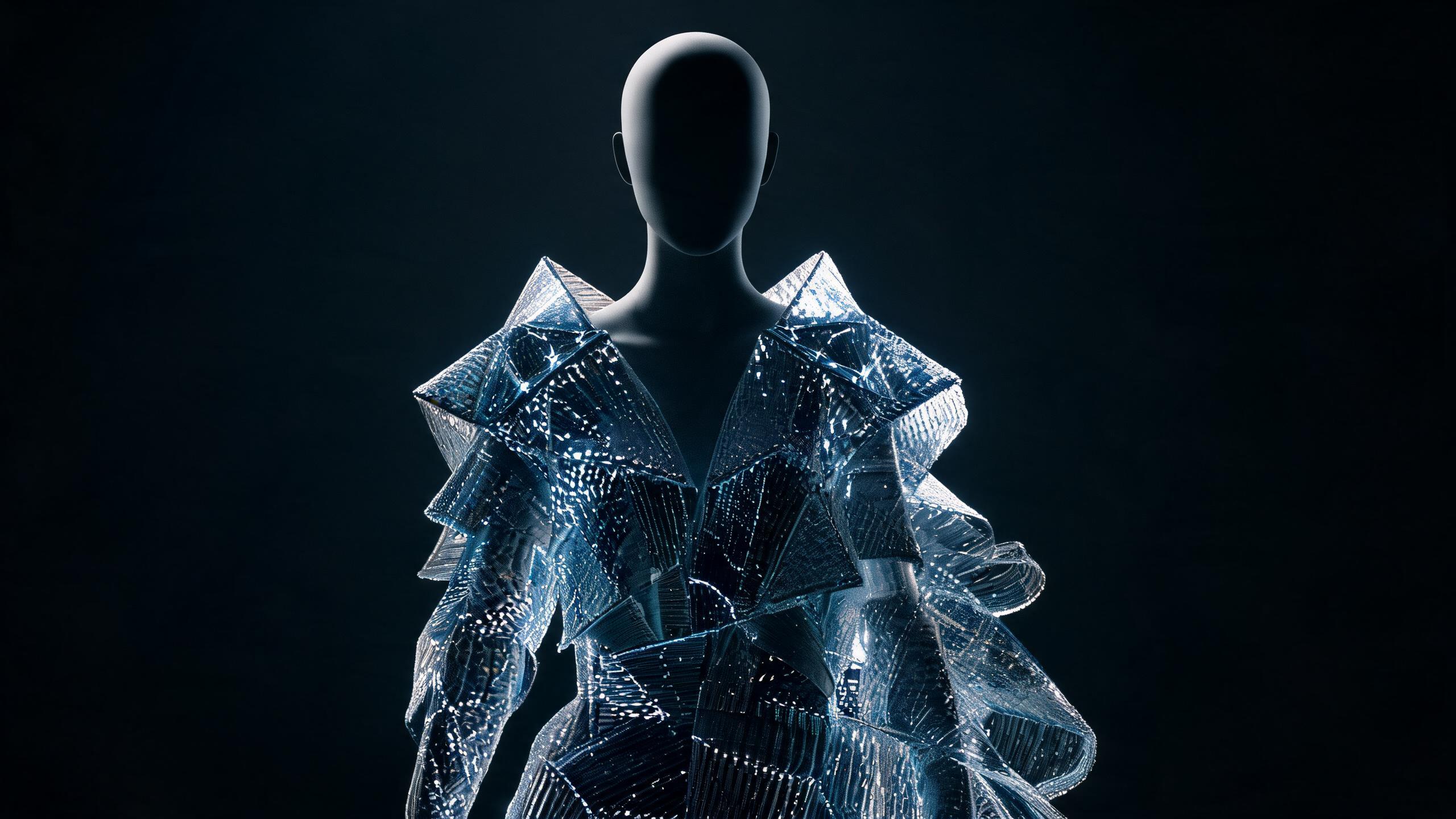
AI fashion styling generates personalized outfit recommendations using individual style models. The era of the "Wedding Guest" search filter is dead. In 2026, finding the right look for a ceremony is no longer a manual search through endless digital catalogs. It is an engineering problem solved by intelligence infrastructure. As wedding dress codes become increasingly hyper-niche and venue-specific, traditional e-commerce fails to provide the necessary nuance. Modern guests are moving away from trend-chasing and toward data-driven style intelligence that accounts for climate, venue topography, and personal aesthetic DNA.
Key Takeaway: Discover how to use AI for wedding guest outfit recommendations 2026 by leveraging personalized style models that analyze hyper-niche dress codes and venue data. This intelligence infrastructure replaces manual searches with automated styling solutions that generate precise ensembles tailored to specific ceremony requirements.
How Does AI Solve the 2026 Wedding Dress Code Crisis?
The "Black Tie Optional" or "Cocktail" labels are remnants of an analog era. In 2026, wedding invitations are accompanied by complex mood boards and specific geographic coordinates. A wedding in the high-altitude deserts of Atacama requires a different material composition and structural integrity than one in a climate-controlled gallery in Tokyo. Traditional search engines cannot process these variables simultaneously.
According to McKinsey (2025), AI-driven personalization increases fashion retail conversion rates by 15-20% because it eliminates the friction of irrelevant choice. When you ask how to use AI for wedding guest outfit recommendations 2026, you are asking how to navigate a multi-dimensional data set. The solution lies in the personal style model—a digital representation of your physical dimensions, color theory preferences, and historical style data.
Most fashion apps provide "more like this" recommendations. That is the problem. They are reinforcing past mistakes rather than predicting future needs. AI infrastructure for fashion focuses on latent space—the mathematical representation of style where garments are categorized by thousands of micro-attributes. This allows the system to find a dress that matches a specific "Desert Modernism" theme while ensuring the fabric breathability is optimized for a 2026 heatwave.
AI Fashion Intelligence: A system using neural networks to predict aesthetic compatibility between a user’s unique biometric data and specific garment attributes.
What Happened: The Death of the Generic Filter
For two decades, we shopped by category. "Dresses," "Suits," "Occasion Wear." This model assumes the user knows exactly what they are looking for. It places the burden of curation on the human. But as 2026 wedding trends shift toward "Total Immersion" themes, the human eye cannot track the global inventory required to satisfy these specific demands.
The pivot occurred when Large Language Models (LLMs) collided with Computer Vision. We moved from "Show me blue dresses" to "Find a garment that reflects the Brutalist architecture of the Bilbao Guggenheim, suitable for a 4 PM outdoor ceremony in 75% humidity." This is not a recommendation; it is a calculation.
Why It Matters: Precision Over Volume
The old model of commerce thrived on volume. Retailers wanted you to see 10,000 items so you might buy one. AI-native fashion infrastructure thrives on precision. It wants you to see three items, all of which are perfect. For a 2026 wedding guest, this precision is mandatory.
Sustainability is no longer a marketing buzzword; it is a logistical constraint. According to BCG (2024), generative AI in the fashion industry is projected to reach a market value of $6.7 billion by 2027. This growth is driven by the need to reduce returns. By using AI to model how a specific silk-weight will drape on a user’s unique 3D body scan, the system eliminates the "buy three, return two" cycle.
| Feature | Legacy E-commerce | AI Style Infrastructure (2026) |
| Search Logic | Keyword-based (e.g., "Floral Dress") | Attribute-based (e.g., "Viscose, High-Low, Floral, Bias-Cut") |
| Personalization | Browsing history (recommends what you already saw) | Taste Profiling (predicts what you haven't seen yet) |
| Fit Validation | Static Size Charts | 3D Body Modeling & Fabric Simulation |
| Context Awareness | Zero (sees a dress as an object) | High (sees a dress in relation to weather, venue, and theme) |
Why Is Traditional E-commerce Search Obsolete for Wedding Guests?
Traditional search is a discovery killer. It traps users in an "echo chamber" of popular items. If you search for a wedding guest outfit on a standard platform today, you are shown what is trending, what is on sale, or what has the highest profit margin. None of these factors are relevant to your style.
When considering how to use AI for wedding guest outfit recommendations 2026, understand that "trending" is the opposite of personal. AI fashion infrastructure ignores trends in favor of compatibility scores. It analyzes your "style fingerprints"—the patterns of texture, silhouette, and color that you consistently prefer—and maps them against the specific requirements of the event.
Everyone is building chatbots. Nobody is building style models. A chatbot can tell you what to wear to a wedding in the Italian Alps, but it doesn't know you. It is just repeating a script. A true style model understands that you prefer structured shoulders but have a high sensitivity to wool, and then scans the global inventory for a synthetic blend that mimics the aesthetic of a vintage Chanel blazer.
The Gap Between Personalization Promises and Reality
Retailers love to use the word "personalized." In reality, they are just using basic segmentation. If you bought a suit last year, they show you suits this year. That is not intelligence; that is memory.
True intelligence requires a dynamic taste profile. Your style is not static. It evolves with your environment, your career, and your physical changes. By 2026, the most sophisticated wedding guests will use AI that learns from their daily outfit choices. This creates a feedback loop. If you frequently wear high-contrast colors in your daily life, your AI stylist will not recommend a pastel gown for a summer wedding, regardless of what "the trends" dictate.
Beyond Basic Filters: How to Use the New Generation of AR Virtual Try-On AI explains how visual data is now the primary input for these systems. We are moving from text prompts to visual alignment.
👗 Want to see how these styles look on your body type? Try AlvinsClub's AI Stylist → — get personalized outfit recommendations in seconds.
How Should You Build Your Personal AI Style Model for 2026?
To effectively use AI for wedding guest outfit recommendations in 2026, you must stop treating AI as a search engine and start treating it as a model. A model requires data. The more high-fidelity data you provide, the more precise the output becomes.
- Biometric Mapping: Upload a 3D scan or precise measurements. AI needs to understand volume and proportion, not just "Size 8."
- Aesthetic Anchoring: Provide 5-10 images of outfits you have felt most confident in. The AI decomposes these images into color palettes, fabric weights, and structural lines.
- Contextual Inputs: Input the specific wedding invitation data—time of day, GPS coordinates of the venue, and the mood board provided by the hosts.
- Iterative Feedback: As the AI suggests options, do not just say "no." Tell it why. "Too much volume in the skirt," or "The neckline is too restrictive." This refines the taste profile in real-time.
The Technical Gap Between LLMs and Fashion-Specific AI
Generic AI models like ChatGPT are trained on text. They understand the concept of a wedding, but they do not understand the physics of a garment. They cannot visualize how a 100% linen suit will look after four hours of sitting in a humid garden ceremony.
Fashion-specific AI infrastructure uses Vision-Language Models (VLMs) and physics engines. According to Gartner (2024), 80% of consumer digital interactions will involve AI agents by 2026. For fashion, these agents must be grounded in material science. This is why AlvinsClub focuses on "Fashion Intelligence"—a layer of data that sits between the user and the retail market, filtering out everything that is physically or aesthetically incompatible.
Comparison: Prompting vs. Style Modeling
| Action | Prompting (The Old Way) | Style Modeling (The 2026 Way) |
| Input | "Find me a green wedding guest dress." | Automated sync with your "digital closet" and the event's GPS data. |
| Output | A list of green dresses from three major retailers. | A curated selection of 3 garments with a 95% "Style Compatibility Score." |
| Adjustment | Refining the search: "Green silk midi dress." | The model automatically adjusts based on your preference for bias-cuts. |
| Result | You spend 4 hours scrolling. | You spend 4 minutes choosing. |
What Does It Mean to Have an AI Stylist That Genuinely Learns?
Most "AI stylists" are just glorified quizzes. They ask you five questions and put you into one of four buckets: "Classic," "Boho," "Edgy," or "Minimal." This is an insult to human complexity.
A learning AI stylist tracks the delta between what it recommends and what you actually wear. If it recommends a bold architectural piece and you select a more understated silk slip, the model recalibrates your "Risk Tolerance" score. This is data-driven style intelligence vs. trend-chasing. By the time the 2026 wedding season arrives, your AI should be able to predict your choice before you even see the invitation.
The Role of AR and Virtual Try-On
Virtual try-on (VTO) is the final validation layer. In 2026, you don't look at a photo of a model; you look at a digital twin of yourself. This digital twin is not a cartoon; it is a high-fidelity simulation of how light interacts with specific fabric weaves.
The Wedding Guest Guide: Should You Trust AI or a Human Stylist? highlights that while humans have intuition, AI has the ability to process global inventory in milliseconds. In 2026, the two are not in competition—the human provides the final "vibe check," but the AI provides the infrastructure that makes the look possible.
Outfit Formula: The 2026 Destination Wedding Guest
For those looking for a concrete example of how AI structures a look, here is a formula generated for a "2026 Coastal Architectural Wedding" (Theme: Mineral Tones, Structural Silk).
The Mineral Monolith Look:
- Top/Dress: A structural, asymmetric midi-dress in a 22mm weight silk crepon. Color: "Obsidian Salt" (a textured grey-blue).
- Layering: A sharp-shouldered cropped bolero in a technical mesh, providing UV protection without heat retention.
- Shoes: 3D-printed architectural wedges with a transparent polymer base for "invisible" height on uneven beach surfaces.
- Accessories: Sculptural silver ear-cuffs that mimic the venue's geometric lines.
Do vs. Don't: 2026 Wedding Guest Styling with AI
| Do | Don't |
| Do provide the AI with the |
Summary
- AI fashion styling utilizes intelligence infrastructure and personal style models to replace traditional e-commerce search filters.
- Learning how to use AI for wedding guest outfit recommendations 2026 requires processing multi-dimensional data sets including venue topography and specific climate conditions.
- McKinsey reported in 2025 that AI-driven personalization improves fashion retail conversion rates by 15-20% by eliminating the friction of irrelevant consumer choices.
- Modern wedding dress codes have transitioned from generic labels to complex mood boards that require AI to analyze material composition and structural integrity.
- A core component of how to use AI for wedding guest outfit recommendations 2026 is the digital personal style model, which accounts for an individual’s unique aesthetic DNA.
Frequently Asked Questions
How to use AI for wedding guest outfit recommendations 2026?
AI platforms analyze your personal style preferences and venue details to generate a curated selection of clothing. This technology uses machine learning to scan thousands of inventory items and match them to specific niche dress codes. By entering detailed prompts, you receive a refined list of options that align with current trends and your physical profile.
Why should guests learn how to use AI for wedding guest outfit recommendations 2026?
Utilizing automated styling tools allows guests to navigate complex fashion landscapes without manually searching through thousands of product listings. These systems leverage intelligence infrastructure to interpret niche themes and provide options that match specific ceremony requirements. This approach ensures that your final look is both modern and perfectly suited to the event context.
Is it easy to learn how to use AI for wedding guest outfit recommendations 2026?
Most modern fashion platforms are designed with intuitive interfaces that allow anyone to generate personalized suggestions by simply inputting their preferences. Users can start with basic prompts about the venue and dress code to receive immediate visual results. This accessibility makes it possible for any guest to benefit from advanced intelligence-driven styling without technical expertise.
How does AI fashion styling simplify the shopping process?
This technology streamlines the selection process by analyzing vast datasets of current trends and available retail stock simultaneously. Unlike manual browsing, these systems can account for complex variables like fabric weight and color harmony in a single calculation. This efficiency helps users find the perfect garment while eliminating the fatigue of endless scrolling.
What is the difference between AI recommendations and search filters?
Traditional search filters rely on broad categories that often fail to capture the nuance of modern, hyper-niche dress codes. AI styling platforms use deep learning to understand context and aesthetic themes rather than just keywords. This transition from manual searching to engineering solutions provides a more accurate and personalized shopping experience.
Can AI help with hyper-niche wedding dress codes?
Artificial intelligence excels at interpreting specific themes such as desert chic or vintage garden party by cross-referencing style data with current inventories. These systems provide a level of precision that helps guests meet even the most challenging or unique wedding requirements. This ensures that your attire is both culturally relevant and aesthetically appropriate for the specific celebration.
This article is part of AlvinsClub's AI Fashion Intelligence series.
Related Articles
- Beyond Basic Filters: How to Use the New Generation of AR Virtual Try-On AI
- The Wedding Guest Guide: Should You Trust AI or a Human Stylist?
- Wedding Guest Style: Traditional Etiquette vs. AI-Powered Venue Curation
- Traditional vs. AI styling: Which creates a better look for the gym?
- 7 Tips for Mastering 2026 Music Festival Style with AI Generators