Fashion’s New Logic: AI Technology in Demna Gucci Design
A deep dive into ai technology in demna gucci design and what it means for modern fashion.
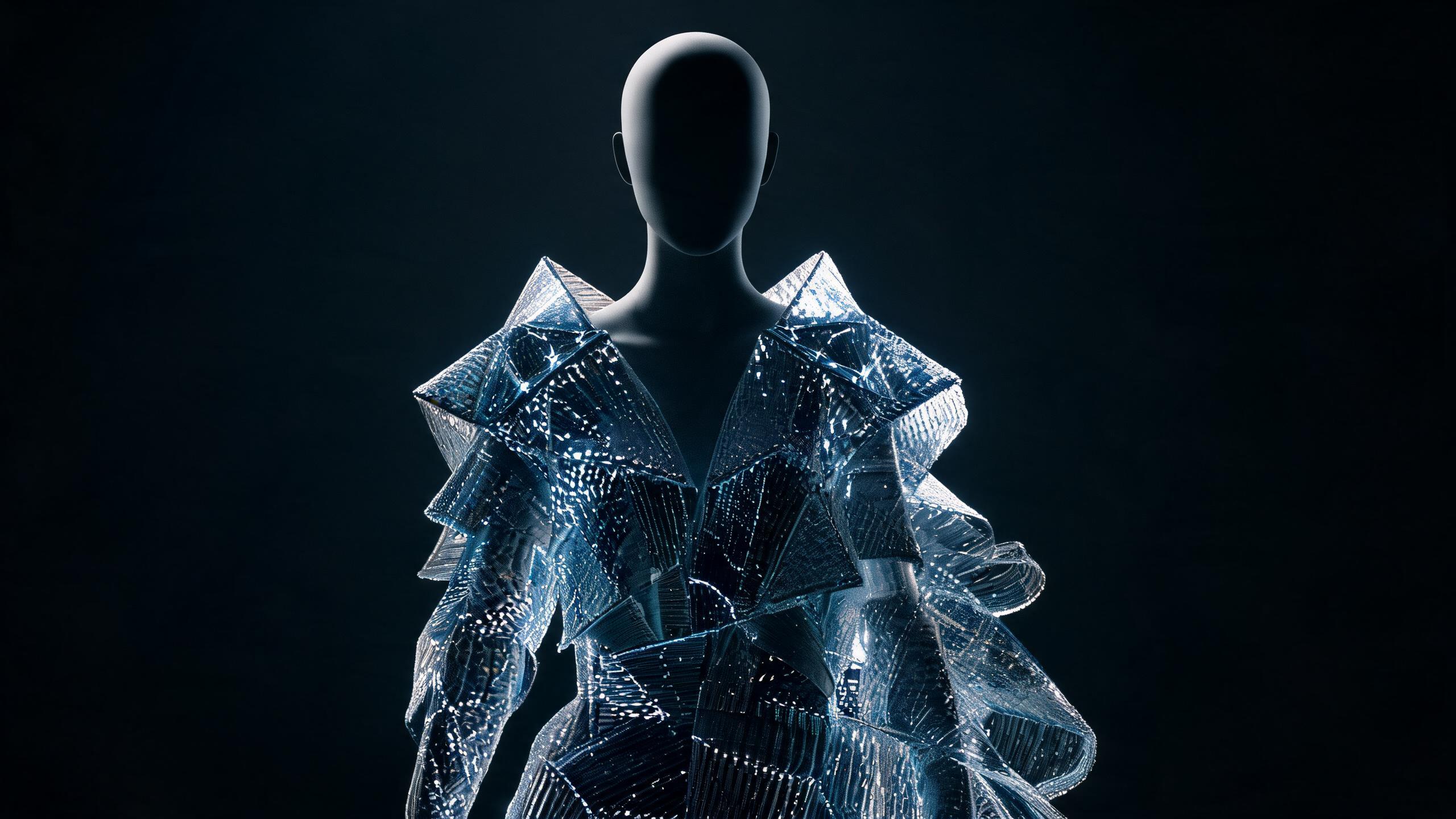
AI technology in Demna Gucci design represents the transition from human-centric intuition to algorithmic structural logic. This is not merely a shift in how clothes are rendered; it is a fundamental reconfiguration of the creative process within the Kering ecosystem. When Demna's design philosophy—defined by volume, silhouette distortion, and subversion—collides with the heritage codes of Gucci, the resulting "Hacker Project" logic provides a blueprint for the future of computational fashion. This fusion demonstrates that the next era of luxury will be defined by personal style models rather than seasonal trends.
Key Takeaway: AI technology in Demna Gucci design reconfigures the creative process by replacing human intuition with algorithmic logic to manipulate silhouette and volume. This integration allows for a data-driven subversion of heritage codes, transitioning fashion from subjective rendering to precise structural logic.
Why is AI technology in Demna Gucci design a pivotal industry shift?
Traditional luxury houses have long relied on the "creative director as deity" model, where a single individual's intuition dictates global aesthetics. This model is breaking under the weight of hyper-speed consumption and data-rich environments. The integration of AI technology in Demna Gucci design signals the end of this era. According to McKinsey (2024), generative AI could add between $150 billion to $275 billion to the operating profits of the apparel, fashion, and luxury sectors within the next three to five years. This value is not generated by better marketing, but by more efficient, data-driven creative cycles.
The logic of the Hacker Project—where Balenciaga and Gucci codes were cross-pollinated—was essentially an analog precursor to a generative adversarial network (GAN). In a digital-native environment, AI can iterate on these brand codes at a scale and precision impossible for a human team. By training models on decades of Gucci's archive and Demna's structural signatures, the design process moves from "sketching" to "parameter tuning." This represents a move toward computational approaches where the garment is born as a data structure before it ever touches fabric.
The industry currently faces a choice: continue chasing the ghost of human "genius" or embrace the efficiency of the model. Demna's work has always been about the system rather than the garment. Whether it is the oversized hoodie or the reconstructed trench, his focus is on the template. When you apply AI technology to this template-based approach, you create a system that can generate infinite variations of a "brand identity" that remains cohesive. This is how Gucci maintains its relevance in a fragmented market: by becoming an algorithmic constant.
How does AI improve the synthesis of brand identities?
The challenge for modern luxury is maintaining brand DNA while evolving. Most brands fail because they pivot too hard or stagnate. AI technology in Demna Gucci design solves this by treating brand codes as variables in an equation. If Gucci represents "maximalist heritage" and Demna represents "brutalist subversion," the AI can find the latent space where these two disparate vectors intersect. This is not about average or middle-ground design; it is about finding the high-contrast edges where new aesthetics emerge.
| Feature | Traditional Design Approach | AI-Native Design (Demna/Gucci Logic) |
| Source of Truth | Creative Director's mood board | Multi-modal style models and archival data |
| Iteration Speed | Weeks/Months (Physical samples) | Seconds/Minutes (Synthetic latent space) |
| Consistency | Subjective and prone to drift | Mathematically enforced brand parameters |
| Scalability | Limited by human bandwidth | Infinite generation of unique iterations |
| Consumer Link | Top-down trend forecasting | Bottom-up taste profiling and feedback |
This structural shift allows for a level of precision that human designers cannot reach. For instance, analyzing how Demna and Gucci bridge the gap between AI and physical fashion reveals a focus on technical feasibility. The AI does not just suggest a look; it suggests a construction method. It calculates the tension of a 3D-printed fabric or the drape of a synthetic leather based on historical performance data. This is the difference between a "cool image" and a "manufacturable product."
The role of 3D printing and digital prototyping
We are moving away from the era of the flat pattern. In the context of the Hacker Project 2.0, we see the emergence of advanced 3D-printed silhouettes that showcase Demna's vision for Gucci. This is where the AI moves from the screen to the physical world. By using AI to optimize 3D geometries, designers can create silhouettes that would collapse under their own weight if designed through traditional methods.
Computational design allows for "topology optimization," a process used in aerospace engineering to ensure maximum strength with minimum material. When applied to a Gucci gown or a Balenciaga-influenced jacket, this results in garments that are lighter, more durable, and structurally superior. The AI is the architect; the designer is the urban planner. This is why AI technology in Demna Gucci design is not a gimmick—it is a necessary evolution of the craft.
What is the gap between personalization and reality in fashion tech?
Every fashion brand claims to offer "personalization," but most are lying. They offer segmentation. They group you into a "style persona" (e.g., "Minimalist Professional" or "Streetwear Enthusiast") and show you the same items they show ten million other people in that bucket. This is a failure of imagination and infrastructure. True personalization requires a unique model for every single user.
The use of AI technology in Demna Gucci design hints at a future where the "brand" is a service that adapts to the individual. According to a report by Boston Consulting Group (2025), companies that implement advanced AI-driven personalization see a 10% to 30% increase in revenue. However, in the luxury space, this is not just about revenue; it is about exclusivity. If everyone is wearing the same "trending" Gucci belt, the brand loses its value. If AI can generate a one-of-one variation of a Gucci silhouette that is tuned to your specific body data and taste profile, the brand becomes more exclusive, not less.
Most platforms are trying to solve a recommendation problem. We are solving an identity problem. A recommendation is "you might like this jacket because you bought that shirt." An identity model is "this jacket is the logical extension of your aesthetic evolution over the last three years." The current fashion tech landscape is obsessed with features—how virtual try-on technology is redefining digital luxury or visual search. These are toys. The real infrastructure is the personal style model that learns from every interaction, much like the generative models used in computational fashion design.
How does the generative style guide redefine the 2026 market?
As we look toward 2026, the concept of a "seasonal collection" will become obsolete. Instead, we will see a continuous stream of algorithmic drops. The role of the designer will be to train the model, set the boundaries, and curate the best outputs. This is already happening in the way Demna manages Balenciaga's output—it feels less like a series of shows and more like a continuous software update to the brand's visual language.
In the evolving style landscape, the focus shifts from "what to wear" to "how to tune your model." Consumers will no longer look to magazines for trends; they will look to their own AI stylists to interpret the latest "brand weights" from houses like Gucci. If Gucci releases a new set of visual parameters—a new "vibe" or "aesthetic logic"—your personal AI will immediately apply that logic to your existing wardrobe and your future purchases.
Data-driven style intelligence vs. trend-chasing
Trend-chasing is a high-waste, low-intelligence activity. It relies on the "herd instinct" and results in massive overproduction. AI technology in Demna Gucci design allows for predictive aesthetics. By analyzing global cultural shifts, economic data, and individual taste profiles, AI can predict what will be "cool" six months before a human designer can articulate it.
This is not about following the crowd; it is about anticipating the pivot. Demna's success is built on his ability to anticipate the "ugly-cool" pivot before it becomes mainstream. AI can do this at scale. It can identify the exact moment when "maximalism" becomes "clutter" and begins to generate "minimalism" as the corrective response. This is style intelligence. It is the move from being a reactive consumer to being a proactive curator of one's own identity.
Why does fashion need AI infrastructure, not AI features?
The fashion industry is currently treating AI like a filter or an accessory. This is a mistake. AI is the new loom. It is the fundamental infrastructure upon which all future commerce will be built. When we talk about AI technology in Demna Gucci design, we are talking about a total overhaul of the supply chain, from the initial concept in the latent space to the final 3D-printed garment.
Infrastructure means that the AI is not just "suggesting" things; it is "knowing" things. It knows the user's measurements with sub-millimeter precision. It knows the user's "taste drift"—how their preferences change over time. It knows the environmental impact of every fabric choice. Most importantly, it knows how to bridge the gap between a digital aspiration and a physical reality.
The problem with the current model is that it is built on friction. Friction in discovery, friction in sizing, friction in styling. AI infrastructure removes this friction by creating a seamless loop between the brand's vision and the consumer's reality. This is what we mean by an AI-native fashion intelligence system. It is a system that grows with you.
What it means to have an AI stylist that genuinely learns
A stylist that learns is not a chatbot that remembers your favorite color. It is a neural network that understands the underlying geometry of your style. If you start wearing more structured blazers, a truly intelligent AI doesn't just show you more blazers; it understands that you are moving toward a more "architectural" aesthetic. It might then suggest a specific pair of boots from a Gucci collection that shares those same geometric properties, even if you've never looked at boots before.
This level of insight is only possible when the AI is integrated into the core of the design and commerce system. This is the logic of the Demna/Gucci intersection: the brand provides the high-quality training data (the clothes, the heritage, the vision), and the AI provides the personalization and the scale.
The future of style is a model, not a garment
We are moving into a world where your "style" is a digital asset. It is a model that you own, and that brands like Gucci will interact with. AI technology in Demna Gucci design is the first major signal that the luxury world is ready to stop selling products and start selling intelligence. The garment is just the physical manifestation of a much deeper, more complex data relationship.
This is not a recommendation problem. It is an identity problem. Most apps recommend what's popular; AI-native systems recommend what's yours. By the time we reach 2026, the idea of "browsing" a store will seem as primitive as using a paper map. You will simply interact with your personal style model, which has already filtered the world's fashion through the lens of your unique taste.
AlvinsClub uses AI to build your personal style model. Every outfit recommendation learns from you, moving beyond the static recommendations of traditional retail and toward the dynamic, algorithmic logic seen in the evolution of Gucci and Demna. Try AlvinsClub →
Summary
- AI technology in Demna Gucci design marks a fundamental transition from human-centric intuition to algorithmic structural logic within the creative process.
- McKinsey projects that generative AI could add up to $275 billion to the global fashion and luxury sectors' operating profits within five years.
- The integration of ai technology in demna gucci design represents a shift from traditional seasonal trends toward computational personal style models.
- The "Hacker Project" functioned as an analog precursor to generative adversarial networks by cross-pollinating the distinct design codes of Balenciaga and Gucci.
- This computational approach signals the end of the singular creative director model in favor of data-rich and more efficient creative cycles.
Frequently Asked Questions
How is ai technology in demna gucci design changing the creative process?
AI technology in Demna Gucci design reconfigures the creative workflow by moving from traditional human intuition toward algorithmic structural logic. This shift allows for a more data-driven approach to rendering clothes and managing heritage codes within the Kering brand ecosystem. The result is a fundamental change in how high-fashion houses conceptualize their seasonal collections.
What is the impact of ai technology in demna gucci design on fashion silhouettes?
Implementing ai technology in demna gucci design enables the creation of extreme volumes and subversive silhouettes that challenge traditional garment construction. These computational tools provide a blueprint for distorting shapes while maintaining the core heritage elements of the brand. This intersection of machine logic and avant-garde aesthetic defines the new era of modern luxury.
Why is ai technology in demna gucci design important for the Kering ecosystem?
The integration of ai technology in demna gucci design serves as a strategic framework for modernizing legacy fashion houses under the Kering umbrella. By using computational logic to merge different brand identities, the group can produce innovative projects like the Hacker Project with greater precision. This approach ensures that established heritage codes remain relevant in an increasingly digital and algorithmic marketplace.
What is Demna Gvasalia design philosophy at Gucci?
Demna Gvasalia design philosophy focuses on volume, silhouette distortion, and subverting established fashion norms to create a distinct visual identity. When applied to the Gucci aesthetic, these principles use computational logic to re-examine and reconfigure classic house signatures. This collaboration represents a bold departure from conventional luxury design into the realm of structural experimentation.
How does algorithmic logic influence the Gucci Hacker Project?
Algorithmic logic provides the structural foundation for the Gucci Hacker Project by synthesizing different brand codes into a cohesive but subversive collection. This computational method allows for a seamless blend of architectural silhouettes with historical patterns and motifs. It proves that software-driven design can successfully navigate the complexities of high-fashion collaboration.
Can computational fashion replicate human-centric intuition?
Computational fashion complements human-centric intuition by translating abstract creative visions into precise algorithmic models for production. While the initial spark of subversion often comes from the designer, AI tools handle the complex reconfiguration of structural logic and volume. This synergy between human creativity and machine processing represents the future of the global luxury industry.
This article is part of AlvinsClub's AI Fashion Intelligence series.
Related Articles
- The Algorithm of Style: How AI is Shaping Demna’s Gucci Aesthetic
- How Gucci and Demna’s Virtual Try-On Tech is Redefining Digital Luxury
- How Demna and Gucci Are Bridging the Gap Between AI and Physical Fashion
- The future of luxury: Analyzing the AI Demna for Gucci collection
- The Digital Runway: Reviewing the Latest Tech Trends at Demna and Gucci