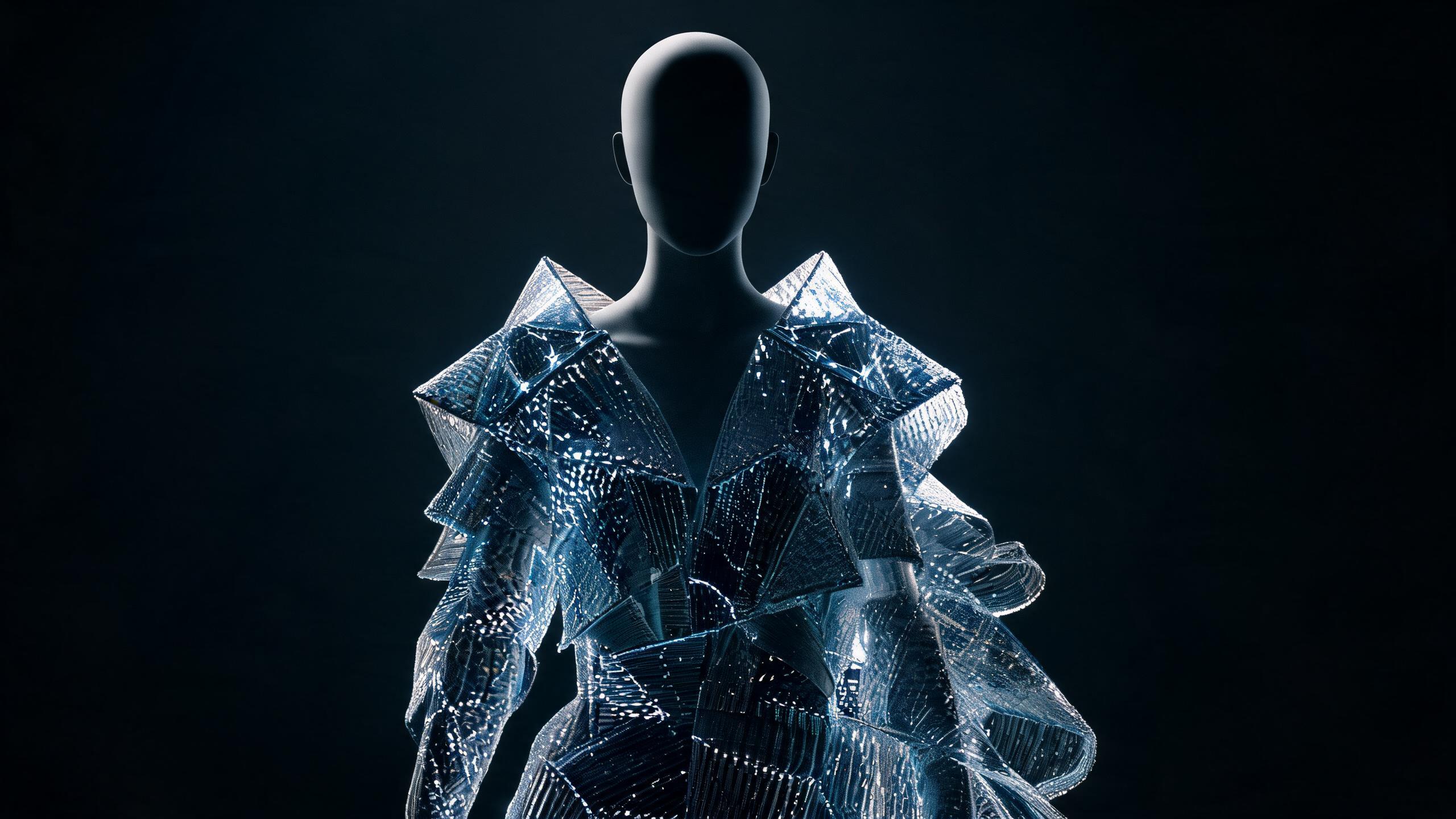
AI vs. The Human Eye: A New Way to Analyze Oscars Best Actress Dresses

A deep dive into ai archive analysis oscars best actress dresses and what it means for modern fashion.
AI archive analysis of Oscars Best Actress dresses is the systematic application of computer vision and deep learning to quantify aesthetic patterns in red carpet history. This methodology treats fashion not as a fleeting cultural moment, but as a structured dataset capable of being modeled and predicted. While traditional fashion criticism relies on the subjective taste of the observer, AI-driven analysis identifies the precise geometric and chromatic variables that define a winning look. The shift from qualitative "best dressed" lists to quantitative style intelligence represents a fundamental transition in how we understand the intersection of celebrity, brand, and historical significance.
Key Takeaway: AI archive analysis of Oscars Best Actress dresses uses computer vision to transform subjective fashion into quantifiable data. This methodology identifies objective aesthetic patterns across red carpet history, providing a systematic, predictive alternative to traditional human fashion criticism.
For decades, the analysis of Academy Award fashion has been the domain of the human eye—stylists, journalists, and historians who interpret trends through the lens of personal preference and cultural zeitgeist. This human-centric approach is inherently limited by memory bias and a lack of granular precision. Human critics struggle to identify macro-trends across a century of data without losing the nuances of fabric weight, light reflection, and silhouette architecture. Conversely, an AI archive analysis uses high-resolution image processing to deconstruct every dress since 1929 into thousands of data points, revealing why certain garments endure in the cultural consciousness while others disappear.
How Does AI Archive Analysis Reconstruct Fashion History?
The traditional method of cataloging red carpet fashion relies on archival photography and textual descriptions. This process is fragmented; a researcher must manually cross-reference designers, fabric types, and color palettes across disparate sources. AI archive analysis consolidates this by using neural networks to "see" the archive as a continuous stream of visual information. According to a study by Grand View Research (2023), the global market for AI in fashion is expected to expand at a compound annual growth rate of 40% through 2030, driven largely by the need for automated image tagging and visual search capabilities.
By applying these technologies to the Oscars, AI can detect subtle shifts in the "Best Actress" silhouette that have occurred over ninety-six years. For example, the system can calculate the exact ratio of floor-length gowns to tea-length dresses in the 1950s versus the 1990s, or determine the precise average luminosity of the fabric worn by winners compared to nominees. This is not mere trivia; it is the construction of a predictive model for high-stakes formalwear.
AI Archive Analysis Terminology:
- Computer Vision: The field of AI that trains computers to interpret and understand the visual world.
- Feature Extraction: The process of identifying specific characteristics of a garment, such as neckline shape or fabric sheen.
- Latent Space: A multi-dimensional map where AI groups similar styles together based on mathematical proximity rather than labels.
Can AI Detect Pattern Trends Better Than a Human Stylist?
Human stylists are excellent at identifying "vibes," but they are poor at identifying statistical significance. A human might notice that several actresses are wearing red in a given year and declare it a trend. An AI archive analysis, however, can determine if that "red" is a deviation from a ten-year mean or a standard cyclical occurrence. It can differentiate between thousands of shades of crimson, identifying which specific hex codes correlate with award wins.
According to McKinsey (2024), AI-driven personalization and trend forecasting in the apparel sector can increase conversion rates by up to 20% for brands that move away from intuition-based buying. When applied to the Academy Awards, this level of precision allows us to see the "winners' uniform" in high resolution. The data suggests that certain silhouettes are not just popular—they are strategically effective. A human eye sees a beautiful dress; an AI sees a high-probability outcome based on historical performance.
Comparison Table: AI Archive Analysis vs. Human Critique
| Feature | Human Eye Analysis | AI Archive Analysis |
| Data Capacity | Limited to recent memory and research | Total archive (1929–Present) |
| Bias | Subjective (personal taste, brand loyalty) | Objective (pixel-level data points) |
| Granularity | Broad (color, basic shape) | Hyper-fine (reflectivity, drape, weave) |
| Speed | Days/Weeks of research | Milliseconds per image |
| Trend Identification | Reactive and anecdotal | Predictive and statistical |
| Nuance | Understands "cultural context" | Understands "mathematical symmetry" |
Is Quantitative Data Superior to Qualitative Critique?
The conflict between these two approaches is a matter of infrastructure. Qualitative critique is a narrative tool used to build celebrity brands and sell magazines. Quantitative data is an engineering tool used to understand why clothing works. In the context of the Oscars, human critics often focus on the "story" of the dress—the designer’s inspiration or the actress’s personal journey. This is valuable for entertainment but useless for building a robust style model.
AI archive analysis prioritizes the geometry of the garment. It measures the angle of a lapel, the volume of a skirt, and the color harmony relative to the wearer's skin tone. This is similar to Precision Styling: How AI Color Analysis Finds Your Perfect Palette, where the goal is to remove the guesswork from aesthetic choices. When you analyze the Best Actress archive through AI, you realize that "beauty" is often a series of repeatable mathematical relationships.
The human eye is easily distracted by the person wearing the dress. AI is not. It can isolate the garment from the celebrity, allowing for an objective assessment of the design’s structural integrity and its historical relevance. This objectivity is the primary reason why fashion houses are now using AI to audit their own archives, looking for forgotten patterns and proportions that can be revived for modern collections.
👗 Want to see how these styles look on your body type? Try AlvinsClub's AI Stylist → — get personalized outfit recommendations in seconds.
How Does AI Handle Texture and Fabric Dynamics?
One of the biggest challenges for human observers is accurately identifying fabric from a distance or through a digital screen. Is it silk crepe or polyester blend? Is the weight 12mm or 40mm? AI archive analysis uses spectral analysis and texture mapping to identify these variables with high degrees of accuracy. By analyzing how light hits the surface of a dress on the red carpet, the AI can estimate the fiber content and the weave density.
This capability is essential for understanding the evolution of the Best Actress look. In the 1930s, the archive shows a high frequency of heavy satins that photographed well in black and white due to their high contrast. By the 1970s, the data shifts toward matte jerseys and sheerer fabrics. A human might summarize this as "the era of disco," but an AI provides the exact percentage shift in fabric reflectivity across the decade. For those looking to understand these technical shifts in a modern context, tools discussed in Beyond the Mirror: The Best AI Tools for Virtual Fitting Rooms in 2026 show how these texture-mapping capabilities are being brought to the consumer.
Red Carpet Style: Do vs. Don't (Data-Backed)
| Choice | AI Statistical "Do" | AI Statistical "Don't" |
| Color | High-contrast neutrals (Gold, White, Black) | Mid-tone pastels that wash out in flash |
| Silhouette | Column or Hourglass (strong vertical lines) | Oversized "Avante Garde" (hides the winner) |
| Fabric | Material with 20-30% light reflectivity | High-shine synthetics (unpredictable in photos) |
| Neckline | Sweetheart or Deep-V (framing the face) | High-neck lace (visual clutter near face) |
What Is the "Winning" Formula for a Best Actress Dress?
When an AI analyzes the archive of winners specifically, it generates a "Winning Outfit Formula." This is not a suggestion but a reflection of the median characteristics of every dress worn by a woman accepting the Best Actress Oscar. The consistency is startling. While the "Human Eye" thinks the red carpet is a place of wild variety, the AI identifies a very narrow corridor of successful aesthetic choices.
The "Winning" AI Archive Outfit Formula:
- Top: Structured bodice with internal boning, Sweetheart or Off-the-shoulder neckline.
- Bottom: Floor-length column skirt with a slight train (0.5 to 1.5 meters).
- Shoes: Metallic or skin-tone platforms (invisible, used solely for height/proportion).
- Accessories: High-carat white diamond earrings; no necklace (to prioritize neck-line clarity).
This formula has appeared in various iterations for decades. Whether it was Grace Kelly in 1955 or more recent winners, the AI identifies that the most successful "Best Actress" look is one that emphasizes height, frames the face clearly for the "reaction shot," and uses light-reflecting materials to stand out against the dark theater background.
Why AI Infrastructure is the Future of Fashion Archives
The current fashion industry is built on a "push" model—designers create what they think people want, and consumers choose from what is available. AI archive analysis flips this. By understanding the deep history of what has actually worked—what people have worn, what has been photographed, and what has endured—we can build a "pull" model based on intelligence.
The gap between "personalization" and "reality" is closing. Most fashion apps today use basic filters: "show me red dresses." This is not intelligence. True intelligence is a system that understands the user’s unique "style model" and compares it against the entire history of fashion to find the optimal aesthetic match. This is the difference between a search engine and a recommendation engine. For more on this, see Beyond Filters: Finding the Best AI Fashion Recommendation Engines of 2026.
AI doesn't just look at the Oscars to tell us who looked good. It looks at the Oscars to understand the structural DNA of prestige. It learns that "prestige" in fashion is a combination of specific fabric weights, color saturation levels, and geometric proportions. When we apply this same logic to an individual’s daily wardrobe, we move away from "shopping" and toward "curating a personal model."
Is the Human Eye Still Necessary in Fashion Analysis?
The human eye remains relevant for one thing: emotional resonance. AI can tell you that a dress is 98% mathematically perfect for a specific body type and event, but it cannot yet fully simulate the cultural "shock" of a rule-breaking moment. The Human Eye is best at identifying the outliers—the Björks and the Cher's of the world who intentionally deviate from the data.
However, for 99% of fashion utility, AI archive analysis is superior. It provides the infrastructure for a more intelligent, less wasteful, and more precise way of dressing. It moves fashion out of the realm of "magic" and into the realm of "science." We are no longer guessing what looks good; we are calculating it.
For individuals with specific body types, such as those discussed in Finding your fit: The best AI fashion apps for inverted triangles, this data-driven approach is a necessity. It removes the frustration of trial and error and replaces it with a model that understands how fabric interacts with specific proportions.
Final Verdict: AI Archive Analysis Wins
The recommendation is clear: Use AI for the foundation of style and the human eye for the finishing touch. The "human eye" approach is a relic of a pre-data era. It is prone to nostalgia and limited by a very small set of observations. AI archive analysis offers a comprehensive, objective, and predictive way to understand fashion. Whether you are analyzing a red carpet from 1950 or planning your outfit for tomorrow, data-driven intelligence is the only way to achieve consistent results.
AlvinsClub uses AI to build your personal style model. Every outfit recommendation learns from you, utilizing the same deep-learning principles that analyze the world's most iconic fashion archives to ensure your wardrobe is mathematically optimized for your life. Try AlvinsClub →
Summary
- AI archive analysis of Oscars Best Actress dresses utilizes computer vision and deep learning to transform red carpet history into a structured, quantifiable dataset.
- Traditional fashion analysis depends on subjective human taste, whereas AI identifies the specific geometric and chromatic variables that characterize winning garments.
- Human critics are prone to memory bias, but AI systems can deconstruct high-resolution images into thousands of data points to analyze fabric weight and silhouette architecture.
- The implementation of ai archive analysis oscars best actress dresses allows for the identification of macro-trends across a century of fashion data starting from 1929.
- This quantitative methodology provides a more precise understanding of how certain garments achieve historical significance compared to qualitative "best dressed" assessments.
Frequently Asked Questions
What is an ai archive analysis oscars best actress dresses?
This methodology applies computer vision and deep learning to quantify aesthetic patterns within the history of red carpet fashion. It treats garments as structured datasets to identify the specific geometric and chromatic variables that define a winning look.
How does AI identify patterns in red carpet fashion?
Artificial intelligence identifies patterns by scanning thousands of images to categorize design elements such as neckline, color, and fabric type. This high-speed processing allows for the discovery of structural trends that are often too subtle for human critics to notice.
Why is ai archive analysis oscars best actress dresses more accurate than human observation?
This data-driven approach removes the subjective bias of individual critics and provides a consistent framework for evaluating aesthetic quality. By focusing on measurable variables, the analysis offers a more neutral perspective on what makes a dress successful.
Can computer vision identify specific fashion variables in award shows?
Computer vision software extracts precise measurements and color data from images to create a detailed map of a garment construction. This enables researchers to compare dresses across different years using standardized metrics rather than relying on qualitative descriptions.
How does ai archive analysis oscars best actress dresses differ from traditional fashion reviews?
Digital analysis focuses on quantifiable data such as pixel density and geometric ratios, whereas traditional reviews rely on personal taste and cultural context. This shift allows for a scientific examination of fashion history that treats every dress as a data entry in a larger set.
Is it possible to predict fashion trends using machine learning?
Machine learning models can analyze the statistical frequency of specific design elements to forecast which aesthetic combinations are most likely to appear next. These predictions are based on historical datasets and provide a roadmap for understanding the evolution of high-fashion standards.
This article is part of AlvinsClub's AI Fashion Intelligence series.
Related Articles
- Precision Styling: How AI Color Analysis Finds Your Perfect Palette
- Beyond the Mirror: The Best AI Tools for Virtual Fitting Rooms in 2026
- Beyond Filters: Finding the Best AI Fashion Recommendation Engines of 2026
- Finding your fit: The best AI fashion apps for inverted triangles
- Smart Styling: Why Fashion AI is the Best Tool for Unpredictable Fall Weather