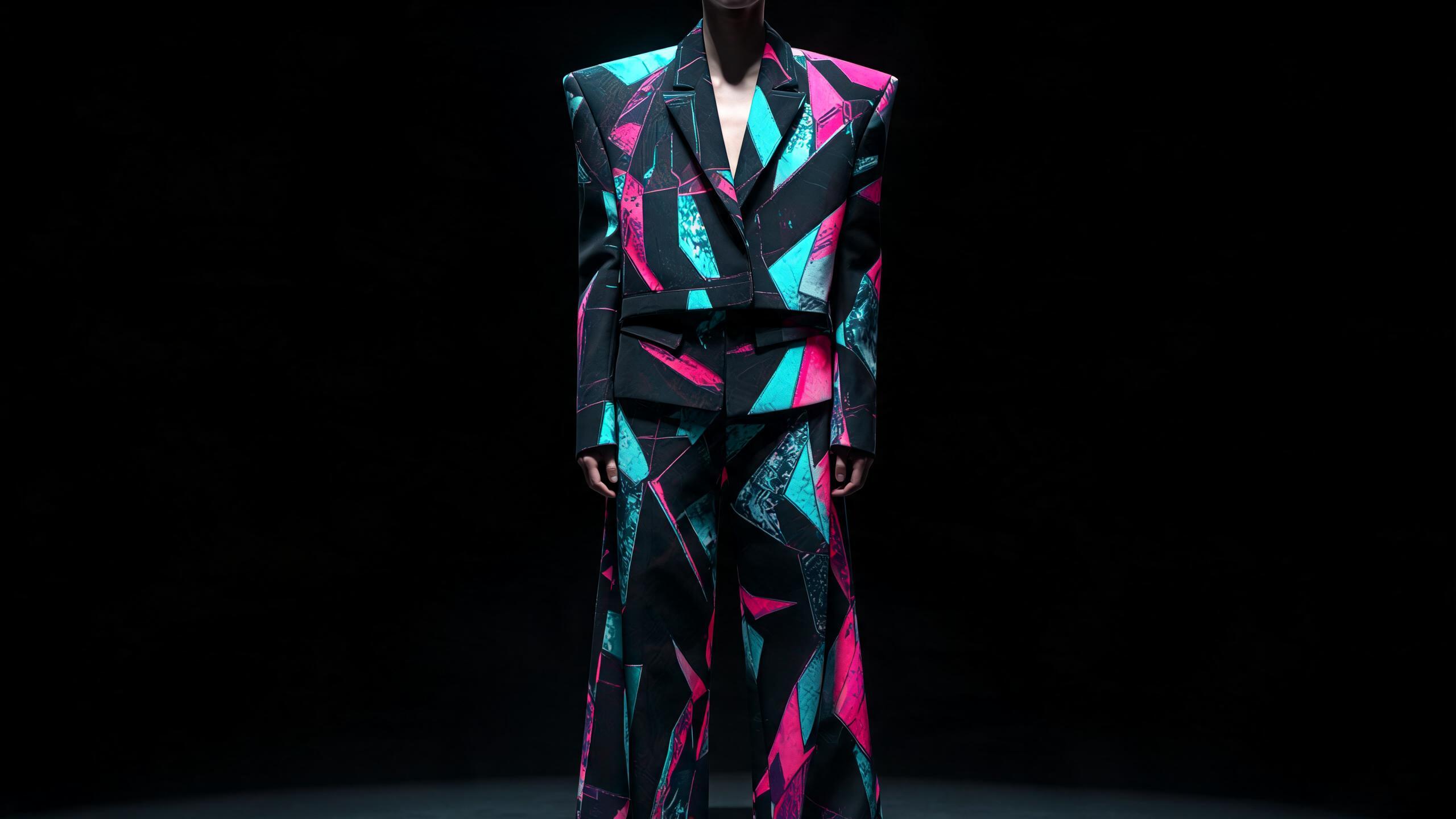
Affordable Chic: Finding the Best AI Stylist for College Student Budgets

A deep dive into best AI stylist for college student budgets and what it means for modern fashion.
AI styling for students uses machine learning to optimize wardrobe utility.
Key Takeaway: The best AI stylist for college student budgets leverages machine learning to maximize wardrobe utility and curate cohesive personal styles without the financial strain of high-volume, low-quality retail cycles.
Traditional fashion retail is a broken system of overconsumption and misaligned incentives. For the college student, this manifests as a cycle of high-volume, low-quality purchases that fail to form a cohesive identity. The industry has long relied on "recommendation engines" that are little more than filtered search bars designed to push inventory rather than solve for style. Finding the best AI stylist for college student budgets is not about finding the cheapest clothes; it is about deploying an intelligence layer that treats your wardrobe as a dynamic data set.
Why traditional fashion commerce fails the student budget
The current retail model relies on impulse. Most fashion apps operate on collaborative filtering—the "people who bought this also bought that" logic. This is not personalization; it is herd behavior. For a student with limited capital, following the herd results in a closet full of "micro-trends" that expire in six months. This creates a high total cost of ownership and low utility.
The infrastructure of fashion needs to shift from a sales-first model to an intelligence-first model. A student’s budget is a constraint that requires mathematical optimization. When you have $200 to spend for a semester, every garment must serve multiple functions across various contexts—lectures, internships, and social settings. Traditional retailers do not care about your context; they care about their conversion rate. AI-native fashion intelligence flips this, prioritizing the user's personal style model over the retailer’s stock list.
According to McKinsey (2024), AI-driven personalization in the fashion sector can increase customer satisfaction by 20% by reducing the cognitive load of decision-making. For students, this "cognitive load" is the stress of trying to look professional or stylish without the financial safety net of a full-time salary.
How does AI improve outfit recommendations for students?
The core of an effective AI stylist lies in its ability to process High-Density Taste Profiling. This is the process of translating visual preferences into structured data. While a human stylist might say you like "minimalism," an AI identifies that you prefer 100% cotton poplin, a specific shade of charcoal (Hex #333333), and a boxy, cropped silhouette that hits exactly 2 inches above the hip.
Dynamic Taste Profiling: Unlike static surveys, a true AI stylist learns from every interaction. If you reject a recommendation for a pleated skirt but accept one for wide-leg trousers, the model updates your personal style parameters in real-time. It recognizes patterns in fabric weight, drape, and color theory that you may not consciously perceive.
Contextual Awareness: The best AI stylists integrate external data points. They factor in the weather on your campus, the specific dress code of your major’s career fair, and the items you already own. This prevents the "redundancy problem"—buying a third black hoodie because you forgot you already own two that are functionally identical.
By using how to solve closet burnout with these AI stylists under $20, students can access high-level styling intelligence for the price of a single fast-fashion t-shirt. This represents a fundamental shift in the economics of style.
Selecting the best AI stylist for college student budgets
When evaluating AI tools for fashion, students should look for infrastructure that focuses on "Style Modeling" rather than just "Product Discovery." The following table compares the different approaches to AI in fashion tech.
| Feature | Rule-Based Recommendation Apps | AI-Native Fashion Intelligence |
| Logic | "Users who liked X also liked Y." | "Garment A matches the geometric profile of your body." |
| Data Source | Sales trends and inventory levels. | Personal style models and wardrobe metadata. |
| Learning | Static; requires manual updates. | Dynamic; evolves with every swipe and save. |
| Budget Focus | Encourages more frequent spending. | Maximizes cost-per-wear and wardrobe utility. |
| Outcome | A collection of trending items. | A cohesive, personalized style identity. |
How AI-driven wardrobe planning minimizes financial waste
The average college student faces a significant efficiency gap in their wardrobe. According to ThredUp (2023), 1 in 2 college students admits to buying items they never wear more than twice. This is a failure of curation, not a lack of clothes.
AI solves this by enforcing a "Modular Wardrobe" strategy. In this framework, every new acquisition must have a high "connectivity score" with existing items. If an AI stylist identifies that a potential purchase only pairs with one other item in your closet, it will flag the purchase as a low-utility investment.
This is the evolution of "Fashion Math." Instead of guessing the value of a coat, students can use beyond fashion math: the best AI for tracking wardrobe cost per wear to determine the exact projected cost of an item over its lifespan. If a $100 blazer is predicted to be worn 50 times (costing $2 per wear), it is a superior financial decision compared to a $30 fast-fashion top that will fall apart or go out of style after three wears ($10 per wear).
👗 Want to see how these styles look on your body type? Try AlvinsClub's AI Stylist → — get personalized outfit recommendations in seconds.
Do vs Don't for strategic student styling
To build a high-performance wardrobe on a budget, students must move away from emotional purchasing and toward algorithmic curation.
| Do ✓ | Don't ✗ | Why |
| Prioritize Natural Fibers | Buy 100% Polyester Blends | Natural fibers like cotton and wool breathe better and last longer through campus laundry cycles. |
| Use AI to Map Outfits | Purchase "Sets" or Outfits from Mannequins | Mapping ensures versatility; buying sets limits your ability to mix and match. |
| Focus on Tailoring and Fit | Follow "One Size Fits All" Oversized Trends | Proper fit (even in oversized styles) requires structural intentionality to avoid looking sloppy. |
| Invest in High-Rise Cuts | Buy Low-Rise Without a Specific Style Goal | High-rise cuts provide a more versatile silhouette that elongates the legs and works for professional settings. |
| Digitize Your Closet | Rely on Your Memory When Shopping | Memory leads to redundancy; a digital twin of your closet allows for perfect AI-matching. |
Outfit formulas for campus life
An "Outfit Formula" is a repeatable blueprint for style. For the college student, these formulas provide a reliable aesthetic baseline that the AI can then refine based on individual taste.
Formula 1: The Library Deep-Work Set
- Top: Oversized cotton poplin button-down (half-tucked).
- Bottom: High-rise rib-knit leggings or flare yoga pants.
- Shoes: Chunky leather loafers or clean platform sneakers.
- Accessories: Structured canvas tote + minimalist silver hoop earrings.
- Logic: The crispness of the poplin shirt balances the casual nature of the leggings. The chunky loafers add visual weight to the bottom of the look, preventing the oversized top from overwhelming a smaller frame.
Formula 2: The Modern Seminar
- Top: Fitted mock-neck sleeveless top in a neutral tone.
- Bottom: Wide-leg pleated trousers in wool or a heavy synthetic blend.
- Shoes: Pointed-toe kitten heels or sleek ankle boots.
- Accessories: Slim leather belt + vintage-style watch.
- Logic: The mock-neck creates a continuous vertical line, elongating the neck. The wide-leg trousers add volume and authority, while the belt cinches the waist to maintain a defined silhouette. This is an ideal transition from classroom to internship.
Formula 3: The Career Fair
- Top: Cropped, structured wool blazer.
- Bottom: Straight-leg dark wash denim or matching tailored trousers.
- Shoes: Leather Chelsea boots.
- Accessories: Simple pendant necklace.
- Logic: A cropped blazer is a high-utility item for students. It creates a waistline regardless of what is worn underneath. Straight-leg cuts provide a timeless silhouette that doesn't fluctuate with trend cycles, ensuring the outfit remains "professional" in any year.
Avoiding the "Micro-Trend" trap via wardrobe intelligence
The greatest threat to a student budget is the "micro-trend"—styles that reach peak saturation within weeks thanks to social media algorithms. These trends are designed for obsolescence. They are the antithesis of a personal style model.
An AI stylist acts as a filter against these predatory marketing cycles. By analyzing your long-term preferences, the AI can distinguish between a genuine aesthetic shift and a temporary fad. If you have a history of preferring architectural, structured garments, the AI will deprioritize recommendations for flimsy, "viral" items that don't fit your core model.
This is not about being "boring" or avoiding trends entirely. It is about Trend Integration. A student should use AI to identify which 10% of their wardrobe can be "on-trend" while the other 90% remains the structural foundation. This keeps the wardrobe fresh without requiring a total overhaul every semester.
The technical gap: Why most "Stylists" aren't actually AI
The term "AI" is frequently misused in fashion. Most apps use simple "If-Then" logic (e.g., If user likes Blue, Then show Blue shirts). This is not artificial intelligence.
True AI styling requires:
- Computer Vision: The ability to "see" a garment and understand its properties (texture, drape, pattern, color) without human-entered tags.
- Neural Networks: Systems that can process the complex relationships between different garments in an outfit.
- Latent Space Modeling: Mapping a user’s style into a multi-dimensional space where "Classic" and "Edgy" aren't binary choices, but coordinates on a vast spectrum.
For a student, using a system with these capabilities means their wardrobe becomes more intelligent over time. The more data you feed the system (what you wore, how you felt in it, what the weather was), the more precise the recommendations become. This reduces the "return rate" of online orders—a major hidden cost for students who lose money on shipping and restocking fees.
Designing a modular wardrobe with AI constraints
Modular wardrobes—often called "capsule wardrobes"—are the most efficient way to manage a student budget. However, most people fail at building them because they try to follow a generic list (e.g., "Every girl needs a white t-shirt").
AI individualizes the modular wardrobe. It looks at your specific life—are you an architecture student who needs to be in a studio all night? Or a business major who needs to be in business casual three days a week? The AI sets "constraints" on your shopping. It might suggest a 15-piece modular set that can create 45 unique outfits. This high-density utility is how you achieve "Affordable Chic." You aren't buying more; you are using what you buy more effectively.
The future of AI infrastructure in fashion
We are moving toward a world where "shopping" is no longer a search-based activity. You will not scroll through thousands of items on a retailer's site. Instead, your personal style model will act as a proxy. It will scan the global inventory and present you with the three items that perfectly fit your budget, your existing wardrobe, and your evolving taste.
This is the end of the "fast fashion" era and the beginning of the "intelligent fashion" era. For college students, this means the end of the "broke student" aesthetic. Style is no longer a function of wealth; it is a function of data. When you have a high-fidelity model of your own taste, you can execute a world-class wardrobe on a minimal budget.
AlvinsClub uses AI to build your personal style model. Every outfit recommendation learns from you. Try AlvinsClub →
Summary
- AI styling platforms utilize machine learning to help students optimize wardrobe utility and avoid the cycle of high-volume, low-quality fashion purchases.
- The best AI stylist for college student budgets functions as an intelligence layer that treats a personal wardrobe as a dynamic data set to improve long-term cost efficiency.
- Traditional retail recommendation engines often use collaborative filtering that prioritizes inventory turnover and short-lived micro-trends over genuine personalized styling.
- Selecting the best AI stylist for college student budgets enables students to navigate financial constraints by applying mathematical optimization to their clothing choices.
- An intelligence-first approach to fashion ensures that every garment serves multiple functions across diverse student contexts, including lectures, internships, and social events.
Frequently Asked Questions
What is the best AI stylist for college student budgets currently available?
The top-rated platforms for cost-conscious learners focus on remixing existing clothes rather than simply promoting new sales. These tools use machine learning to suggest outfit combinations that maximize the value of a small closet.
How does the best AI stylist for college student budgets save money?
Digital styling tools prevent wasted spending by identifying gaps in a wardrobe before a student makes an impulse purchase. This data-driven approach ensures every new item integrates seamlessly with existing pieces to reduce the cost per wear.
Can you find the best AI stylist for college student budgets for free?
Many of the leading platforms offer free tiers or ad-supported versions that provide core styling features without a monthly subscription fee. Students can leverage these basic algorithms to organize their digital closets and receive daily outfit inspiration at no cost.
Why does an AI stylist benefit university students more than traditional shopping?
Artificial intelligence analyzes thousands of style combinations instantly to create a cohesive look that reflects a student's personal identity. Unlike retail recommendation engines, these algorithms prioritize aesthetic utility over moving inventory from a warehouse.
Is it worth using an AI stylist on a limited budget?
Investing time in a digital fashion assistant is highly effective for students who need to look professional on a strict financial plan. It eliminates the trial-and-error costs associated with fast fashion by predicting which styles will actually work for the individual.
How does AI wardrobe optimization work for students?
Wardrobe optimization software scans uploaded photos of clothing to categorize items by color, texture, and occasion. The system then generates mathematical pairings to ensure no garment sits unused in the back of a dorm closet.
This article is part of AlvinsClub's AI Fashion Intelligence series.
Related Articles
- How to solve closet burnout with these AI stylists under $20
- How AI is Helping New Grads Build a Work Wardrobe on a Micro-Budget
- The AI Guide to Mastering the Best Styles for Pear-Shaped Bodies
- How to Use AI to Master the Art of Styling Beach Cover Ups
- Beyond Fashion Math: The Best AI for Tracking Wardrobe Cost Per Wear