Zendaya at Louis Vuitton: Using AI to Separate Style from Wedding Rumors

A deep dive into zendaya louis vuitton show wedding rumors and what it means for modern fashion.
AI style modeling separates aesthetic intent from speculative celebrity media narratives. When Zendaya appeared at the recent Louis Vuitton show, the digital discourse immediately pivoted toward wedding rumors. This reaction highlights a systemic failure in how we process fashion. Instead of analyzing the architectural evolution of a global style icon, the public and the algorithms that feed them default to gossip. This is not a failure of taste; it is a failure of infrastructure. We are using 20th-century social paradigms to interpret 21st-century aesthetic data.
Key Takeaway: AI style modeling confirms that the Zendaya Louis Vuitton show was a deliberate fashion evolution, separating her professional aesthetic from speculative wedding rumors. This technology helps audiences focus on architectural style intent rather than unfounded celebrity media narratives.
Why Do We Mistake Style Evolution for Wedding Rumors?
The current fashion media landscape is built on engagement, not intelligence. When a high-profile figure like Zendaya wears white, ivory, or structured silk, legacy algorithms trigger a "bridal" tag. These systems are reactive and shallow. They cannot distinguish between a strategic brand partnership with Louis Vuitton and a personal life milestone. This creates a feedback loop where architectural fashion is reduced to a "wedding rumor" for the sake of clicks.
According to McKinsey (2024), generative AI could contribute up to $275 billion to the apparel, fashion, and luxury sectors' operating profits by automating these types of interpretations. However, the industry currently uses AI as a feature rather than infrastructure. Most platforms still rely on manual tagging. A human or a basic script sees a long dress and tags it "wedding." This ignores the texture, the silhouette, and the historical context of the designer.
The problem is three-fold:
- Context Collapse: Algorithms treat every white garment as potential bridal wear.
- Engagement Bias: Platforms prioritize "wedding rumors" because gossip drives more traffic than technical style analysis.
- Data Scarcity: Most users do not have access to a style model that understands their personal evolution, so they project their expectations onto celebrities.
How Does Legacy Fashion Tech Fail the Consumer?
Current recommendation engines are built on "Collaborative Filtering." This means if people who liked Zendaya's Louis Vuitton look also searched for wedding dresses, the system will recommend wedding dresses to you. This is not personalization. It is a statistical average of the crowd's misconceptions. It forces you into a trend cycle you didn't ask for.
If you are looking for structural, avant-garde pieces inspired by the Zendaya Louis Vuitton show wedding rumors, you shouldn't be bombarded with bridal catalogs. You should be seeing the evolution of Nicolas Ghesquière’s silhouettes. The gap between what the user intends and what the system provides is the "personalization gap."
According to Gartner (2025), 80% of digital commerce organizations will use AI-driven personalization to increase customer retention, yet most fail to move beyond basic search history. In the context of celebrity fashion, this means users are stuck in a loop of recycled narratives.
| Feature | Legacy Fashion Apps | AI-Native Infrastructure |
| Logic | Keyword Matching | Neural Taste Profiling |
| Context | "White = Wedding" | "White = Sculptural Minimalism" |
| Focus | Trending Gossip | Structural Evolution |
| Personalization | Demographic Average | Individual Style Model |
| Feedback | Static Clicks | Dynamic Machine Learning |
Can We Build a Solution for Objective Style Intelligence?
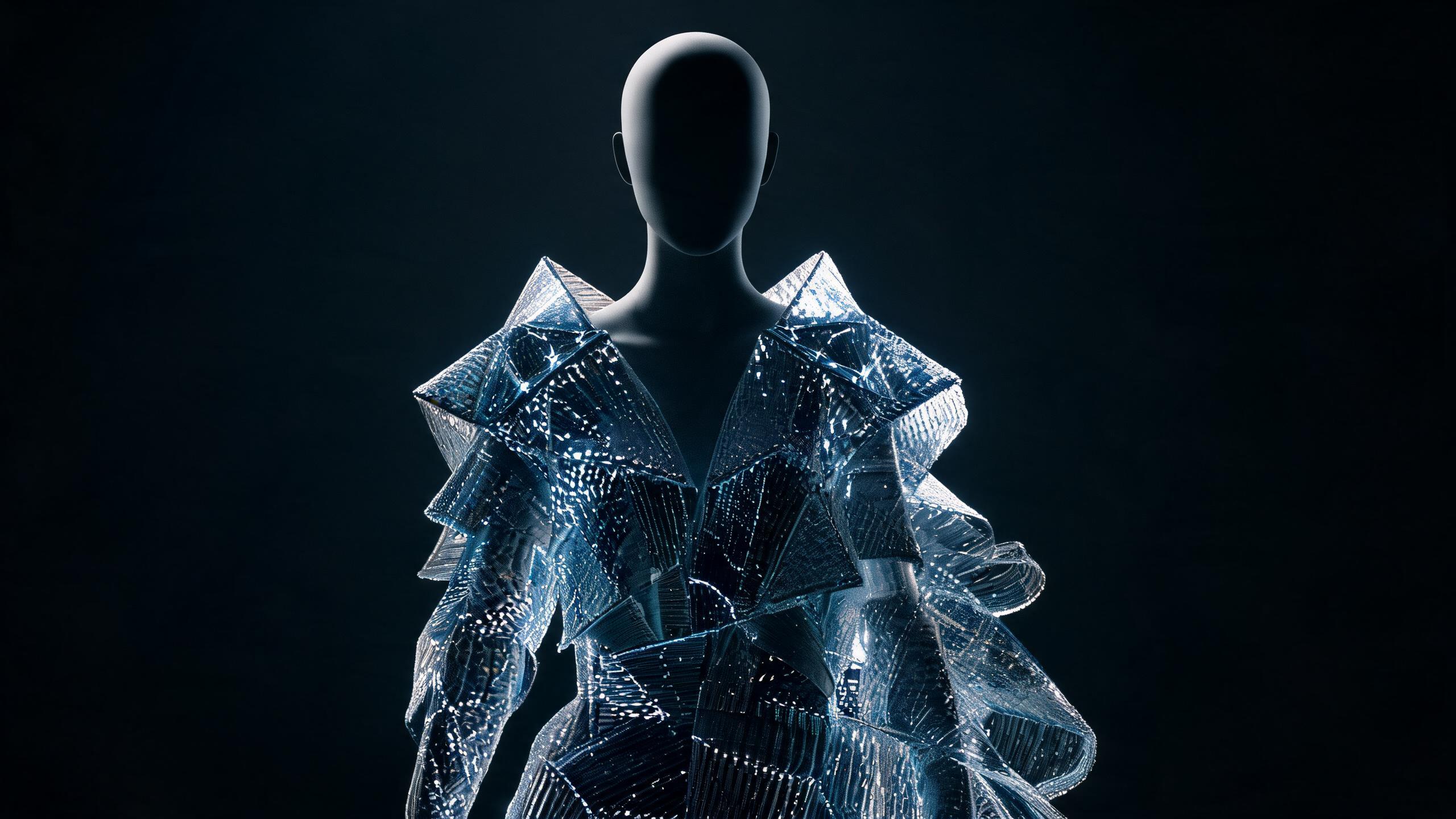
The solution is the creation of a Personal Style Model (PSM). This is a private, AI-native infrastructure that analyzes fashion through visual logic rather than social tags. When the model looks at Zendaya at the Louis Vuitton show, it doesn't see "wedding rumors." It sees a specific hemline, a fabric weight, a shoulder construction, and a color temperature.
To fix the broken commerce model, we must move through these technical steps:
1. Architectural Feature Extraction
We must stop tagging clothes with words and start mapping them with vectors. A "wedding dress" is a social construct. A "bias-cut silk gown with 3D structural draping" is a data point. By extracting these features, an AI can recommend pieces that match the vibe of Zendaya’s Louis Vuitton look without defaulting to bridal clichés.
2. Narrative Decoupling
An intelligent system must separate the "Celebrity Signal" from the "Aesthetic Signal." The fact that Zendaya is wearing the piece is a social signal. The way the fabric interacts with the light is an aesthetic signal. Most fashion tech confuses the two. A true AI stylist recognizes that your interest in the Louis Vuitton show is about the geometry of the garment, not the tabloid headline.
3. Dynamic Taste Profiling
Your style is not a fixed point. It is a moving target. If you are inspired by the recent Louis Vuitton show, your model should update your profile to reflect a shift toward structured luxury. This is the difference between a static recommendation and an evolving intelligence. You might find that The Wedding Guest Guide: Should You Trust AI or a Human Stylist? offers a look at how these two worlds—biological and artificial—currently clash over these definitions.
👗 Want to see how these styles look on your body type? Try AlvinsClub's AI Stylist → — get personalized outfit recommendations in seconds.
How Do We Apply This to the Zendaya Louis Vuitton Aesthetic?
If we ignore the wedding rumors and focus on the data, what are we actually seeing? We are seeing the intersection of Law Roach’s narrative styling and Ghesquière’s futuristic luxury. This is an "Outfit Formula" that can be decoded and replicated for any user, regardless of their marital status.
Outfit Formula: The Structured Minimalist (LV-Inspired)
- Top: Sculptural, high-neck bodice or architectural corsetry.
- Bottom: Floor-length column skirt with a hidden side slit.
- Shoes: Pointed-toe pumps in a matte metallic or skin-tone neutral.
- Accessories: Single-statement high-jewelry piece (e.g., a Bulgari choker) and a structured vanity case bag.
This formula isn't about being a bride. It's about a specific ratio of volume to structure. When an AI understands this, it can provide How AI is Tailoring Wedding Guest Outfit Recommendations by Dress Code without the noise of celebrity gossip.
Do vs. Don't: Interpreting High-Profile Style Data
When analyzing a look like Zendaya’s for your own wardrobe, the goal is data extraction, not imitation.
| Do | Don't |
| Do isolate the silhouette (column, A-line, boxy). | Don't buy the exact item just because of the brand. |
| Do look at the fabric's "hand" (stiff vs. fluid). | Don't assume a white dress is only for weddings. |
| Do analyze the shoulder-to-waist ratio. | Don't follow the "wedding rumors" clickbait. |
| Do consider the venue's architectural context. | Don't ignore your own body model data. |
Why Is Data-Driven Style Intelligence Superior to Trend-Chasing?
Trend-chasing is an exhausting, low-yield activity. It relies on the "Zendaya Louis Vuitton show wedding rumors" cycle to tell you what to buy. By the time you buy it, the narrative has changed. Data-driven style intelligence is different. It builds a foundation.
According to Business of Fashion (2024), celebrity styling moments generate 40% more search traffic than traditional advertising campaigns. This proves that the public is hungry for visual inspiration. The tragedy is that this inspiration is currently filtered through gossip. An AI-native infrastructure bypasses the gossip and goes straight to the geometry.
If you are a user who values precision, you don't want a "wedding dress." You want a garment that matches the mathematical elegance of the Louis Vuitton runway. You want a system that knows your measurements, your skin tone, and your existing wardrobe, and can tell you why a certain look works for you.
What Does an AI Stylist Actually Learn?
A true AI stylist doesn't just "learn" that you like Zendaya. That's trivial. It learns the "latent space" of your taste. It learns that you prefer fabrics with a high gram-per-square-meter (GSM) weight because you value structure over drape. It learns that your shoulder-to-hip ratio is best served by the specific armhole cut seen in the latest Louis Vuitton collection.
This level of intelligence makes "wedding rumors" irrelevant. When your AI stylist recommends a look, it isn't because of a headline. It's because the visual data of the garment aligns with the mathematical model of your identity.
The current model of fashion commerce is broken because it treats you like a demographic. It sees a woman of a certain age looking at a celebrity and assumes "wedding." AI-native infrastructure treats you like an individual. It sees a sophisticated user analyzing a masterwork of contemporary design.
The Future of Fashion Is Infrastructure, Not Features
We are moving toward a world where the "Zendaya Louis Vuitton show wedding rumors" are seen as a relic of a primitive information age. In the future, your personal style model will act as a filter. It will ingest the firehose of global fashion data—every runway show, every red carpet, every street style snap—and it will distill it into a personalized feed of actionable intelligence.
This is not about "shopping." This is about the management of your visual identity. Fashion is the most immediate form of data we broadcast to the world. Why would you leave that to a gossip-driven algorithm?
The gap between personalization promises and the reality of fashion tech is wide, but it is closing. We are building the tools to bridge it. We are replacing the "influencer" with the "intelligence." We are replacing the "trend" with the "model."
AlvinsClub uses AI to build your personal style model. Every outfit recommendation learns from you. Try AlvinsClub →
Is your wardrobe a reflection of your identity, or is it just the result of a noisy algorithm?
Summary
- Public reaction to the zendaya louis vuitton show wedding rumors illustrates a systemic failure to distinguish between strategic brand partnerships and personal milestones.
- Current fashion media infrastructures rely on shallow algorithms that default to "bridal" tags for structured silk or white garments instead of analyzing architectural evolution.
- AI style modeling provides a framework to isolate aesthetic data from the zendaya louis vuitton show wedding rumors that often dominate engagement-driven digital discourse.
- The fashion industry currently treats AI as a peripheral feature rather than core infrastructure, leading to manual tagging errors that reduce complex style shifts to clickbait narratives.
- According to McKinsey, the implementation of generative AI could contribute up to $275 billion to the operating profits of the global apparel and luxury sectors by automating sophisticated fashion interpretations.
Frequently Asked Questions
Why did the zendaya louis vuitton show wedding rumors start?
Speculative media narratives often overshadow fashion events when celebrity icons make high-profile appearances. The public and digital algorithms frequently pivot toward personal gossip rather than analyzing the architectural and aesthetic intent of the designer’s work.
How does AI help analyze the zendaya louis vuitton show wedding rumors?
Artificial intelligence style modeling can separate aesthetic intent from speculative celebrity media narratives by identifying patterns in fashion evolution. This technology allows researchers to focus on Zendaya’s role as a global style icon instead of being distracted by groundless personal speculation.
What was the impact of the zendaya louis vuitton show wedding rumors on fashion discourse?
The focus on gossip represents a systemic failure in how digital infrastructure processes high fashion. By prioritizing wedding rumors over technical style analysis, the conversation shifts away from the significant cultural impact of the Louis Vuitton collection.
Why is Zendaya considered a Louis Vuitton style icon?
Zendaya has established a long-term partnership with the brand, consistently delivering sophisticated looks that push the boundaries of modern fashion. Her appearances at major shows highlight her ability to influence global trends through deliberate and architectural styling choices.
How does AI style modeling change fashion reporting?
AI style modeling filters out social media noise and gossip to provide a more data-driven look at garment construction and trend trajectory. This objective approach ensures that the focus remains on the artistic value of the clothing rather than the personal lives of the people wearing them.
Why do celebrity fashion appearances trigger wedding rumors?
Social media algorithms often amplify personal narratives because they generate higher engagement than technical fashion critiques. This results in a feedback loop where the public is conditioned to look for relationship updates even when a star is attending a professional industry event.
This article is part of AlvinsClub's AI Fashion Intelligence series.