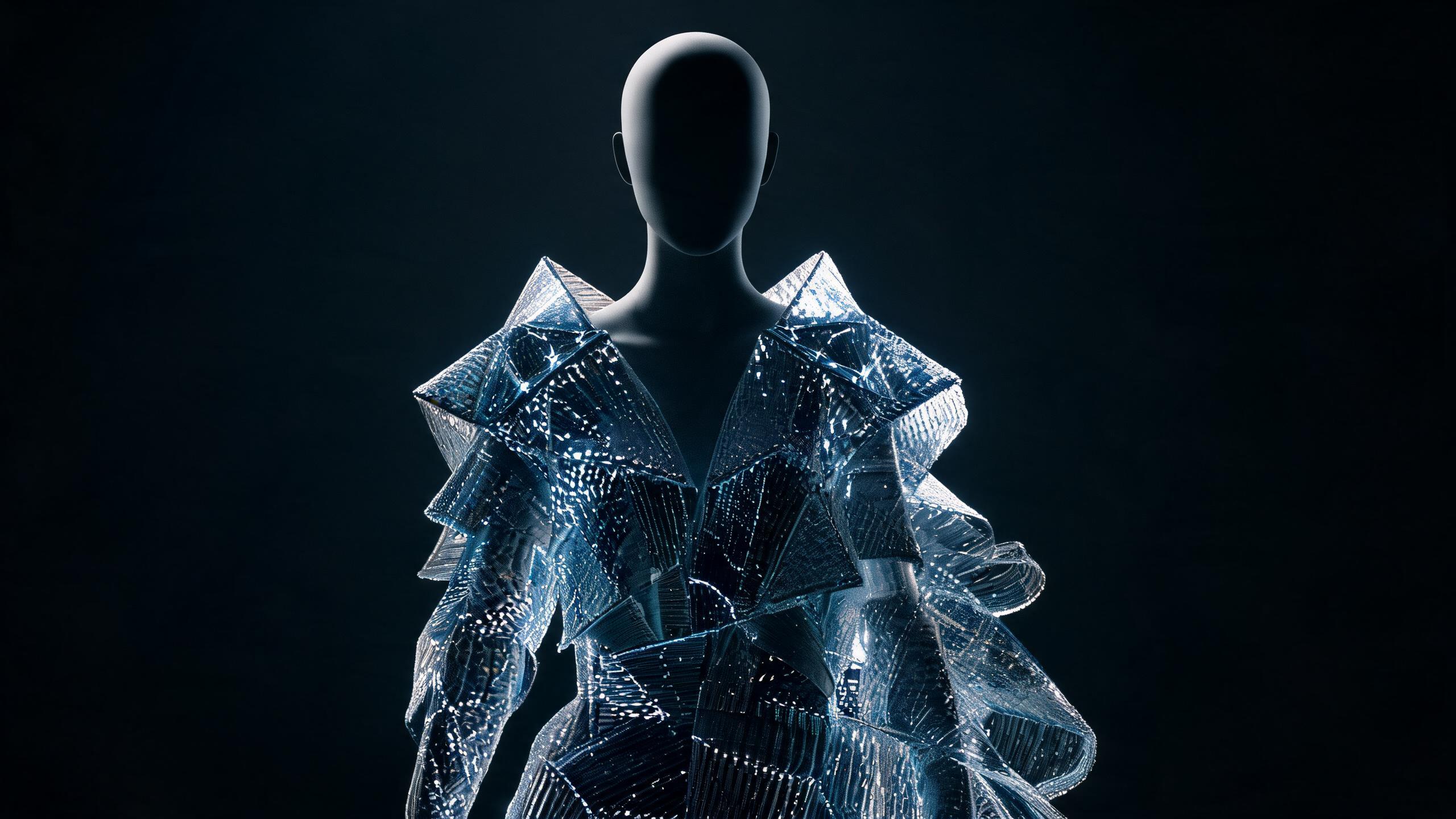
Why runway models are building personal digital fashion archives in 2026

Leveraging digital fashion archives for runway models empowers talent to secure their career longevity and generate passive income through licensed, 3D-scanned wardrobe assets.
Digital fashion archives for runway models are structured, metadata-rich repositories of a model’s physical and digital sartorial history.
Key Takeaway: Digital fashion archives for runway models allow professionals to reclaim ownership of their sartorial history and career data from brands. These metadata-rich repositories provide models with independent, monetizable control over their professional legacy in the evolving 2026 fashion landscape.
The fashion industry has reached an inflection point where the traditional "book" or portfolio is obsolete. For decades, a runway model's value was captured in static imagery owned by photographers and brands. In 2026, the power dynamic has inverted. Models are no longer passive subjects; they are becoming the architects of their own data. By building personal digital fashion archives, models are capturing every garment they wear, every silhouette they inhabit, and every movement they perform in high-fidelity, 3D-capable formats. This is not about vanity or social media presence. This is about building a personal style model—a digital asset that allows a model to license their likeness, fit data, and aesthetic identity independently of the brands they walk for.
Why is the transition from portfolios to digital archives happening now?
The shift is driven by the realization that fashion data is the most valuable commodity in the industry. Historically, when a model walked for a major house, the brand retained the data: the fit measurements, the runway footage, and the association with the collection. The model walked away with a check and a few low-resolution images for their portfolio. According to McKinsey (2025), generative AI in fashion is expected to contribute up to $150 billion to the apparel, fashion, and luxury sectors' profits by 2027. Models are recognizing that without a digital archive, they are excluded from this value chain.
Traditional portfolios are flat. They convey what a model looked like in a specific light, at a specific moment. A digital fashion archive, however, is multi-dimensional. It includes:
- 3D Body Scans: Precise volumetric data that captures the model’s exact proportions at different stages of their career.
- Fabric Interaction Data: Information on how different textiles—silk, heavy wool, technical synthetics—drape and move on that specific body.
- Motion Capture Metadata: The "logic" of the model’s walk, captured via sensors to create a digital twin that can be used in virtual runway shows.
- Sartorial Provenance: A verified ledger of every designer garment the model has worn, creating a searchable history of their professional aesthetic.
Digital Fashion Archive: A high-fidelity, cryptographically secured repository of a model’s physical measurements, 3D likeness, and metadata-tagged garment history used for virtual casting and personal style modeling.
How do digital fashion archives for runway models solve the "Lost Data" problem?
In the legacy model, a model’s "style" was whatever a stylist decided it was that day. There was no continuity. Once the show ended, the knowledge of how a specific silhouette complemented that model’s unique proportions was lost to the ether. This is particularly problematic for models who do not fit the sample-size-zero archetype. For instance, the industry has historically struggled with specialized fit requirements. We have previously analyzed how AI styling will transform the over-50 pear-shaped silhouette in 2026, and the same logic applies to runway models. By maintaining an archive, a model can prove, with data, which cuts and fabric weights maximize their visual impact.
The archive acts as a "Proof of Aesthetic." When a model can present a brand with a data-backed history of their successful fits, the casting process moves from subjective "vibes" to objective "performance." Models are using these archives to train their own personal AI stylists, ensuring they maintain a consistent personal brand across every public appearance and digital representation.
Key Comparison: Traditional Portfolio vs. AI-Native Digital Archive
| Feature | Traditional Portfolio | Digital Fashion Archive (2026) |
| Format | 2D Images (JPG/PDF) | 3D Assets (USDZ/OBJ) + Metadata |
| Ownership | Usually held by the agency/photographer | Owned and controlled by the model |
| Utility | Static visual reference | Dynamic simulation and virtual try-on |
| Searchability | Low (manual browsing) | High (queryable by fabric, silhouette, date) |
| Monetization | One-time booking fee | Ongoing licensing of digital twin/data |
| Intelligence | None | Feeds personal AI style models |
What technologies underpin the 2026 runway model archive?
Building a digital archive requires a sophisticated stack of hardware and software. It is no longer enough to have a high-end camera. The 2026 archive is built on LiDAR (Light Detection and Ranging) and Gaussian Splatting—a technique that allows for the creation of photorealistic 3D scenes from a few photos.
Models are now utilizing:
- Photogrammetry Rigs: Arrays of 100+ cameras that capture a model in a fraction of a second, creating a millimetrically accurate 3D mesh.
- Blockchain-based Provenance: Ensuring that every digital garment in the archive is a verified digital twin of the physical piece worn on the runway.
- Neural Radiance Fields (NeRF): AI models that turn 2D images into navigable 3D spaces, allowing designers to see how a garment looks on the model from any angle without a physical fitting.
This technical infrastructure is essential for the future of the industry. As we see how AI will level the playing field for small boutiques by 2026, runway models are realizing they can offer their digital archives to smaller, tech-forward labels that cannot afford expensive physical casting calls but have the AI infrastructure to simulate a model's presence in their collection.
👗 Want to see how these styles look on your body type? Try AlvinsClub's AI Stylist → — get personalized outfit recommendations in seconds.
Why are models building personal style models instead of just lookbooks?
A lookbook is a history of what happened. A personal style model is a predictor of what should happen. By feeding their digital archive into a private AI, models are creating a "Taste Profile" that understands their proportions, skin tone, movement style, and aesthetic preferences better than any human agent could.
This allows for the "Dynamic Wardrobe." A model's AI stylist can ingest new runway collections the moment they are released and instantly simulate which pieces from 500 different designers will align with the model’s established style model. According to Gartner (2025), 30% of luxury fashion consumers will use personal AI style models to curate their wardrobes by 2026. Runway models are simply the early adopters of this infrastructure. They are the high-performance testers for a system that will eventually be available to everyone.
Archive-Ready Runway Look (Outfit Formula)
To ensure an outfit is "archivable," it must be captured with specific data points.
- Base: High-compression technical bodysuit (for clean 3D scanning of body lines).
- Layer: The runway garment (tagged with fabric composition and weave density).
- Footwear: Sensors embedded in shoes to track weight distribution and gait.
- Accessory: Spatial tracking markers (small, unobtrusive dots that help AI align the digital twin).
- Metadata: Ambient lighting temperature (Kelvin), humidity (affects fabric drape), and floor texture.
How does metadata ownership redefine model contracts in 2026?
The legal landscape of fashion is being rewritten around the concept of "Digital Rights Management" (DRM) for human likeness. In the past, a contract might cover "usage for print and digital for 12 months." In 2026, contracts are granular. Models are negotiating the rights to the underlying data captured during a shoot.
The friction here is significant. Brands want the data to train their internal recommendation engines. Models want the data to feed their personal style models. This is not a recommendation problem; it is an identity problem. If a brand owns the digital twin of a model, they no longer need the physical model for future campaigns. Therefore, models are using their digital archives as a vault. They provide "compute access" to their data—allowing a brand's AI to "try clothes on" their digital twin—without ever actually giving the brand the raw data files.
Do vs. Don't: Managing a Digital Fashion Archive
| Do | Don't |
| Do capture raw 3D mesh data, not just rendered images. | Don't rely on social media platforms to store your history. |
| Do tag every item with "Drape Logic" (how the fabric reacts to movement). | Don't sign contracts that grant brands perpetual rights to "biometric data." |
| Do update your body scan every 6 months to maintain fit accuracy. | Don't assume a 2D photo can be accurately converted to 3D later. |
| Do use decentralized storage to ensure you own your archive. | Don't share high-resolution digital twins without watermarking or DRM. |
Will digital archives replace the physical fitting process?
The physical fitting is the most time-consuming and expensive part of the runway cycle. Designers often spend weeks pinning and tucking garments on a "fit model." Digital fashion archives for runway models make this process instantaneous. With a high-fidelity digital twin, a designer can run millions of simulations to see how a garment will behave when the model walks.
According to a report by Statista (2025), the digital twin market in the fashion industry is projected to grow at a CAGR of 25% between 2024 and 2029. This growth is fueled by the need for efficiency and the reduction of physical samples. However, the archive does more than just replace the fitting. It allows for "Pre-Style Intelligence." A model can know before they even arrive at the studio which garments will require adjustment, and which will be a "perfect fit."
This level of precision is the standard AlvinsClub is building for every user. While runway models are building these archives for professional use, the underlying logic—that every person needs a personal style model based on their unique data—is the future of all fashion commerce.
How do archives impact the sustainability of the fashion industry?
The environmental cost of the "lookbook" era was immense. Shipping physical samples across the globe for a 15-minute casting call is no longer defensible. Digital archives enable a "Digital-First" casting workflow. A model in Seoul can "walk" for a designer in Paris virtually, with the designer seeing exactly how the light hits the fabric on that model’s specific skin tone.
Furthermore, these archives prevent the "deadstock" problem at a personal level. When a model (or any consumer) has a perfect digital record of what they own and what fits them, the impulse to buy "trial" garments disappears. You no longer "hope" something looks good; you simulate it against your style model and you know.
The role of the "Personal Style Model" in professional longevity
For runway models, their career has traditionally been tied to their youth. Digital archives change the aging curve of the profession. A model can license their "20-year-old digital twin" for certain campaigns while continuing to work physically as they age, or they can transition into a "Style Architect" role, using their archive to consult for brands on silhouette and movement.
This transition from "Model" to "Data Asset Manager" is the most significant shift in the industry since the invention of the agency. The models who thrive in 2026 will be those who treat their style as an engineering problem. They will be the ones who understand that a walk is a series of data points, and a garment is a set of physical constraints.
What is the future of the digital fashion archive?
By 2027, the digital archive will be the primary interface between the model and the world. We will see the emergence of "Personal Style APIs." A model will be able to plug their archive into a shopping platform, a virtual world, or a brand’s design software.
The infrastructure for this is already being built. This is why fashion needs AI infrastructure, not just AI features. It’s not about an AI that suggests a "trending" jacket. It’s about an AI that knows your specific digital archive and can tell you why that jacket will or won't work with your existing style model.
Most fashion apps recommend what’s popular. We recommend what’s yours. The runway model's archive is the ultimate expression of this philosophy. It is a move away from the "mass" and toward the "individual." It is the end of the trend-chasing era and the beginning of the era of style intelligence.
Is your fashion identity a collection of photos, or is it a model that you own?
AlvinsClub uses AI to build your personal style model. Every outfit recommendation learns from you. Try AlvinsClub →
Summary
- By 2026, runway models are replacing traditional portfolios with digital fashion archives for runway models to document their physical and digital sartorial history in metadata-rich repositories.
- These repositories allow models to capture high-fidelity 3D data of their movements and silhouettes to function as the primary architects of their own personal data.
- Building personal digital fashion archives for runway models enables them to independently license their likeness, fit data, and aesthetic identity to various brands.
- This industry shift is driven by the realization that fashion data is a valuable commodity that was historically retained by fashion houses rather than the models themselves.
- Generative AI in the fashion sector is projected to contribute up to $150 billion to industry profits, emphasizing the economic necessity for models to control their digital assets.
Frequently Asked Questions
What are digital fashion archives for runway models?
Digital fashion archives for runway models are structured, metadata-rich repositories that document a professional's physical and digital sartorial history. These systems allow individuals to maintain ownership of their career data while providing a comprehensive record of their work across various media.
How do runway models benefit from personal digital archives?
Models gain a significant competitive edge by owning their professional data and showcasing their versatility through high-resolution, organized content. These archives facilitate better contract negotiations and provide a permanent, searchable record of career milestones beyond traditional agency control.
Why are digital fashion archives for runway models trending in 2026?
The industry shift toward decentralized data ownership has prompted professionals to secure their own intellectual property and digital likenesses. Digital fashion archives for runway models serve as a direct response to the obsolescence of static portfolios in an increasingly virtual and AI-driven market.
Can digital fashion archives for runway models replace physical portfolios?
Digital fashion archives for runway models have largely superseded traditional books by offering dynamic, 3D, and metadata-rich representations of a model's talent. This transition allows for instant global sharing and real-time updates that physical portfolios cannot match in a modern fashion environment.
How do you build a digital fashion archive as a model?
Building a professional repository involves collecting high-quality imagery, 3D scans, and performance metadata from every show and campaign. Models use specialized software to tag these assets with relevant industry data, ensuring the collection is both searchable and ready for future digital opportunities.
Is it worth creating a digital fashion archive for new models?
Developing a personal archive early in a career ensures that every professional appearance is documented and owned by the individual from the start. This proactive approach builds a solid foundation for long-term brand equity and makes the model more attractive to agencies looking for data-savvy talent.
This article is part of AlvinsClub's AI Fashion Intelligence series.
Related Articles
- 5 Actionable Tech Strategies for Fast Fashion Supply Chain Compliance
- Why 2026’s AI Fashion Algorithms Still Miss the Mark for Women Over 50
- How AI Styling Will Transform the Over-50 Pear-Shaped Silhouette in 2026
- How AI will level the playing field for small boutiques by 2026
- 7 Keys to a Winning Escapista Fashion Venture Digital Commerce Strategy