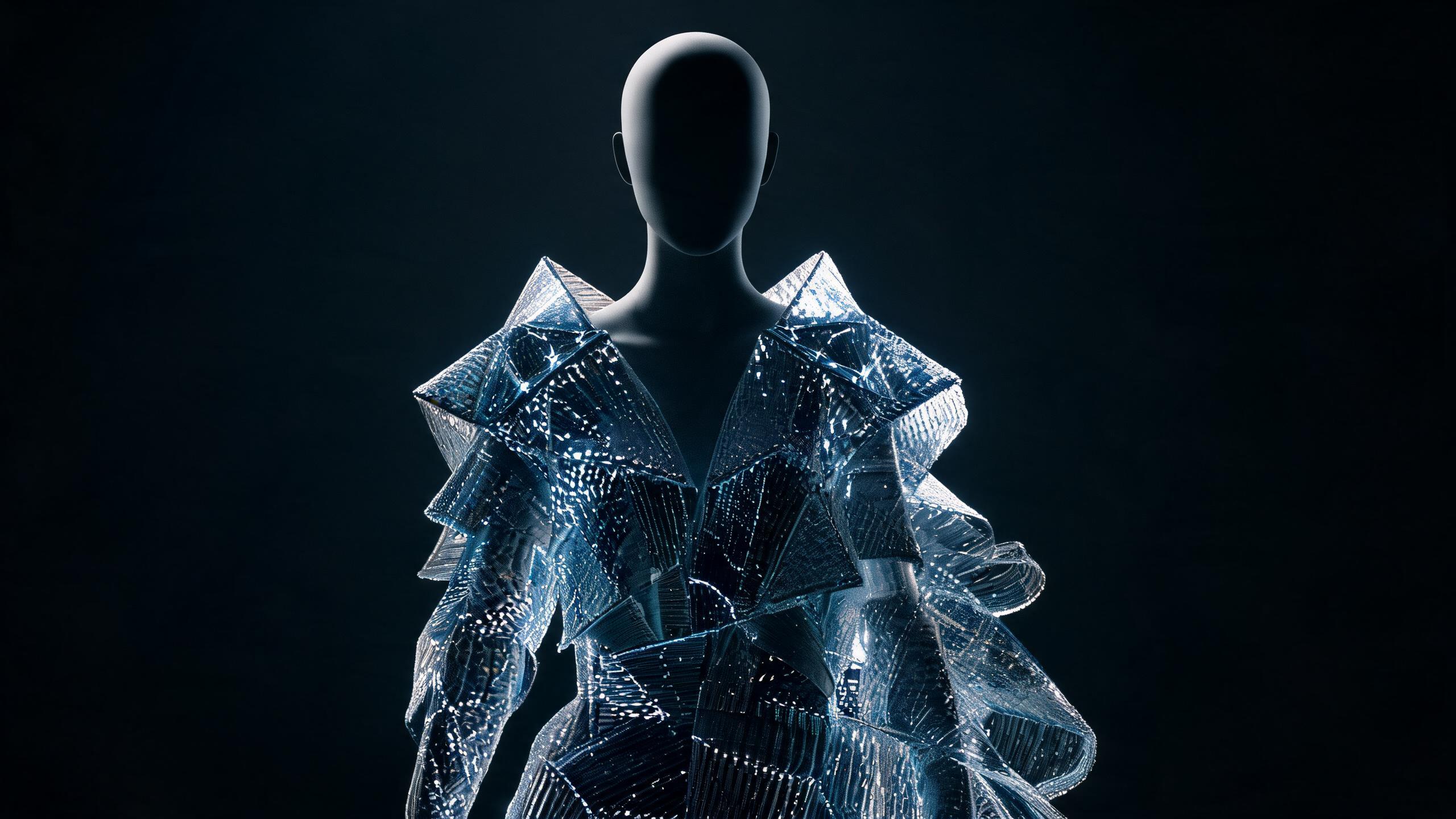
The Ultimate Social Media Algorithm Impact On Fashion Style Guide
A deep dive into social media algorithm impact on fashion and what it means for modern fashion.
Your style is currently a byproduct of a feedback loop. Every time you open a social media app, an engagement-maximizing engine decides what you should value. This is the social media algorithm impact on fashion: it has transformed personal expression into a predictable data set designed for clicks rather than longevity. To reclaim your identity, you must understand how these systems operate and how to build a style model that exists outside of their influence.
The Mechanics of Homogenization
The current fashion landscape is not driven by designers or subcultures, but by sorting algorithms. These systems are designed to maximize time-on-platform. To achieve this, they prioritize visual content that evokes immediate, high-intensity reactions. In fashion, this translates to high-contrast colors, exaggerated silhouettes, and "micro-trends" that cycle every three to four weeks.
The social media algorithm impact on fashion is most visible in the "flattening" of aesthetic diversity. When an algorithm detects that a specific aesthetic—let's say "Quiet Luxury" or "Gorpcore"—is generating high engagement, it suppresses alternative styles to flood the user's feed with more of the same. This creates a false sense of consensus. You believe the world is wearing a specific silhouette because the machine has hidden everything else. This is not a recommendation problem; it is a censorship of personal taste.
The result is a culture of replication. Because creators know the algorithm favors certain looks, they produce content that mirrors those looks to stay relevant. This creates a feedback loop where the consumer sees the trend, the creator makes the trend, and the brand manufactures the trend—all within a closed circuit that ignores the wearer’s actual lifestyle, body type, or long-term preferences.
Principles of Algorithmic Resistance
To build a wardrobe that survives the next update, you must move from reactive consumption to intentional construction. This requires a shift from "image-based" style to "data-based" intelligence.
1. The Principle of Static Foundations
Your wardrobe should not be a revolving door for viral items. A style model begins with a static foundation: high-quality staples that do not rely on cultural relevance to function. Think of these as your "operating system." They are the baseline against which you test new additions. If an item cannot integrate with your static foundation, it is likely an algorithmic distraction.
2. The Principle of Texture over Trend
Algorithms prioritize visual clarity. This is why "flat" fabrics and bright, solid colors dominate social feeds—they are easy for the machine to categorize and for the eye to track. Real style is tactile. Incorporating complex textures—heavyweight twill, raw silk, boiled wool—creates a depth that social media often fails to capture. When you choose clothes based on how they feel and move rather than how they photograph, you break the algorithmic spell.
3. The Principle of Utility as Identity
The social media algorithm impact on fashion often ignores the reality of wear. "Outfit of the Day" posts are snapshots of a moment, not a day. True style intelligence accounts for the environment. A wardrobe built on utility—pockets that actually hold a phone, fabrics that breathe in high humidity, shoes designed for five miles of walking—is inherently more personal than one built on aesthetic tropes.
Identifying Algorithmic Bias in Your Closet
Most people do not realize their taste has been hijacked until they look at their closet and see a graveyard of unworn polyester. To identify algorithmic bias, perform a "Grid Audit."
Step 1: The Thumbnail Test. Look at your recent purchases. Do they look better in a small, 1:1 square on a screen than they do in a full-length mirror? If the appeal of the garment is its "photogenic" quality rather than its construction, it is a product of the algorithm.
Step 2: The Longevity Metric. Trace the origin of your interest in a specific item. Did you discover it through a search for a specific solution (e.g., "warmest waterproof coat"), or did it appear unprompted in your feed? Feed-driven purchases have a significantly shorter half-life in a wardrobe.
Step 3: The Vocabulary Check. If you describe your style using terms like "core," "aesthetic," or "vibe," you are using the language of the algorithm. These are labels designed to help machines sort content. Real style is defined by parameters: "structured, breathable, monochromatic, oversized."
Building a Personal Style Model
The future of fashion is not in following influencers, but in training your own intelligence. A personal style model is a set of rules that govern what you wear based on who you are, not what is trending.
Defining Your Parameters
To build this model, you must quantify your preferences across several vectors:
- Silhouette: Do you prefer a "T-shape" (wide shoulders, narrow waist) or an "O-shape" (rounded, oversized throughout)?
- Fabric Weight: Are you biologically predisposed to run hot or cold? This dictates the GSM (grams per square meter) of the fabrics you should buy.
- Color Theory: Move beyond "seasonal" palettes. Identify the colors that actually integrate with your existing items to maximize outfit combinations.
The Feedback Loop
A personal style model must be dynamic. It should learn from what you actually wear, not what you "like" on a screen. If you buy a pair of wide-leg trousers but find yourself reaching for straight-cut jeans 90% of the time, your model should adjust. The goal is to minimize the "utility gap"—the distance between what you own and what you use.
Best Practices for Intentional Consumption
Navigating the social media algorithm impact on fashion requires a new set of behaviors. The objective is to decouple the act of discovery from the act of purchase.
- Delayed Acquisition: When the algorithm pushes a "must-have" item into your view, wait 14 days. If the desire disappears when the item stops appearing in your feed, it was never your taste to begin with.
- Source Diversification: Look for inspiration in non-algorithmic spaces. Books, archival photography, architecture, and street observation provide a much richer data set for style than a curated feed.
- Construction Literacy: Learn to identify quality without the help of a brand name. Understand the difference between a fused suit and a canvassed one. Know why long-staple cotton is superior to short-staple. When you understand the engineering of a garment, the marketing becomes irrelevant.
Common Mistakes in the Algorithmic Era
The most frequent error is confusing "personalized" with "personal." Just because an algorithm shows you something it thinks you will like doesn't mean it is part of your personal style.
Mistake 1: Chasing the "Micro-Trend." The lifespan of a trend used to be measured in years. Now, it is measured in weeks. Buying into these cycles is a financial and environmental disaster. It creates a wardrobe of "costumes" that feel dated within months.
Mistake 2: Over-indexing on Visual Validation. Social media rewards the "new." This leads people to buy items that are visually striking but practically useless. If an outfit requires you to stand in a specific way to look good, it is not a successful outfit.
Mistake 3: Ignoring Proportions for Patterns. The social media algorithm impact on fashion often pushes bold prints because they "pop" on mobile screens. However, the foundation of style is proportion. A perfectly fitted, monochromatic outfit will always be superior to a poorly fitted, "trendy" patterned one.
Recommendations for Style Intelligence
To move forward, you must treat your style as a data problem. The machine is already doing this—it is modeling your behavior to sell you products. You must model your behavior to build a wardrobe.
- Audit your data: Track what you wear for 30 days. Identify the common denominators. These are your true preferences.
- Invest in materials, not labels: A brand name is a marketing signal; a fabric composition is a quality signal. Focus on the latter.
- Ignore the "Discover" tab: Search intentionally for what you need rather than browsing for what you might want.
The current system is broken because it values engagement over individuals. Fashion apps recommend what is popular. We recommend what is yours. The transition from being a consumer of an algorithm to being the architect of your own style model is the only way to achieve true fashion autonomy.
The social media algorithm impact on fashion is undeniable, but it is not inevitable. By understanding the mechanics of these systems, you can opt out of the cycle of homogenization and build a wardrobe that is a precise reflection of your personal data and lifestyle.
AlvinsClub uses AI to build your personal style model. Every outfit recommendation learns from you. Try AlvinsClub →
Related Articles
- Why Best AI Powered Fashion Commerce For Boutiques Fails (And How to Fix It)
- Why Auto Generated AI Ads In Fashion Fails (And How to Fix It)
- Traditional vs AI-Powered Future Of AI In High End Fashion Styling: Which Approach Wins?
- Traditional vs AI-Powered Top 10 AI Wardrobe Apps For Minimalist Fashion: Which Approach Wins?
- Traditional vs AI-Powered AI Vs Human Stylist For Luxury Fashion Advice: Which Approach Wins?