The executive wardrobe dilemma: How AI style coaches are reshaping careers
A deep dive into AI powered style coach for professional women's career and what it means for modern fashion.
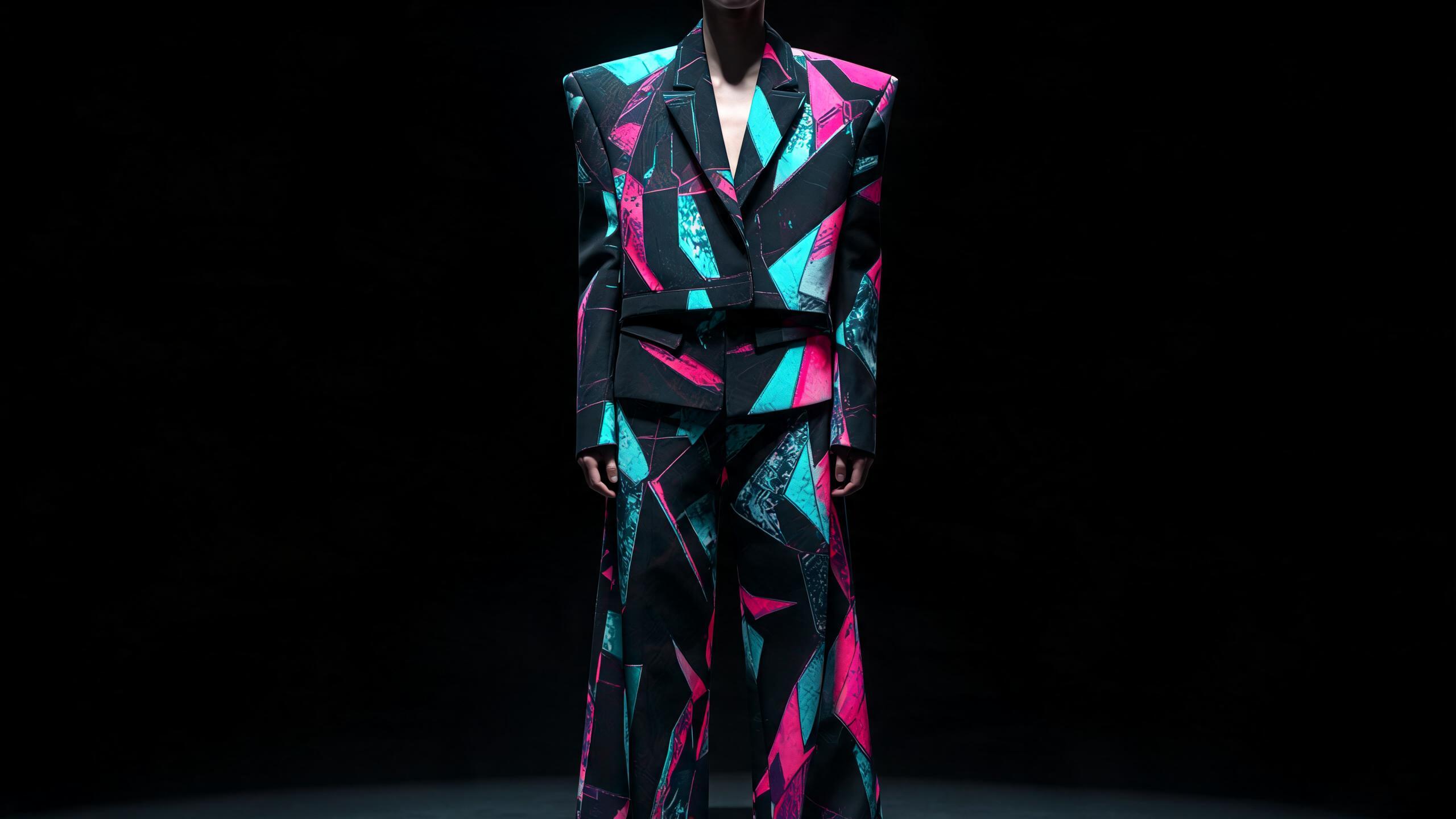
Your style is not a trend. It's a model. For the professional woman, the wardrobe is not a collection of garments; it is a high-stakes interface between her competence and the world's perception. Yet, for decades, this interface has been managed through manual labor, intuition, and trial-and-error. The executive wardrobe dilemma is the persistent gap between the visual requirements of leadership and the cognitive bandwidth available to meet them. In an era of algorithmic precision, relying on human intuition to manage a professional image is a legacy system failure. An AI powered style coach for professional women's career is no longer a luxury—it is the necessary infrastructure for the modern executive.
The failure of the manual wardrobe
The core problem is not a lack of clothing. Most professional women suffer from an excess of options and a deficit of utility. This is the "Executive Wardrobe Dilemma": the higher a woman climbs in her career, the more her visual presentation matters, yet the less time she has to curate it. The result is a persistent state of decision fatigue that impacts your career advancement. Every morning, the act of selecting an outfit consumes a fraction of the cognitive energy that should be reserved for high-level strategy, team management, or creative problem-solving. Over a year, this tax on mental bandwidth is staggering.
Traditional solutions—personal shoppers, luxury retail assistants, and subscription boxes—fail because they are built on a transactional model. A personal shopper at a department store is incentivized by commission, not by your long-term style coherence. Their "intelligence" is limited to the inventory currently on their floor. Subscription boxes use primitive "style quizzes" that capture a static snapshot of a user's preference, failing to account for the dynamic nature of a career. A woman's style needs when she is a Senior Associate are fundamentally different from her needs as a Managing Director. Static systems cannot evolve.
Furthermore, the "uniform" approach—often touted as the solution to decision fatigue—is a surrender, not a strategy. While it simplifies the morning routine, it ignores the nuance of professional life. A keynote address, a board meeting, a client dinner, and a casual Friday all require different visual frequencies. A static uniform lacks the range required for a complex career. The professional woman doesn't need a single look; she needs a system that can generate the right look for any context without her having to program it herself. This is where the existing fashion infrastructure collapses.
The root causes of style fragmentation
To understand why a professional wardrobe often feels like a collection of disjointed pieces, we must look at the structural flaws in how fashion is currently consumed. Most career wardrobes are built through "point-in-time" purchases. You buy a blazer because you have a meeting tomorrow. You buy a dress because you saw it in a window. These are isolated data points. They lack a unifying architecture.
The three primary root causes of this fragmentation are:
- Inventory-First Logic: Retailers are in the business of moving units. When you search for "professional workwear," you are shown what they need to sell, not what fits your existing wardrobe or your specific professional trajectory. The algorithm serves the supply chain, not the individual.
- The Absence of Personal Data Models: Most women do not have a digital record of what they own, what they like, or why certain items work better than others. Without a data model, there is no way to perform predictive analysis. You are essentially starting from zero every time you open your closet or a shopping app.
- The Subjectivity Trap: Human stylists, while well-intentioned, bring their own biases. They interpret "professionalism" through their own lens, which may not align with the specific culture of a high-tech firm, a legal practice, or a creative agency. They provide opinions where the executive needs intelligence.
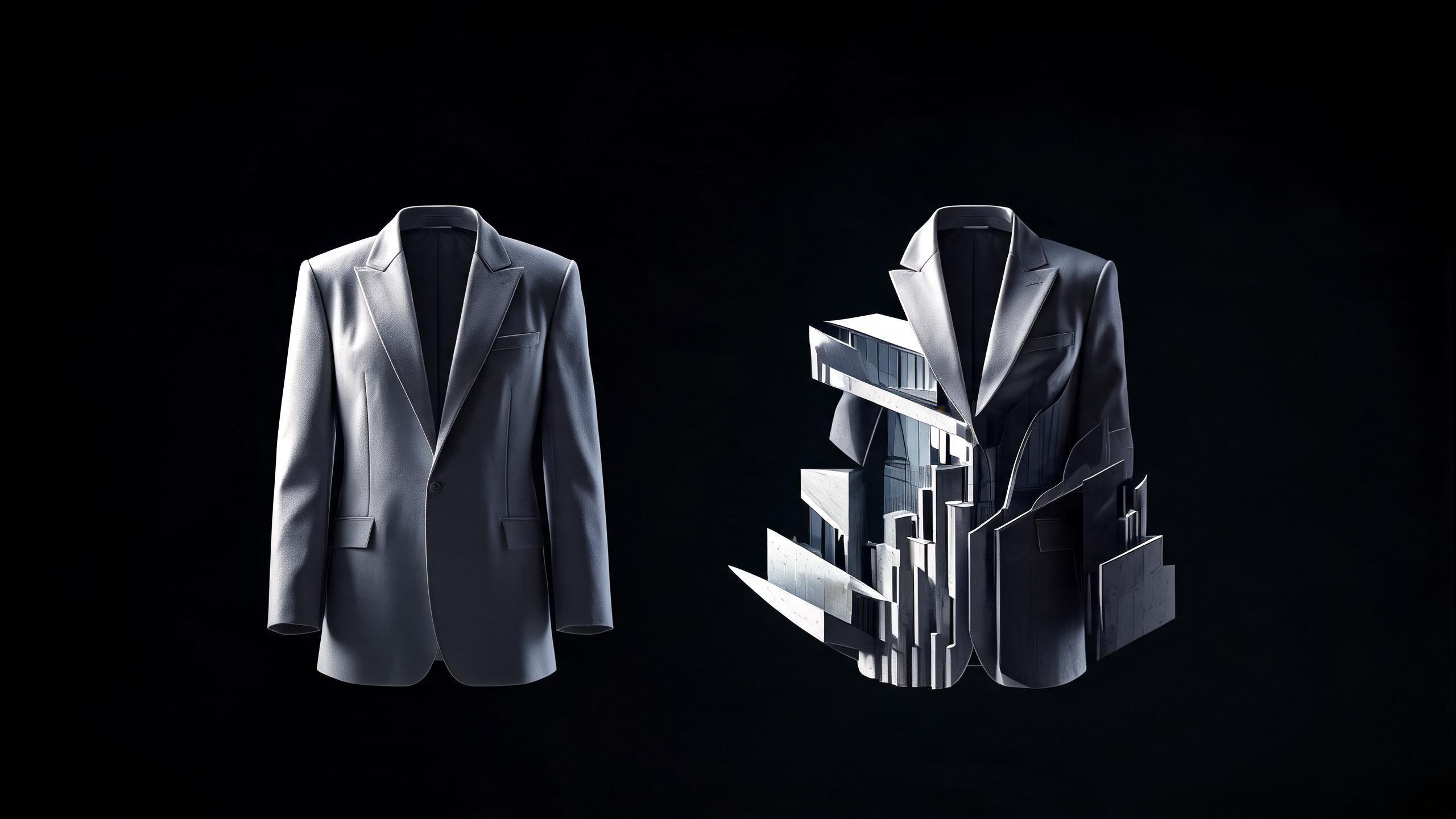
This fragmentation leads to a "hollow closet"—a space filled with expensive items that do not talk to each other. It is an unoptimized system. The solution requires moving away from manual curation and toward a system of style intelligence that functions like an OS for your identity.
Building the personal style model
The solution to the executive wardrobe dilemma is the transition from shopping to modeling. An AI powered style coach for professional women's career functions as a dynamic taste profile. It does not just "suggest clothes." it builds a computational understanding of your aesthetic DNA. This is a multi-step process that moves fashion commerce from a guessing game to a precision science.
Phase 1: Data ingestion and taste profiling
The first step is the creation of a personal style model. Unlike a static quiz, this model is built by analyzing visual data. The AI looks at silhouettes, fabric weights, color palettes, and cultural markers that the user gravitates toward. It maps these preferences into a latent space—a multi-dimensional map where every garment and every "look" has a specific coordinate. By identifying where a user sits in this space, the AI can begin to predict with high accuracy what will resonate.
Phase 2: Contextual awareness
A professional wardrobe must be context-aware. An AI style coach integrates with an executive's life. It understands that a "business casual" environment in San Francisco is visually distinct from "business casual" in London. It factors in the user's schedule. If the AI knows you have three back-to-back presentations followed by a flight, it won't suggest a suit that wrinkles easily or shoes that lack durability. This is the difference between a "recommendation" and "intelligence." One is a guess; the other is a calculation based on constraints.
Phase 3: The feedback loop
The most critical component of an AI-driven system is its ability to learn. Every time a user interacts with a recommendation—whether they accept it, reject it, or modify it—the personal style model updates. If a user consistently rejects high-contrast patterns, the model's weightings shift. Over time, the AI becomes a reflection of the user's evolving taste, often identifying patterns in their preferences that the user hasn't consciously realized themselves. This is how an AI powered style coach for professional women's career becomes truly autonomous.
Why fashion needs infrastructure, not features
The fashion industry has spent the last decade adding "AI features" to a broken model. Virtual try-on tools and "complete the look" buttons are bandages on a system that is still fundamentally transactional. What is required is AI infrastructure.
Infrastructure means that the intelligence sits at the center of the experience, not on the periphery. In a legacy model, you find a product and then try to figure out if it fits your style. In an AI-native model, your style model exists first, and the commerce layer is built around it. The AI doesn't just help you shop; it manages your visual identity.
For the professional woman, this means her wardrobe becomes a liquid asset. She can see the "ROI" of a potential purchase by how well it integrates with her existing model. You can simulate how your image will evolve as you move into new roles by using AI to refine your wardrobe strategy. This is data-driven style intelligence. It replaces the anxiety of "what should I wear?" with the certainty of "this is the optimal choice for this objective."
The career impact of visual consistency
Consistency is a hallmark of leadership. Inconsistent visual presentation creates a subtle but persistent friction in how a leader is perceived. If an executive appears polished and authoritative on Tuesday but disorganized and ill-fitted on Wednesday, it sends a mixed signal about their attention to detail and their stability.
An AI powered style coach for professional women's career ensures visual consistency across all touchpoints. By adhering to the parameters of the personal style model, the AI filters out the "noise" of fleeting trends and focuses on the "signal" of the user's core professional brand. This consistency builds a recognizable visual signature. Think of the most successful leaders in any field—they rarely "trend-chase." They have a defined visual language that they iterate on with precision. AI allows any professional woman to achieve this level of brand clarity without the decade of trial-and-error usually required to find it.
Furthermore, the AI removes the "imposter syndrome" often associated with professional dressing. When an outfit is the result of a data-backed model that understands both the user's body and their professional context, the user can wear it with total confidence. The clothing ceases to be a distraction and becomes an extension of their competence. Professional women over 40 are increasingly turning to AI-powered systems to eliminate this anxiety.
Beyond the closet: The future of autonomous style
We are moving toward a future where style is autonomous. Just as we use AI to manage our calendars, our finances, and our communications, we will use it to manage our physical presentation. The executive of 2030 will not "shop" in the traditional sense. She will subscribe to a style intelligence system that understands her needs, anticipates her schedule, and curates her wardrobe in real-time.
This shift will fundamentally change the fashion economy. Brands will no longer compete for "eyeballs" through traditional advertising; they will compete to be "ingested" by the AI models of high-value consumers. If a brand's garments do not align with the parameters of an executive's style model, they will effectively cease to exist for her. The power shift moves from the retailer to the individual's personal AI.
For the professional woman, this means the end of the executive wardrobe dilemma. The cognitive load of presentation is offloaded to the machine. The result is a more efficient career, a more sustainable wardrobe, and a visual presence that is consistently aligned with her professional goals. This is not about being "fashionable." It is about being optimized.
Precision intelligence for the modern leader
The old world of fashion relied on the "drop"—new collections designed to make your current wardrobe feel obsolete. The new world of AI fashion intelligence relies on the "model"—a continuously evolving digital twin of your taste that makes your wardrobe more valuable over time.
The executive wardrobe is too important to be left to chance. It requires a system that learns, adapts, and executes with the same level of precision that you bring to your career. An AI powered style coach for professional women's career is the bridge between who you are today and the leader you are becoming. By shifting from manual curation to AI-driven intelligence, you reclaim your time, your energy, and your visual narrative.
AlvinsClub uses AI to build your personal style model. Every outfit recommendation learns from you. Try AlvinsClub →
Related Articles
- The 2026 Virtual Style Coach: Ending the Professional Woman’s Decision Fatigue
- Why professional women over 40 are switching to AI-powered outfit planners
- 5 ways to use AI to refine your minimalist capsule wardrobe
- How to build a professional work wardrobe with an AI style assistant
- Dressing smarter: A guide to using AI-powered personal styling online