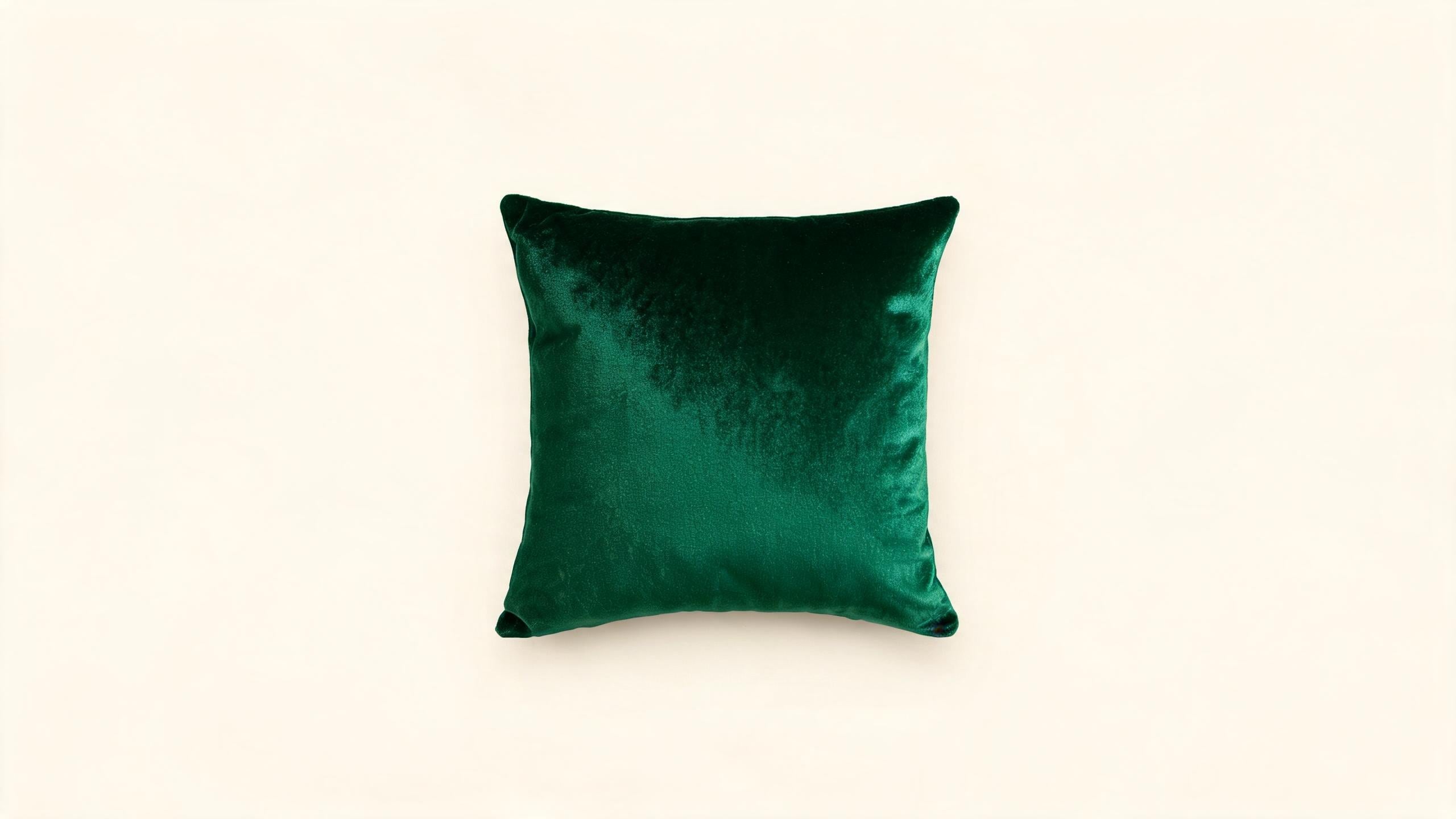
A deep dive into AI based fabric texture recognition for shopping and what it means for modern fashion.
AI fabric texture recognition maps digital pixels to physical material properties. This technology interprets the visual data of a garment—shadow depth, sheen, weave density, and light refraction—to predict how a fabric feels and behaves. In the current e-commerce landscape, the primary cause of friction is the "tactile gap," where a user cannot verify the quality or weight of a garment before purchase. AI based fabric texture recognition for shopping solves this by translating flat 2D images into multidimensional material intelligence. This is not a visual filter; it is a computational understanding of textile engineering.
Key Takeaway: AI based fabric texture recognition for shopping bridges the e-commerce tactile gap by analyzing visual data like weave density and light refraction to predict material properties. This technology allows consumers to accurately assess a garment's physical feel and behavior before making a purchase.
How does AI based fabric texture recognition for shopping work?
The core of fabric recognition lies in Computer Vision (CV) and Deep Learning. Standard e-commerce platforms treat images as static marketing assets. In contrast, an AI-native system treats every pixel as a data point reflecting a physical reality. According to a study by the IEEE (2023), deep convolutional neural networks (CNNs) can now identify fabric types from images with over 90% accuracy by analyzing micro-patterns that are often invisible to the untrained human eye.
The process begins with feature extraction. The AI identifies "textons"—the fundamental units of texture. For a heavy denim, the system recognizes the diagonal twill pattern and the slight variations in indigo saturation. For a silk charmeuse, it analyzes the specular reflection and the way light pools in the folds, indicating a high-sheen, low-friction surface. This data is then cross-referenced against a library of known physical materials.
Sophisticated systems go further by incorporating "drape simulation." By calculating the weight and stiffness of the perceived texture, the AI can predict how the fabric will hang on a 3D body model. This transforms the shopping experience from a guessing game based on a "100% Cotton" label into a precise analysis of structural performance.
Why do current digital shopping models fail at texture?
Most fashion apps are built on metadata, not material intelligence. They rely on product descriptions written by copywriters, which are frequently inaccurate or vague. Terms like "soft touch" or "premium feel" are marketing labels, not data points. This lack of precision is why return rates in fashion remain catastrophically high. According to Statista (2023), clothing returns due to a mismatch in physical expectations account for nearly 70% of total e-commerce returns.
The failure of the legacy model is rooted in its reliance on human-inputted tags. When a retailer labels a shirt as "flannel," the system treats all flannels as equal. It ignores the difference between a 4oz summer flannel and a 10oz heavy-duty brushed cotton. An AI-native infrastructure identifies these differences by measuring the surface "fuzz" or nap through high-resolution image analysis.
Furthermore, legacy systems do not account for the interaction between light and fiber. A matte finish absorbs light differently than a mercerized finish. By ignoring these optical signatures, traditional platforms force users to rely on imagination. AI based fabric texture recognition for shopping replaces imagination with simulation.
| Feature | Legacy E-commerce | AI-Native Infrastructure |
| Data Input | Manual tags (e.g., "Silk") | Visual feature extraction (CNNs) |
| Material Depth | 2D static images | 3D drape and weight simulation |
| Accuracy | Subjective / Marketing-led | Objective / Data-driven |
| User Feedback | Zoom and crop | Haptic-driven descriptions |
| Return Mitigation | Reactive (refunds) | Proactive (precision matching) |
How does AI interpret different fabric categories?
To understand how AI based fabric texture recognition for shopping functions in practice, one must look at how it categorizes specific textile behaviors. The system does not just see "blue fabric"; it sees a specific weave density and yarn count.
Natural vs. Synthetic Fibers
AI systems analyze the uniformity of the fiber. Natural fibers like linen have "slubs"—irregularities in the yarn thickness. An AI model identifies these irregularities to confirm the authentic texture of the linen. Synthetics, such as polyester, often exhibit a more uniform, grid-like structure under magnification. The AI uses these patterns to provide the user with an "authenticity score" or a "breathability index" based on the perceived tightness of the weave.
Knit vs. Woven Structures
The mechanical stretch of a garment is determined by its construction. A jersey knit has a looped structure that suggests high elasticity. A poplin weave is a simple over-under pattern that implies rigidity. By identifying these structures, the AI can inform a personal style model whether a garment will fit tightly or move with the body. This level of detail is essential for AI algorithms for personalized clothing shopping, where the goal is to match a garment to a user's specific comfort profile.
Surface Finishes
Finishing processes like calendering (which adds shine) or napping (which adds fuzz) change the visual frequency of the fabric. AI models use spectral analysis to determine how much light is reflected versus absorbed. A high-specular reflection suggests a smooth, cool-to-the-touch surface, whereas a high-diffuse reflection suggests a warm, textured surface like wool or fleece.
What are the principles of tactile style intelligence?
Building a style model requires more than just knowing what a user likes. It requires knowing what a user feels. Fabric is the interface between the body and the environment. Therefore, AI infrastructure must prioritize tactile intelligence.
- Material-First Filtering: Users should not search for "dresses." They should search for "heavy-weight, matte-finish fabrics with high drape." This shifts the focus from aesthetic trends to physical utility.
- Contextual Texture Analysis: A velvet blazer is appropriate for a winter gala but functionally useless for a summer wedding. AI must correlate texture data with environmental data.
- Dynamic Preference Learning: If a user consistently returns items labeled as "viscose" because they find them too thin, the AI should learn to flag low-density textures in the future, regardless of the fiber name.
The objective is to create a digital twin of the user's tactile preferences. This goes beyond simple recommendation. It is about building a system that understands the user's sensory boundaries.
Common mistakes in fabric recognition implementation
Most attempts at AI based fabric texture recognition for shopping fail because they treat the AI as a search tool rather than a diagnostic tool. Here are the most frequent errors in the industry:
- Over-reliance on low-resolution imagery: AI cannot extract texture from a 72dpi thumbnail. For texture recognition to work, the infrastructure must ingest high-fidelity, multi-angle shots that capture the fabric under different lighting conditions.
- Ignoring the "Hand-Feel" variable: Texture is not just a visual pattern; it is a physical sensation. Systems that do not map visual data to haptic descriptors (e.g., "crisp," "spongy," "slick") fail to provide value to the consumer.
- Disregarding the impact of color on texture perception: Darker colors often mask texture details. A black twill is harder to identify than a tan twill. Sophisticated AI uses infrared or high-contrast processing to "see" through the pigment and identify the underlying structure.
According to McKinsey (2023), companies that successfully integrate AI-driven visual discovery and material analysis report a 10-15% reduction in return rates and a significant increase in customer lifetime value. The mistake is treating texture as an afterthought rather than the foundation of the purchase decision.
How to use AI texture recognition to build a style profile?
For the modern consumer, the goal is to automate the vetting process. You should not have to read five reviews to find out if a sweater is itchy. The AI should tell you. When building an AI-based style profile, texture becomes a primary attribute alongside fit and color.
A robust style profile will categorize your preferences into "Texture Clusters."
- Cluster A (Structured): Heavy denims, crisp poplins, architectural wools.
- Cluster B (Fluid): Silk crepes, fine jerseys, tencel blends.
- Cluster C (Tactile): Bouclé, corduroy, brushed mohair.
By analyzing your past behavior and feedback, the AI determines which clusters resonate with your lifestyle. If you work in a corporate environment, your model may skew toward Cluster A. If you prioritize comfort and movement, it skews toward Cluster B. The AI based fabric texture recognition for shopping acts as a gatekeeper, ensuring that only garments matching your tactile profile reach your recommendations.
The gap between personalization promises and reality
Every fashion retailer claims to offer "personalization." In reality, they offer "segmentation." They put you in a bucket with a thousand other people who bought the same sneakers. True personalization requires an understanding of your unique relationship with materials. Finding your perfect fit means understanding how AI can make online fashion feel more personal.
The reality is that most "AI" in fashion is just a glorified search engine. It looks for keywords. If you search for "soft pants," it looks for the word "soft" in the description. A true AI infrastructure analyzes the fabric of every pair of pants in the database and determines which ones are objectively soft based on fiber orientation and yarn thickness.
This is the difference between a feature and an infrastructure. A feature is a "Find Similar" button. Infrastructure is a system that understands that a brushed cashmere and a heavy-gauge cotton fleece share the same "thermal comfort" and "softness" metrics, even if they look different.
What is the future of AI in fabric recognition?
We are moving toward a reality where digital shopping is more informative than physical shopping. In a store, you can touch a garment, but you don't know how it will look after ten washes. AI can predict this. By analyzing the structural integrity of the weave, AI based fabric texture recognition for shopping can estimate the pilling resistance and color fastness of a material.
Furthermore, we are seeing the rise of "Haptic-to-Visual" mapping. Future interfaces may allow users to use haptic feedback devices (like phone vibrations or specialized styluses) to "feel" the grain of a fabric identified by the AI. This would completely close the tactile gap.
According to Gartner (2024), by 2026, 30% of global luxury brands will use AI-based material analysis to verify the quality of their supply chains and communicate that value directly to the consumer. This isn't just about shopping; it's about transparency and ethical verification.
Closing: The Intelligence of Touch
The era of "blind" e-commerce is ending. Fashion is a physical medium, and its digital representation must be equally physical. AI based fabric texture recognition for shopping is the infrastructure required to make digital fashion commerce viable at scale. It removes the risk of the unknown and replaces it with the certainty of data.
Your style is not just an aesthetic choice; it is a material one. The way a fabric interacts with your skin and the way it moves through the world defines your experience of a garment. AI allows us to quantify that experience. We are no longer limited by what we can see on a screen; we are empowered by what the AI can sense in the data.
AlvinsClub uses AI to build your personal style model. Every outfit recommendation learns from you—not just the colors you like, but the textures you demand. We treat fashion as a data science, ensuring that every piece recommended to you meets your personal standards for material quality and tactile performance. Try AlvinsClub →
Summary
- AI fabric texture recognition interprets visual data such as shadow depth, sheen, and weave density to predict the physical behavior and feel of garments.
- AI based fabric texture recognition for shopping bridges the e-commerce "tactile gap" by translating 2D product images into multidimensional material intelligence.
- According to a 2023 IEEE study, deep convolutional neural networks can achieve over 90% accuracy in identifying fabric types by analyzing micro-patterns invisible to the human eye.
- To function effectively, AI based fabric texture recognition for shopping employs feature extraction to identify "textons," which are the fundamental units of texture within a material.
- The system distinguishes between materials by analyzing specific physical indicators, such as the specular reflection in silk charmeuse or the diagonal twill patterns in heavy denim.
Frequently Asked Questions
What is AI based fabric texture recognition for shopping?
AI based fabric texture recognition for shopping is a technology that analyzes visual data like sheen and weave density to predict physical material properties. It maps digital pixels to tactile characteristics, allowing consumers to understand the quality of a garment without touching it. This innovation bridges the gap between digital images and physical sensory experiences in online retail.
How does AI based fabric texture recognition for shopping improve e-commerce?
This technology enhances the e-commerce experience by reducing the tactile gap that often leads to customer dissatisfaction and product returns. By providing a detailed digital interpretation of a garment's weight and feel, AI based fabric texture recognition for shopping helps buyers make more informed decisions. Retailers benefit from higher conversion rates and lower operational costs related to logistics.
Why is AI based fabric texture recognition for shopping important for fashion brands?
Fashion brands use AI based fabric texture recognition for shopping to communicate the premium quality of their textiles through standard product photography. It allows companies to showcase subtle details like shadow depth and light refraction that traditional 2D images often fail to capture. This transparency builds brand trust and helps differentiate high-quality materials in a crowded marketplace.
Can AI predict how a fabric feels from a photo?
Advanced computer vision models analyze visual cues such as light refraction and pixel patterns to estimate the softness or stiffness of a textile. By interpreting how light interacts with the surface of a weave, the system creates a digital profile that mimics human touch. This process translates visual information into sensory data points that accurately reflect physical material behavior.
How do algorithms analyze textile materials in online stores?
Algorithms process high-resolution images to identify specific parameters like weave density and material sheen that indicate fabric composition. These systems use deep learning to compare visual inputs against extensive databases of known textile properties. This analysis allows the software to generate a comprehensive report on how a garment will drape or move in real life.
Is digital texture recognition accurate for luxury clothing?
Digital texture recognition provides high levels of accuracy for luxury items by identifying the complex weaves and delicate finishes typical of high-end garments. The technology excels at distinguishing between similar-looking materials by detecting minute differences in texture and light absorption. This precision ensures that the luxurious feel of premium fabrics is effectively communicated to online shoppers.
This article is part of AlvinsClub's AI Fashion Intelligence series.
Related Articles
- AI Algorithms For Personalized Clothing Shopping — What You Need To Know
- Finding Your Perfect Fit: How AI Makes Online Fashion Feel More Personal
- The modern man's guide to building an AI-based style profile
- Smart Style: A Definitive Guide to AI-Based Personal Shoppers for the Busy
- 7 Clever Ways to Use AI for Better Accessory and Handbag Styling
About the author
- Founder building AI-native fashion commerce infrastructure. I design autonomous systems, agent workflows, and automation frameworks that replace manual retail operations. Currently focused on AI-driven commerce infrastructure, multi-agent systems, and scalable automation.
Comments
Join the discussionNo comments yet. Be the first to comment.