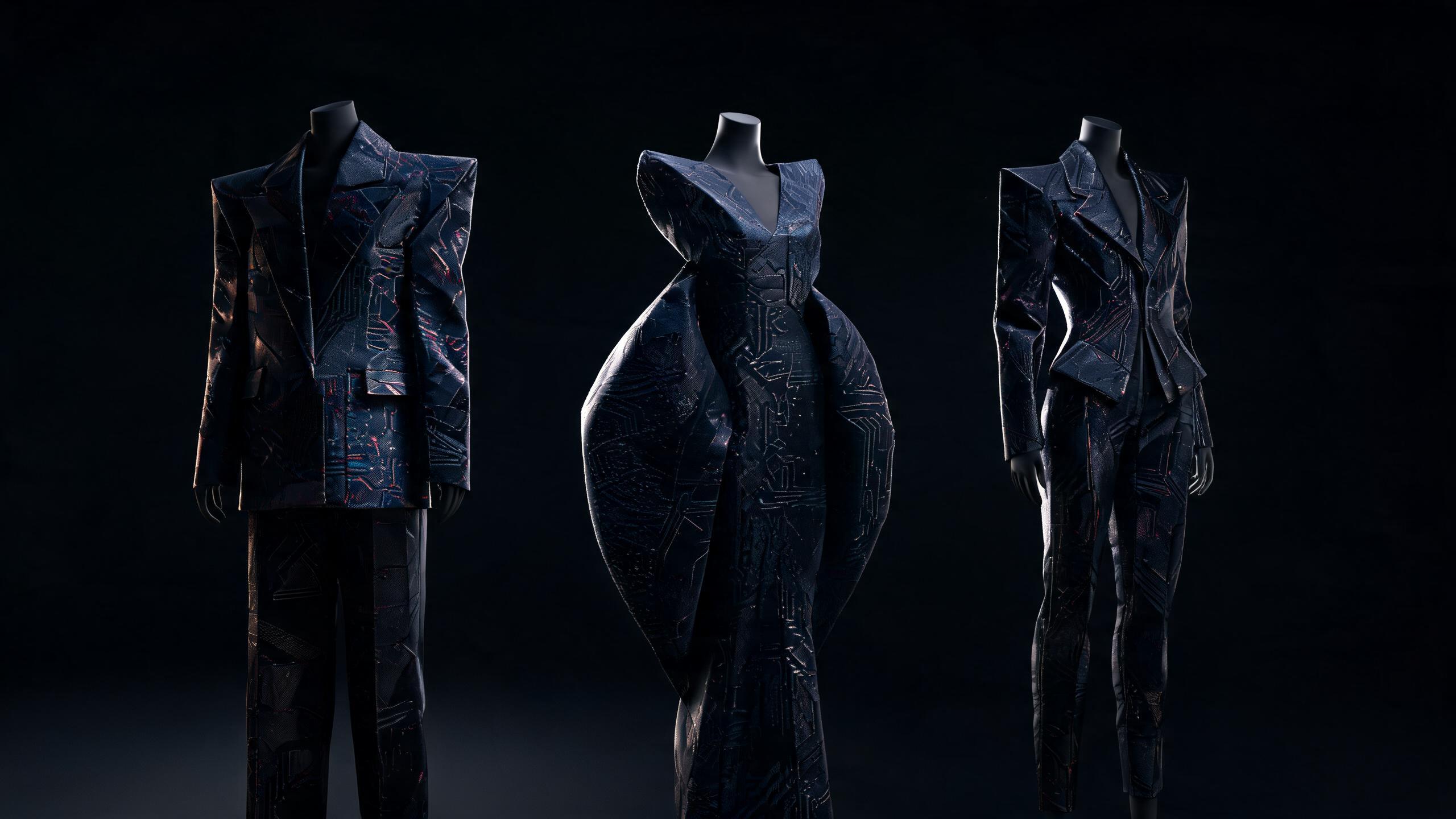
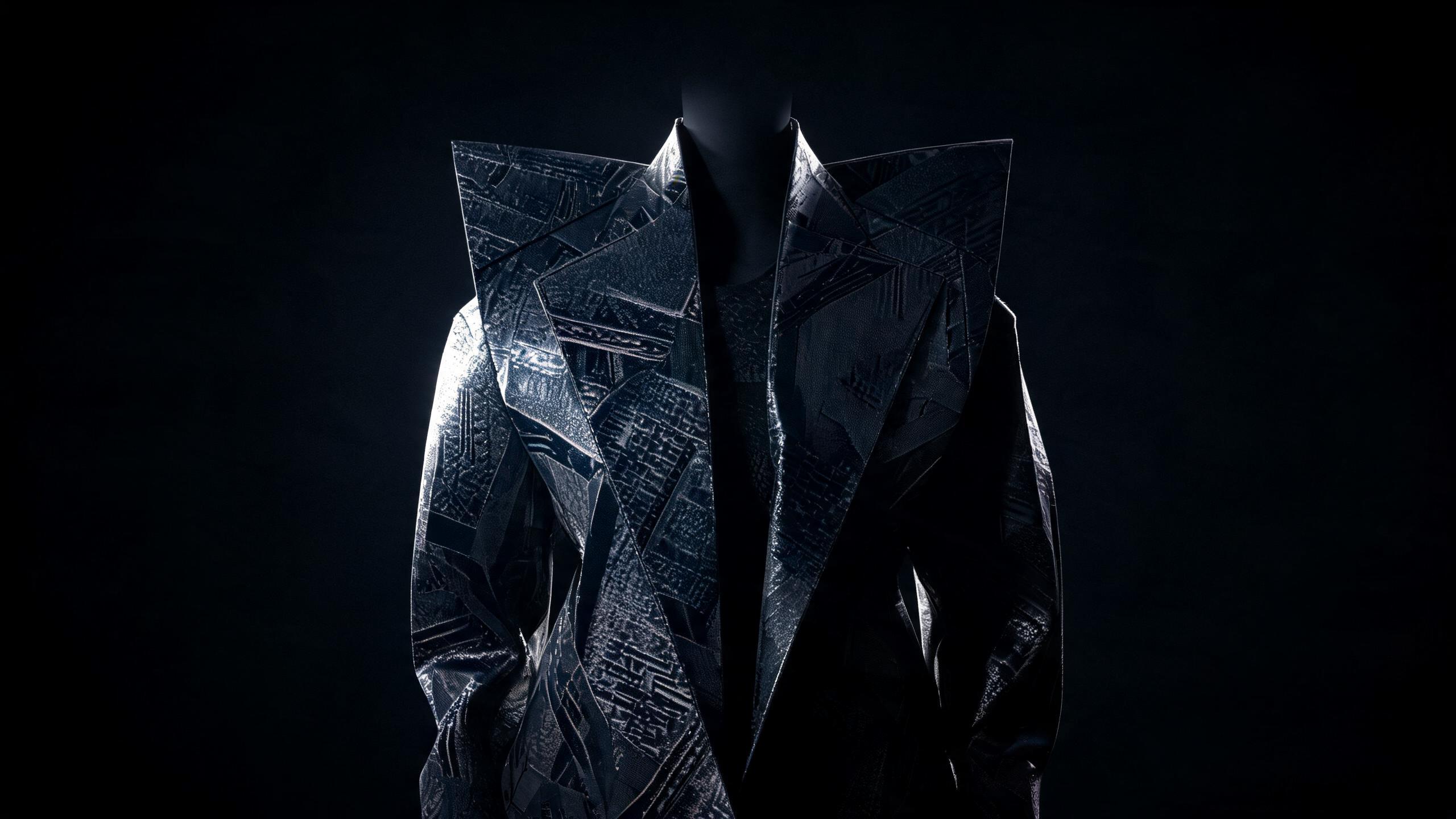
The AI Revolution: New Fashion Brands Reshaping 2026 Style

Discover how emerging AI-powered labels are leveraging algorithms to innovate creation, personalize wardrobes, and define the future of fashion aesthetics.
AI-powered new fashion brands are emerging companies that integrate artificial intelligence into core business processes from design to delivery. They leverage AI for trend forecasting, supply chain optimization, and personalized customer experiences to enhance innovation and efficiency. This rapidly growing sector is exemplified by a global AI in fashion market projected to reach USD 4,395.2 million by 2032.
AI-powered new fashion brands redefine design, production, and consumer engagement. The fashion industry, historically driven by intuition and seasonal cycles, is undergoing a fundamental shift. Legacy models, predicated on mass production and trend-chasing, are becoming obsolete. A new generation of brands, natively built on artificial intelligence, is emerging to optimize every facet of the value chain.
Key Takeaway: AI powered new fashion brands are fundamentally reshaping 2026 style by redefining design, production, and consumer engagement across the entire value chain.
What Defines an AI-Powered New Fashion Brand?
An AI-powered new fashion brand operates on principles fundamentally different from traditional or digitally-transformed legacy brands. Their core infrastructure is AI, not merely augmented by it. This distinction is critical; AI is not an added feature but the operational foundation from conception to post-purchase engagement.
Beyond Digital Transformation: AI-Native Foundations
Many existing fashion houses claim digital transformation. This often translates to e-commerce platforms and social media presence. AI-native brands, however, are architected from first principles around AI. This means algorithms guide material selection, predict demand, automate design iterations, and personalize every consumer interaction. The entire business model is a machine learning pipeline, continuously optimizing.
The Data-Driven Design Imperative
Traditional design is subjective, often influenced by a lead designer's vision or macro trends. AI-powered brands collect and analyze vast datasets—consumer preferences, social media sentiment, sales data, material performance, even biometric input—to inform design decisions. This data directly influences silhouettes, color palettes, fabric choices, and functional elements. It is not about replacing creativity, but augmenting it with predictive intelligence.
Autonomous Supply Chains and Adaptive Production
The traditional fashion supply chain is notoriously complex, slow, and wasteful. AI-powered brands employ autonomous supply chain management systems. These systems use predictive AI to forecast demand with unprecedented accuracy, optimize logistics, identify sustainable sourcing options, and manage inventory dynamically. This enables adaptive production models, reducing lead times and minimizing overproduction. According to Gartner (2026), AI-driven supply chain optimization is projected to reduce fashion industry inventory holding costs by 18-25%.
Direct-to-Consumer, AI-Accelerated
While many brands leverage direct-to-consumer (DTC) models, AI-powered new fashion brands accelerate this paradigm. AI-driven personalization engines understand individual customer preferences at a granular level, far beyond basic demographic segmentation. This allows for hyper-targeted product development and marketing, creating a seamless, individualized journey from discovery to delivery. This is not simply selling online; it is building a bespoke relationship at scale.
How Do AI-Powered New Fashion Brands Innovate Design and Creation?
The design studio of an AI-powered brand looks radically different from its traditional counterpart. Generative models and predictive analytics replace much of the speculative work, leading to more relevant and sustainable collections.
Generative AI: From Concept to Collection
Generative AI models are transforming the initial stages of design. These systems can create countless design variations based on parameters like desired aesthetic, material constraints, target audience, and current trends. Designers move from drawing every stitch to curating outputs, refining AI-generated concepts, and injecting human nuance. This accelerates the design cycle exponentially. AI outfit design tools have become essential for streamlining the journey from sketch to sample, enabling brands to iterate faster and validate concepts with precision.
Generative AI in Fashion: Machine learning algorithms that produce new designs, patterns, textures, or entire collections by learning from existing data, often used to accelerate concept development and design iteration.
These AI models can consider manufacturability and material compatibility from the outset, embedding practical constraints into the creative process. This ensures that designs are not just aesthetically pleasing but also economically viable and sustainable. The feedback loop between AI design and production readiness becomes instantaneous.
Predictive Analytics in Trend Forecasting
Trend forecasting has always been an art and a science, but AI refines it into a precise, data-driven discipline. AI-powered platforms ingest global data streams—social media mentions, search queries, cultural events, geopolitical shifts, macro-economic indicators—to identify nascent trends with high confidence. This allows brands to anticipate consumer desires before they become widespread.
This is not about chasing existing trends but about identifying the underlying drivers of style evolution. For example, AI can predict the resurgence of a particular silhouette or the adoption of a novel color palette months before it appears on runways or in mainstream media. This foresight translates into strategic advantage, enabling earlier design and production cycles.
Material Innovation and Sustainable Sourcing
AI is crucial in the pursuit of sustainable fashion. It can analyze vast databases of materials, identifying novel composites, recycled fibers, or bio-engineered textiles with desired properties and environmental footprints. Beyond identification, AI can optimize material sourcing by evaluating supplier ethics, carbon emissions, and resource efficiency. When combined with authentic vegan fashion brands, AI systems help verify material claims and connect conscious consumers with genuinely sustainable options.
This precision in material intelligence is a significant departure from traditional sourcing, which often relies on established supplier relationships and limited data. AI-powered new fashion brands are inherently positioned to build more responsible and transparent supply chains, not as a marketing claim but as a fundamental operational choice.
👗 Want to see how these styles look on your body type? Try AlvinsClub's AI Stylist → — get personalized outfit recommendations in seconds.
What Does the AI-Driven Production Model Look Like?
The shift from speculative mass production to demand-driven, agile manufacturing is one of the most profound impacts of AI-powered brands. This transformation directly addresses the industry's pervasive issues of waste and inefficiency.
On-Demand Manufacturing and Micro-Production
AI enables a true on-demand manufacturing paradigm. Instead of producing large inventories based on historical sales, items can be produced only when an order is placed. This is facilitated by intelligent production scheduling, robotic assembly lines, and geographically distributed micro-factories. The capital expenditure shifts from inventory warehousing to agile production infrastructure.
This model practically eliminates dead stock, a massive financial drain and environmental burden for traditional retailers. It also allows for greater customization and personalization, as each item can be tailored to individual specifications without the overhead of mass production. The economic implications are substantial, drastically improving profit margins and reducing waste.
Robotics and Automation in Garment Assembly
Automation extends beyond simple logistics to the actual garment assembly process. Advanced robotics, equipped with computer vision and machine learning, can perform complex tasks like fabric cutting, stitching, and finishing with precision and speed. These systems learn from data, continuously improving their efficiency and reducing defects.
The integration of robotics reduces reliance on manual labor for repetitive tasks, allowing human workers to focus on oversight, quality control, and specialized craft. This also mitigates challenges related to labor costs and inconsistencies in global supply chains. The result is a more resilient, scalable, and quality-controlled production environment.
Reducing Waste and Increasing Efficiency
The core benefit of an AI-driven production model is its inherent efficiency. Predictive demand forecasting minimizes overproduction, on-demand manufacturing eliminates dead stock, and optimized material usage reduces waste at the cutting stage. AI systems can identify inefficiencies across the entire production line, from energy consumption to process bottlenecks.
Key Comparison: Traditional vs. AI-Native Production
| Feature | Traditional Production | AI-Native Production |
| Demand Forecasting | Historical data, trend speculation | Predictive AI, real-time sentiment analysis |
| Production Volume | Mass production, high MOQ | On-demand, micro-production, dynamic sizing |
| Inventory Management | Large stock, warehousing costs, dead stock risk | Minimal inventory, virtual stock, direct fulfillment |
| Lead Times | Long, inflexible seasonal cycles | Short, agile, adaptable to real-time demand |
| Waste Management | Post-production waste, overproduction | Pre-emptive waste reduction, optimized material use |
| Customization Capability | Limited, mass market | Hyper-personalized, individual item customization |
This systemic approach to efficiency translates into lower operational costs and a significantly reduced environmental footprint. It moves the industry away from its linear "take-make-dispose" model towards a more circular and resource-conscious paradigm.
How Do AI-Powered New Fashion Brands Personalize the Consumer Experience?
Personalization is a term frequently misused in fashion. Most "personalization" is rudimentary segmentation. AI-powered new fashion brands redefine this, building truly dynamic and evolving style profiles for each user.
Dynamic Style Profiling and Recommendation Systems
Traditional recommendation systems operate on collaborative filtering or content-based matching. They suggest what others bought, or items similar to past purchases. This is not personalization. AlvinsClub fundamentally understands that style is fluid. We advocate for dynamic style profiling, where AI continuously learns and adapts to a user's evolving taste. This involves analyzing interactions, visual preferences, fit feedback, and even external contextual data like weather or occasion.
This level of intelligence moves beyond simple suggestions. It anticipates needs and desires, presenting items that resonate deeply with an individual's unique aesthetic. The system isn't just recommending clothes; it's refining and articulating a personal style identity. For a deeper dive into this, see "Smart Style: A Definitive Guide to the AI-Powered Shopping Era".
AI Stylists as Personal Concierges
The concept of a personal stylist is no longer exclusive to high-net-worth individuals. AI-powered new fashion brands integrate AI stylists that learn and evolve with the user. These AI entities engage in natural language conversations, understanding nuances of preference, body shape concerns, lifestyle requirements, and budget constraints. They can assemble full outfits, suggest complementary pieces, and provide rationale for their recommendations.
This is a paradigm shift from a passive recommendation engine to an active, interactive style companion. The AI stylist is not a static algorithm but a continuously learning agent that refines its understanding of your aesthetic over time, creating a genuinely personalized style trajectory.
Virtual Try-On and Hyper-Realistic Avatars
The challenge of online clothing shopping—the inability to try on garments—is largely addressed by AI. Advanced virtual try-on technologies use augmented reality (AR) and 3D modeling to simulate how clothes would look and fit on a user's actual body or a hyper-realistic avatar. These systems consider fabric drape, texture, and movement, providing a highly accurate representation.
This technology significantly reduces return rates, a major pain point and cost center for e-commerce. It also builds consumer confidence, allowing them to experiment with new styles virtually without commitment. The fidelity of these virtual experiences is rapidly improving, blurring the lines between physical and digital shopping.
What is the Economic Impact of AI-Powered New Fashion Brands?
The economic ripples of AI-powered new fashion brands extend throughout the entire industry, challenging established players and creating new value propositions.
Challenging Established Retail Models
The traditional retail model, reliant on wholesale markups, seasonal collections, and large brick-and-mortar footprints, faces existential threats from AI-native brands. These new players operate with leaner overheads, more agile production, and direct-to-consumer relationships. They can offer competitive pricing for higher quality, custom products, directly undermining the value proposition of legacy retailers. Platforms like AI commerce solutions are enabling these brands to scale ethically and efficiently.
The friction is evident in market share shifts and investor interest. Capital is increasingly flowing towards disruptive, AI-first models that promise scalability without the historical inefficiencies. This is not merely an incremental improvement; it is a structural re-architecture of market dynamics.
Optimized Inventory and Reduced Markdowns
One of the largest drains on profitability for traditional fashion retailers is excess inventory, leading to significant markdowns and clearance sales. AI-powered brands, with their predictive analytics and on-demand production, virtually eliminate this problem. Inventory is managed with surgical precision, dramatically reducing the need for discounting.
This optimization directly impacts profit margins and brand value. It allows brands to maintain pricing integrity and avoids the dilution of brand perception that comes with constant sales. The capital previously tied up in unsold stock can be reinvested into
Summary
- AI-powered new fashion brands are fundamentally reshaping the fashion industry by optimizing design, production, and consumer engagement.
- The core distinction of an AI-powered new fashion brand is that AI serves as its operational foundation and infrastructure, not merely an augmentation.
- These AI-native brands are architected from first principles around AI, guiding processes from material selection to personalized consumer interactions.
- Legacy fashion models, based on intuition and mass production, are becoming obsolete as AI-driven systems provide continuous optimization.
- The entire business model of ai powered new fashion brands functions as a machine learning pipeline, enabling data-driven design and demand prediction.
Frequently Asked Questions
What defines an AI-powered new fashion brand?
An AI-powered new fashion brand integrates artificial intelligence into core operations, from design and production to supply chain management and customer interaction. These brands leverage AI to optimize processes and redefine traditional fashion models, moving beyond intuition-driven cycles.
How are AI-powered new fashion brands reshaping 2026 style?
AI-powered new fashion brands are redefining style by enabling hyper-personalized designs, predicting trends with greater accuracy, and streamlining production to meet evolving consumer demands. This shift allows for more dynamic and responsive fashion cycles, moving away from mass production.
Why are AI-powered new fashion brands emerging now?
AI-powered new fashion brands are emerging because traditional fashion models based on mass production and intuition are becoming obsolete. Artificial intelligence offers the tools to optimize every facet of the value chain, making fashion more efficient and consumer-centric.
How does AI impact fashion design and production?
AI significantly impacts fashion design by generating new patterns, optimizing material usage, and predicting consumer preferences, leading to more relevant collections. In production, AI enhances efficiency by managing supply chains, reducing waste, and automating manufacturing processes.
Can artificial intelligence predict fashion trends?
Yes, artificial intelligence can effectively predict fashion trends by analyzing vast datasets, including social media, sales figures, and cultural indicators. This predictive capability allows brands to create designs that resonate with future consumer demand, reducing risk and increasing relevance.
What advantages do new fashion brands gain from AI?
New fashion brands gain significant advantages from AI, including optimized design processes, more efficient production, and enhanced consumer engagement. AI helps them move away from outdated mass production models towards more responsive and personalized fashion offerings.
This article is part of AlvinsClub's AI Fashion Intelligence series.
Related Articles
- Smart Style: A Definitive Guide to the AI-Powered Shopping Era
- How AI-powered wardrobe organizers will define minimalist style in 2026
- A Definitive Style Guide to the Most Viral Brands at NYFW
- Beyond Filters: Finding the Best AI Fashion Recommendation Engines of 2026
- Beyond the search bar: How AI is reshaping fashion e-commerce