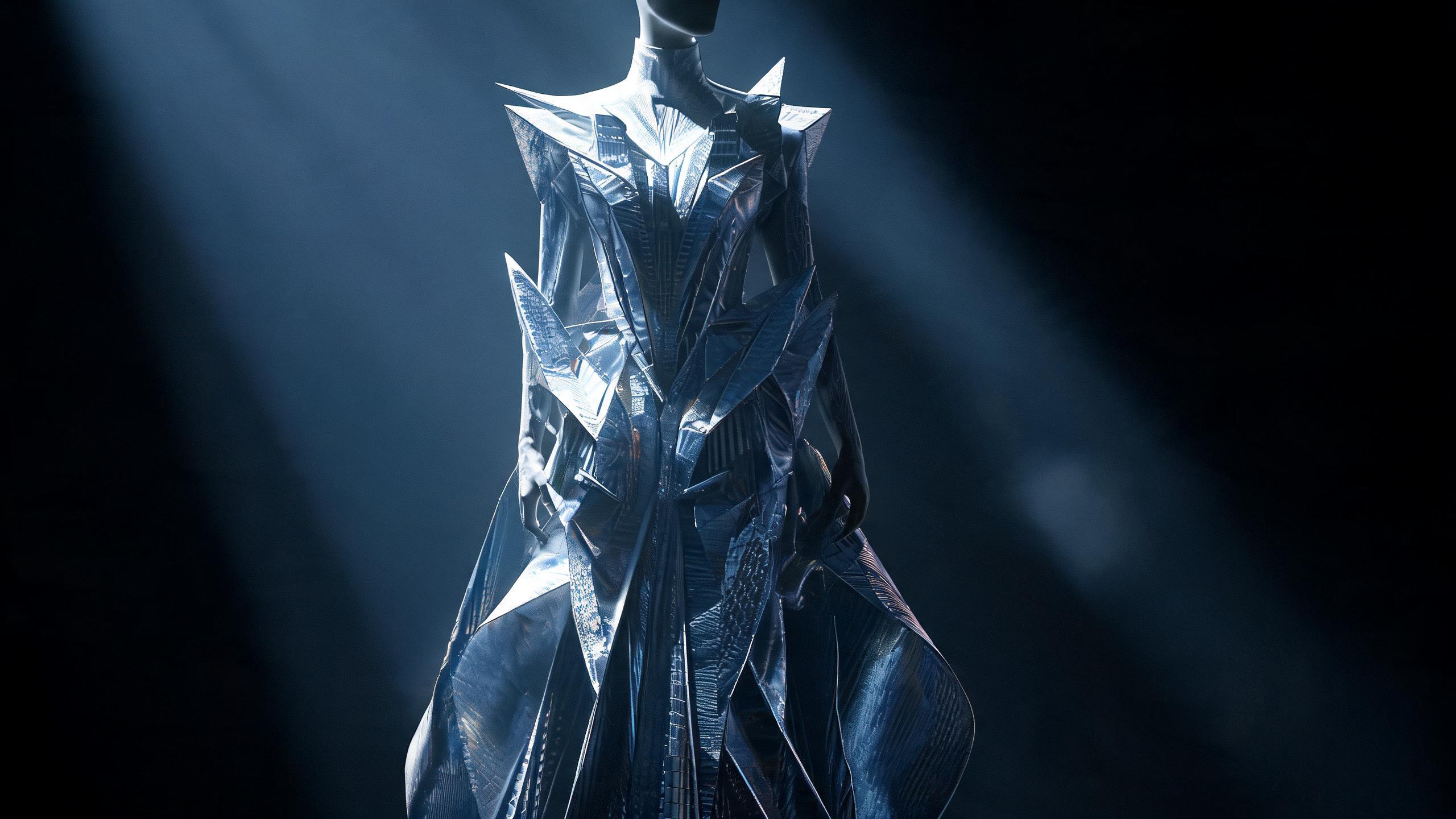
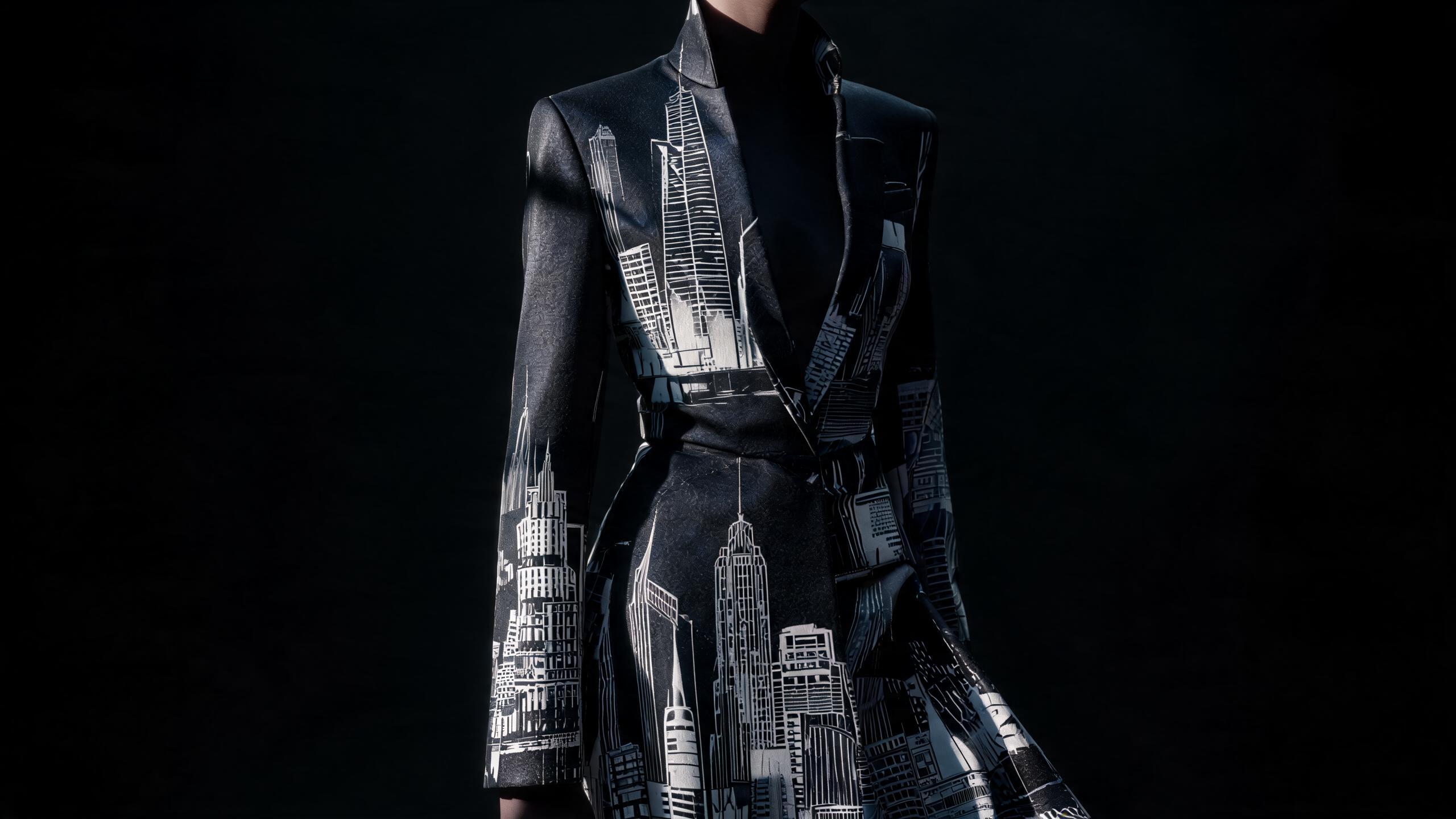
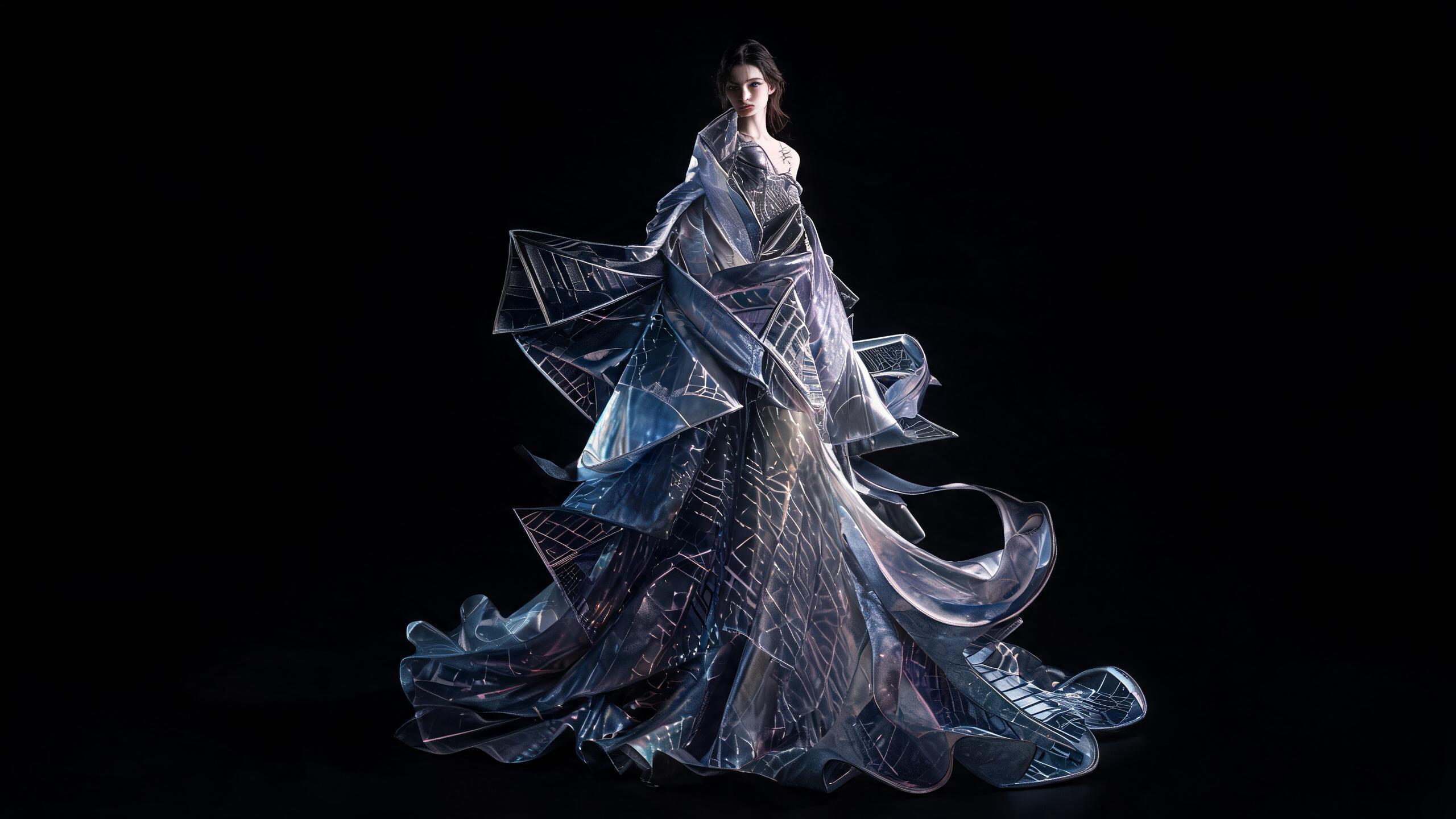
Runway to Algorithm: Traditional vs AI-Designed Bra Tops
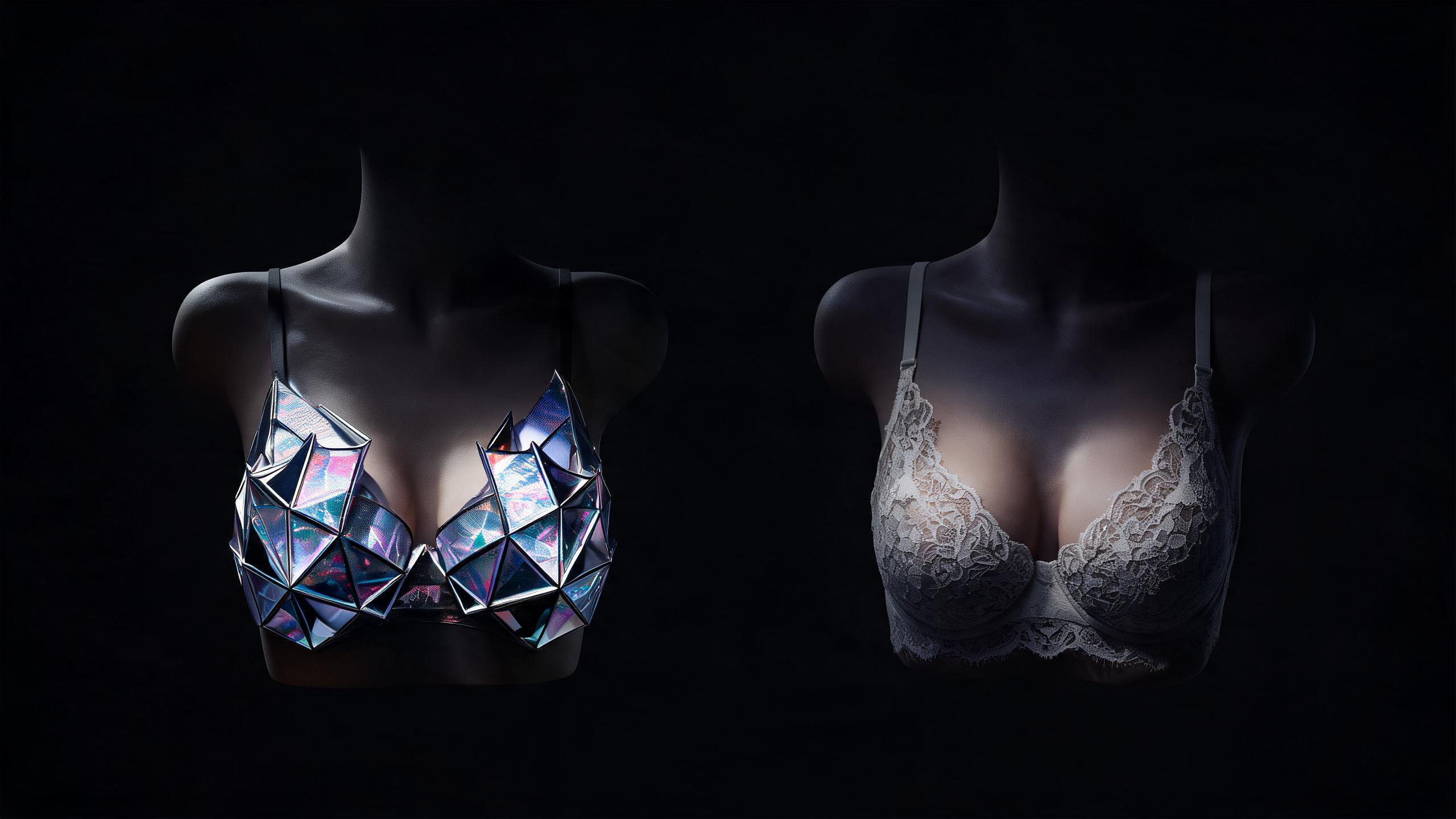
Compare craftsmanship, cultural influence, and generative design shaping how bras as tops evolve from runway statements into technology-driven fashion.
Bras as tops runway trend technology is the use of bra-inspired garments as standalone fashion tops, increasingly shaped by digital design tools and AI-generated pattern, styling, and visualization workflows. Traditional bra tops rely on established manual patternmaking and fit testing, while AI-designed versions use algorithmic systems to generate and optimize variations across parameters such as silhouette, fabric, and support.
Bra tops designed through traditional runway methods prioritize a designer’s cultural vision, while AI-designed bra tops optimize fit, styling context, and personal relevance through data.
Key Takeaway: The bras as tops runway trend technology reflects a shift from traditional designs driven by cultural vision to AI-designed bra tops optimized for fit, styling context, and personal relevance through data.
Runway to Algorithm: Traditional vs AI-Designed Bra Tops
The phrase bras as tops runway trend technology captures a larger shift in fashion design: clothing is moving from seasonal spectacle toward responsive, data-informed systems. A bra top can function as lingerie, outerwear, sportswear, eveningwear, or a layered base depending on material, construction, styling, setting, and the wearer’s preferences.
Traditional runway design and AI-assisted design approach that problem from different directions. The traditional method begins with a designer’s concept, references, sketches, fabric choices, and patternmaking expertise. AI-assisted design begins with structured inputs: garment attributes, body measurements, wardrobe context, visual references, user behavior, and performance feedback.
Neither method automatically produces better fashion. Traditional design excels at authorship, symbolism, and material intuition. AI excels at exploring variations, identifying relationships across data, and adapting a garment to a specific wearer or use case.
The strongest approach combines them without confusing novelty with intelligence.
The central recommendation is clear: use traditional design to establish meaning and construction quality, then use AI to personalize, test, and extend the garment across real wardrobes. The runway should generate the language. The algorithm should make that language useful to more people.
AI-designed bra top: A bra top developed or adapted with machine-learning systems that analyze garment attributes, body data, styling context, and wearer feedback to generate or refine designs for specific users and situations.
What Does the Traditional Runway Approach Actually Optimize?
Traditional runway design optimizes creative direction, cultural expression, and controlled presentation. A designer establishes a visual thesis, selects materials, builds prototypes, and stages the garment within a collection. The runway then communicates the garment through a curated sequence of styling, casting, lighting, music, and movement.
This process matters because clothing does not exist as an isolated object. A bra top on a runway is part of a larger system of proportions, textures, references, and social signals. The same garment can communicate athletic precision under a tailored blazer, glamour with a long skirt, or utilitarian minimalism with cargo trousers.
Traditional design also contains tacit knowledge that is difficult to encode. Experienced designers recognize how a fabric behaves under tension, how a seam changes the perception of the torso, and how a small adjustment to strap placement affects both comfort and silhouette. These judgments emerge through repeated physical experimentation rather than abstract data analysis.
How Does Traditional Bra Top Design Move From Concept to Garment?
A conventional development process typically includes:
- Reference development: The designer gathers visual, historical, cultural, and material references.
- Concept definition: The collection establishes a silhouette, palette, mood, and narrative.
- Sketching and draping: The garment is explored in two-dimensional drawings and three-dimensional fabric experiments.
- Pattern development: Flat patterns translate the concept into panels, seams, support structures, and closures.
- Sampling: Prototypes reveal issues in fit, movement, stretch recovery, opacity, and durability.
- Fitting: A sample is assessed on one or more fit models.
- Runway styling: The final garment is placed within a look that controls how the audience interprets it.
- Production translation: Construction details are adapted for repeatable manufacturing.
For bra tops, the technical demands are unusually concentrated. The garment must manage support, exposure, tension, pressure, and movement while retaining the visual simplicity that often defines the look. A designer must decide whether support comes from underwire, elastic, molded cups, internal bonding, structured fabric, adjustable straps, or strategic layering.
The runway can hide some of these constraints. A look may be presented for a brief walk under controlled lighting and movement. Real wear introduces sitting, bending, temperature changes, washing, perspiration, and individual differences in breast shape and torso length.
What Are the Advantages of Traditional Runway Design?
| Strength | Why it matters for bra tops |
|---|---|
| Creative authorship | Establishes a coherent point of view rather than a generic output |
| Material intuition | Captures stretch, drape, tension, tactility, and surface behavior |
| Cultural interpretation | Connects the garment to history, identity, and visual language |
| Editorial control | Shows how a bra top functions within a complete outfit |
| Craft knowledge | Resolves construction problems through physical experimentation |
| Emotional resonance | Creates garments with narrative and symbolic force |
Traditional design is strongest when the problem is expressive rather than merely functional. If a collection needs to articulate a position on femininity, armor, sensuality, sport, or domestic codes, human authorship provides the interpretive depth.
A designer can also reject the assumptions embedded in existing data. This matters because historical fashion data often reflects narrow casting, limited sizing, established commercial categories, and dominant aesthetic preferences. A system trained on those patterns can reproduce them.
A designer can intentionally interrupt them.
What Are the Limitations of Traditional Runway Design?
The traditional method often treats the runway as the primary proof of concept. That creates several limitations:
- Limited wearer representation: A fitting process centered on a narrow sample range cannot reveal every fit experience.
- Weak feedback continuity: Consumer reactions may influence later collections but rarely update one specific garment in real time.
- Expensive iteration: Physical sampling consumes time, materials, labor, and coordination.
- Context dependence: A look validated on a runway may not translate to work, travel, climate variation, or everyday layering.
- Styling bias: The runway image can make the garment appear more versatile than it is.
- Seasonal compression: The garment is often evaluated within a launch cycle rather than through long-term use.
These limitations do not invalidate traditional design. They reveal its operating boundary. Traditional fashion is optimized for authored collections and controlled presentation.
It is not inherently optimized for continuous individual adaptation.
How Does AI-Designed Bra Top Technology Work?
AI-designed bra top technology treats the garment as a set of relationships rather than a single visual object. The system can model relationships among body measurements, garment construction, fabric behavior, outfit compatibility, climate, occasion, color preference, previous choices, and feedback.
The technology does not need to replace the designer. Its more valuable role is to expand the design search space and connect design decisions to specific users. Instead of asking, “What bra top belongs in this collection?” an AI system can ask, “Which version of this bra top works with this person’s wardrobe, proportions, comfort preferences, and intended setting?”
What Data Can an AI System Use?
An AI fashion system may process several categories of information:
- Garment data: silhouette, neckline, cup structure, strap width, closure type, fabric composition, opacity, color, and pattern.
- Body data: measurements, proportions, fit preferences, mobility needs, and self-reported comfort.
- Wardrobe data: existing garments, dominant colors, preferred silhouettes, footwear, outerwear, and layering habits.
- Behavioral data: saved items, rejected recommendations, outfit completion, repeat wear, and styling edits.
- Context data: season, temperature, occasion, activity level, dress code, and travel conditions.
- Visual data: images of garments, outfits, textures, and references.
- Language data: descriptions such as “less revealing,” “more structured,” “works under a jacket,” or “not too sporty.”
The quality of the output depends on how these inputs are represented. A basic catalog tag such as “black crop top” is insufficient. A useful system needs to distinguish between a balconette-style top, a compression bralette, a molded bustier, a sheer overlay, and a structured underbust garment.
Their visual similarity does not make them interchangeable.
What Is the Difference Between Generative Design and Recommendation?
These concepts are often combined, but they solve different problems.
Generative design creates or modifies potential garments. It can propose variations in neckline, strap geometry, paneling, color, proportion, or surface treatment.
Recommendation technology selects an existing or generated option for a particular wearer and context. It answers questions about relevance, compatibility, and timing.
A generative system can create an attractive bra top that no one wants to wear. A recommendation system can select a technically ordinary bra top that perfectly fits a person’s wardrobe and comfort requirements. Fashion intelligence requires both creation and selection, but selection is where personalization becomes visible in daily life.
What Are the Advantages of AI-Assisted Design?
| Advantage | Practical effect |
|---|---|
| Rapid variation | Explores more construction and styling options before physical sampling |
| Personalization | Adapts recommendations to individual taste and wardrobe context |
| Fit analysis | Identifies likely conflicts between body proportions and garment structure |
| Context awareness | Distinguishes runway, evening, office, travel, and casual use cases |
| Continuous learning | Updates recommendations based on explicit and implicit feedback |
| Pattern discovery | Finds links between choices that humans may overlook |
| Digital prototyping | Tests visual combinations before producing every sample |
AI is particularly strong at managing complexity. A designer may understand a garment deeply but cannot manually compare every possible pairing across a large wardrobe. An AI system can evaluate how one bra top interacts with dozens of trousers, skirts, jackets, shoes, and accessories while ranking the combinations according to a wearer’s known preferences.
That capacity changes the meaning of “versatility.” Traditional styling often labels a garment versatile because an editor can create several attractive looks. An AI system can evaluate versatility against a specific user’s actual closet. A white structured bra top is not versatile for someone whose wardrobe contains mostly soft knits and relaxed layers unless the system also identifies a bridge garment, such as an unstructured overshirt or fluid trouser.
What Are the Limitations of AI-Assisted Design?
AI has serious weaknesses when fashion data is incomplete or poorly structured.
- Garbage-in problem: Inaccurate garment tags produce irrelevant recommendations.
- Bias inheritance: Training data can reproduce narrow assumptions about bodies, gender, taste, and occasion.
- Visual overconfidence: An image model may prioritize appearance over support, comfort, or construction feasibility.
- Weak causal reasoning: A system may detect that two items appear together without understanding why they work.
- Novelty inflation: Generative systems can produce unusual details that are difficult to manufacture or wear.
- Feedback ambiguity: Rejecting an outfit does not always reveal whether the problem was color, fit, price, mood, weather, or timing.
- Privacy risk: Personal style models require careful handling of images, measurements, and behavioral data.
AI should not be treated as an autonomous authority on the body. It should operate as a decision system with visible assumptions, user correction, and human oversight where physical fit and product safety matter.
The most important distinction is between prediction and understanding. AI can predict that a user will prefer a certain outfit based on prior behavior. It does not automatically understand the emotional, cultural, or personal meaning behind the choice.
A system becomes more useful when it allows the wearer to explain preferences in language and then incorporates that explanation into the model.
Which Approach Produces Better Fit and Comfort?
For bra tops, fit is the most consequential comparison dimension. A runway look can appear precise while providing little evidence about comfort across different bodies. AI can improve fit-related decision-making, but only when it receives accurate measurements and reliable garment construction data.
Traditional patternmaking remains indispensable because fit is physical. Fabric tension, seam pressure, cup volume, strap placement, underbust stability, and movement cannot be fully validated through an image. Virtual models can estimate appearance, but the garment still needs physical testing.
How Traditional Design Handles Fit
Traditional fit development relies on:
- A base block or sloper.
- Graded size patterns.
- Fit models representing selected measurements.
- Pinning, marking, and alteration.
- Physical movement tests.
- Iterative sample revisions.
This process is effective when the fit team has access to diverse bodies and enough time for iteration. It becomes weaker when one sample is generalized across many body shapes through simple proportional grading.
A bra top exposes the limitations of basic grading. Two people with the same bust measurement can have different bust projection, torso length, shoulder slope, ribcage shape, and preferred coverage. A single size label cannot communicate all of those variables.
How AI Can Improve Fit Decisions
AI can analyze fit as a multidimensional problem. Instead of mapping one measurement to one size, it can compare:
- Bust-to-underbust relationship.
- Torso length.
- Shoulder and strap position.
- Garment stretch percentage.
- Cup depth and shape.
- Desired coverage.
- Support preference.
- Movement requirements.
- Historical fit feedback.
An AI system can then recommend a size, construction type, or styling layer while communicating uncertainty. It can also identify when a user’s needs exceed what a garment can provide. That is more useful than presenting every item as universally suitable.
AI-assisted fit has a crucial role in styling even when it cannot guarantee physical fit. Suppose a user prefers a bra top but dislikes exposed straps. The system can recommend a structured blazer, a sheer high-neck layer, or a close-fitting mesh top depending on the user’s existing wardrobe.
The problem is not solved by sizing alone; it is solved through outfit architecture.
Fit Comparison
| Fit factor | Traditional runway approach | AI-assisted approach |
|---|---|---|
| Base sizing | Uses standard blocks and graded sizes | Maps measurements and preferences to more specific options |
| Physical validation | Strong when fit samples are tested well | Requires physical validation to confirm predictions |
| Body diversity | Depends on fit-model selection and sampling budget | Can represent more variables, but only with quality data |
| Comfort preferences | Often handled through direct fittings | Can retain and apply stated feedback over time |
| Movement analysis | Physical testing provides reliable evidence | Digital simulation can screen options but cannot replace wear testing |
| Recommendation context | Usually demonstrated through editorial styling | Can connect fit to wardrobe, occasion, and layering |
The Clear Finding
Traditional methods remain the authority for physical validation. AI offers the stronger system for fit-aware selection and personalization. A reliable bra top pipeline uses both: human-led construction and AI-assisted matching.
👗 See the trends Alvin's Club is picking for you this week. Open your feed →
How Do the Two Approaches Handle Personal Style?
Personal style is not the same as visual similarity. A user may save black bra tops because they fit a monochromatic wardrobe, because they are easier to layer, or because black feels less exposing. A recommendation system that sees only color will miss the underlying pattern.
Traditional runway design communicates a point of view to a broad audience. AI-designed fashion can build a model of one person’s evolving preferences. The distinction is fundamental.
What Does Traditional Styling Offer?
Traditional styling offers cultural and editorial intelligence. A stylist understands that a bra top can change meaning through contrast:
- A delicate satin top with severe tailoring creates tension.
- A sporty compression top with a long skirt shifts athletic codes into eveningwear.
- A sculptural bustier under a loose shirt balances exposure with volume.
- A minimal knit top with denim becomes casual through texture rather than decoration.
These relationships are difficult to reduce to simple tags. They depend on proportion, social context, and visual rhythm.
Traditional styling also introduces people to combinations they would not choose independently. It can expand taste by presenting a persuasive alternative. That form of intervention is valuable, especially when a recommendation system risks repeating a user’s existing habits.
What Does AI Personalization Offer?
AI personalization offers continuity. It can remember that a user liked the silhouette but rejected the shiny fabric, preferred wider straps, wore the garment only under an open shirt, or chose a longer skirt to offset a cropped proportion.
A useful personal style model should track at least four layers:
- Stable preferences: Colors, materials, silhouettes, and levels of formality that remain consistent.
- Situational preferences: Choices that change by work, travel, weather, event, or mood.
- Negative preferences: Items, proportions, and styling combinations the user repeatedly rejects.
- Emerging preferences: New patterns that appear through recent behavior but have not yet become stable.
This model should evolve rather than freeze the user into a past identity. A person’s style changes through life stage, environment, body changes, cultural exposure, and experimentation. Static quizzes cannot capture that movement.
Personalization Comparison
| Personalization dimension | Traditional runway styling | AI style intelligence |
|---|---|---|
| Source of taste | Designer or stylist perspective | Individual behavior, feedback, and wardrobe data |
| Adaptation speed | Changes through new collections or sessions | Updates continuously as interactions accumulate |
| Context | Curated editorial or event-specific | Can respond to daily conditions and actual wardrobe |
| Discovery | Introduces intentional creative contrast | Finds patterns across many signals |
| Memory | Depends on the stylist or user | Can store structured preference history |
| Risk | May impose a broad aesthetic | May overfit past behavior without exploration controls |
The strongest recommendation system must do both jobs: preserve personal relevance while creating controlled novelty. Repeating only what a user already likes turns personalization into a filter bubble. Showing random novelty turns discovery into noise.
Which Approach Scales Better Across Use Cases?
The runway approach is powerful when the use case is a collection, campaign, editorial, or cultural statement. AI becomes more valuable when the use case involves many users, frequent decisions, and changing contexts.
Traditional Design Use Cases
Traditional bra top design is especially effective for:
- Defining a seasonal collection language.
- Establishing a signature silhouette.
- Creating editorial and runway moments.
- Translating cultural references into material form.
- Developing craftsmanship and construction details.
- Designing a deliberate visual experience.
- Producing limited or highly authored pieces.
A designer-led bra top may be the right choice when the garment’s purpose is symbolic. Its value lies in its specific authorship, not its ability to adapt to every wardrobe.
AI-Assisted Design Use Cases
AI-assisted systems are especially effective for:
- Recommending bra tops to individual users.
- Matching garments to existing wardrobes.
- Generating outfit formulas for different contexts.
- Screening color and proportion combinations.
- Learning comfort and exposure preferences.
- Supporting virtual styling before purchase or production.
- Detecting repeated fit problems across user feedback.
- Creating adaptive product assortments.
The difference resembles the difference between a book and a search engine. A book expresses a complete authored structure. A search engine helps a specific person navigate a large information space.
Fashion needs both authored objects and intelligent navigation.
Use-Case Matrix
| Use case | Better starting point | Why |
|---|---|---|
| Runway collection concept | Traditional design | Requires authorship and visual coherence |
| Daily outfit recommendation | AI-assisted system | Requires context, memory, and wardrobe awareness |
| New silhouette invention | Traditional design with AI exploration | Human direction benefits from computational variation |
| Size and fit guidance | Combined approach | Physical testing and data-based matching are both necessary |
| Editorial campaign | Traditional styling | Narrative control determines the result |
| Large wardrobe catalog | AI-assisted system | Manual matching does not scale |
| Comfort-sensitive recommendation | Combined approach | User feedback and garment engineering must interact |
| Trend analysis | AI-assisted system with human interpretation | Pattern detection needs cultural judgment |
| Limited artisanal garment | Traditional design | Craft and scarcity are central to the object |
| Evolving personal style profile | AI-assisted system | Continuous learning is the core requirement |
How Should AI Evaluate a Bra Top Beyond Its Image?
A major failure in fashion technology is treating the image as the product. A bra top can look compelling in a generated image while being impossible to support, manufacture, wash, or wear comfortably.
A more rigorous AI system needs a garment ontology: a structured representation of what the item is, how it is built, how it behaves, and where it works.
What Should a Bra Top Data Model Include?
A useful representation can include:
- Silhouette: bandeau, triangle, balconette, bustier, bralette, corset-inspired, molded, or asymmetric.
- Support architecture: underwire, elastic band, compression, molded cup, internal stay, adjustable strap, or none.
- Coverage: neckline depth, side coverage, back coverage, and opacity.
- Material behavior: stretch direction, recovery, weight, breathability, sheen, and structure.
- Layering compatibility: under jackets, shirts, sheer tops, knitwear, or dresses.
- Movement profile: suitable for standing, walking, dancing, commuting, or low-impact activity.
- Care profile: washing, drying, wrinkling, and durability requirements.
- Visual language: minimal, romantic, athletic, utilitarian, sculptural, or decorative.
- Context fit: casual, evening, resort, editorial, performance, or formal layering.
- User constraints: exposure tolerance, support preference, sensory sensitivities, and climate needs.
This level of structure allows a system to make recommendations that are explainable. Instead of saying “You may also like this,” it can say: “This option preserves the structured neckline you prefer, uses a wider underband, and works under the cropped jacket you wear regularly.”
Explainability matters because fashion choices are personal. Users should be able to correct a recommendation by identifying the reason it failed.
What Are the Pros and Cons of Each Approach?
Traditional Runway Design: Pros
- Strong creative identity: The garment carries a recognizable authorial point of view.
- Material intelligence: Physical prototypes reveal behavior that images cannot.
- Cultural depth: Designers can interpret references rather than merely correlate them.
- Controlled styling: The runway communicates a complete visual proposition.
- Constructive resistance: Human judgment can challenge dominant patterns in historical data.
- Emotional value: The garment can embody memory, symbolism, or craft.
Traditional Runway Design: Cons
- Slow iteration: Each physical change requires additional development.
- Limited personalization: One design is often presented as suitable for a broad audience.
- Inconsistent memory: User feedback does not automatically persist across decisions.
- Runway bias: Short, controlled presentation can conceal everyday limitations.
- Scaling difficulty: Expert styling and fitting do not multiply easily.
- Weak daily context: The method rarely produces continuously updated outfit guidance.
AI-Assisted Design: Pros
- High variation capacity: Many options can be explored before committing to samples.
- Individual relevance: Recommendations can respond to personal style models.
- Context sensitivity: Outfits can adapt to occasion, weather, wardrobe, and mood.
- Persistent learning: Feedback can influence future recommendations.
- Pattern discovery: Systems can identify relationships across garments and behaviors.
- Operational scale: One intelligence layer can support many users and decisions.
AI-Assisted Design: Cons
- Data dependence: Poor labels and incomplete feedback distort results.
- Bias risk: Historical fashion data can encode narrow body and taste assumptions.
- Physical uncertainty: Visual predictions do not guarantee comfort or support.
- Reduced authorship: Unsupervised generation can produce aesthetic sameness.
- Privacy complexity: Personal images, measurements, and behavior require careful governance.
- Feedback confusion: A rejected look does not explain itself without better interaction design.
The comparison does not produce a simple winner. It identifies two different optimization targets. Traditional design optimizes meaning and material realization.
AI-assisted design optimizes relevance and adaptation.
What Does a Better Bras as Tops Runway Trend Technology Stack Look Like?
The phrase bras as tops runway trend technology should not refer only to image generation or virtual try-on. A complete technology stack must connect design intelligence to physical product intelligence and personal styling intelligence.
Layer 1: Visual and Cultural Analysis
This layer reads runway imagery, editorial references, street style, and historical archives. It identifies recurring forms such as visible undergarments, sculpted bust lines, transparent layering, and exposed straps.
The system should not treat recurrence as proof of universal desirability. It should distinguish between:
- A genuine shift in silhouette.
- A styling technique limited to editorial contexts.
- A commercial product opportunity.
- A cyclical reference returning under a new material language.
- A visual motif that gains attention but has low everyday adoption.
This is where human interpretation remains essential. Trend detection describes movement; it does not explain significance.
Layer 2: Garment Intelligence
This layer structures product information at a deeper level than category and color. It records construction, support, coverage, materials, stretch, care, and layering behavior.
Without this layer, recommendations remain superficial. A system may understand that two garments are visually similar while missing that one is supportive and opaque and the other is decorative and sheer.
Layer 3: Personal Style Modeling
This layer represents the individual user. It should learn from:
- Garments saved.
- Outfits worn.
- Recommendations accepted.
- Recommendations modified.
- Items repeatedly ignored.
- Text feedback.
- Images uploaded.
- Context in which an item was chosen.
The model must distinguish preference from circumstance. A user may reject a bra top because the weather is cold, not because the silhouette is wrong. It may learn that a person likes the garment for evening but not for daytime.
Context determines whether feedback is durable.
Layer 4: Recommendation and Outfit Assembly
This layer generates complete outfits rather than isolated product suggestions. It should account for proportion, color relationships, texture, exposure balance, and practical context.
A bra top recommendation is incomplete without an answer to the following:
- What goes over it?
- What balances its cropped proportion?
- Which bottom creates the intended silhouette?
- What footwear shifts the level of formality?
- Which accessories reinforce or soften the look?
- What alternative works if the wearer wants more coverage?
The system should provide options rather than one supposedly perfect answer.
Layer 5: Learning and Correction
The final layer records what happened after the recommendation. Did the user wear the outfit? Did they change the jacket?
Did they reject the bra top but keep the trousers? Did the outfit work visually but fail in comfort?
This feedback turns styling from a one-time prediction into an evolving intelligence system. The system should learn not only from clicks but from edits, because edits reveal the user’s active judgment.
How Should Traditional and AI Approaches Work Together?
The strongest model is not a compromise. It is a division of responsibilities.
Human-Led Tasks
Designers and stylists should lead:
- Cultural interpretation.
- Collection narrative.
- Material selection.
- Construction principles.
- Ethical and aesthetic judgment.
- Novel silhouette direction.
- Final physical validation.
- Decisions that require embodied experience.
AI-Led Tasks
AI systems should lead or support:
- Combinatorial exploration.
- Garment attribute organization.
- Pattern detection across wardrobes.
- Context-specific outfit assembly.
- Preference memory.
- Fit-risk screening.
- Feedback aggregation.
- Personalized recommendation ranking.
Shared Tasks
Both should participate in:
- Testing silhouette variations.
- Evaluating inclusivity.
- Refining size and fit systems.
- Translating runway ideas into everyday styling.
- Identifying where a trend has practical relevance.
- Balancing novelty with familiarity.
This model prevents two common errors. The first is treating human creativity as inefficient noise. The second is treating algorithmic output as objective truth.
What Outfit Formulas Make Bra Tops Wearable Beyond the Runway?
A bra top becomes more practical when the outfit distributes visual intensity across several pieces. The formula should account for coverage, proportion, texture, and context.
Outfit Formula 1: Structured Contrast
- Top: Structured black or neutral bra top with defined support.
- Bottom: High-waisted wide-leg trousers.
- Shoes: Minimal pointed flats or low-profile loafers.
- Accessories: Compact shoulder bag and architectural earrings.
- Use case: Evening, gallery setting, or polished social occasion.
- Why it works: The tailored bottom adds authority and length, preventing the bra top from carrying the entire look.
Outfit Formula 2: Soft Layering
- Top: Knit or matte-finish bra top.
- Bottom: Fluid midi skirt or relaxed trousers.
- Shoes: Flat sandals, ballet flats, or simple sneakers.
- Accessories: Lightweight overshirt and soft leather bag.
- Use case: Warm-weather casual dressing.
- Why it works: Soft textures reduce the visual sharpness of exposed skin and create movement around the fitted top.
Outfit Formula 3: Utility Balance
- Top: Sport-influenced bra top with wide straps.
- Bottom: High-rise utility trousers or straight denim.
- Shoes: Technical sneakers or sturdy boots.
- Accessories: Oversized shirt, belt, and functional crossbody bag.
- Use case: Daytime streetwear and travel.
- Why it works: Utility layers reposition the bra top from lingerie-coded to performance-coded.
Outfit Formula 4: Layered Coverage
- Top: Minimal bra top.
- Bottom: Long skirt or tailored trousers.
- Shoes: Slingback flats or ankle boots.
- Accessories: Open button-down, sheer top, or cropped jacket.
- Use case: Transitional settings where direct exposure is not preferred.
- Why it works: The outer layer gives the wearer control over visibility without eliminating the central silhouette.
Do vs Don’t for Bra Top Styling
| Do | Don’t |
|---|---|
| Balance a fitted top with volume below | Pair every fitted element with another fitted element |
| Use layering to control exposure | Treat maximum exposure as the only way to style the garment |
| Consider support and movement | Evaluate the garment only from a static front image |
| Match texture to the setting | Ignore the difference between satin, knit, mesh, and technical fabric |
| Use high-rise proportions when lengthening the silhouette matters | Assume one rise works for every torso |
| Let footwear set the formality | Treat shoes as an afterthought |
| Build around the wearer’s actual wardrobe | Recommend isolated pieces without outfit context |
| Use AI to test combinations | Let generated imagery substitute for physical fit testing |
Which Approach Better Supports Responsible Fashion Technology?
Technology should improve the relationship between product, wearer, and use. It should not simply accelerate the production of more visually optimized garments.
AI can support more responsible decision-making by identifying underused wardrobe pieces, recommending outfit combinations that extend wear, and reducing irrelevant product exposure. It can also reveal repeated fit failures, helping design teams improve future iterations.
However, AI can increase consumption if its primary objective is endless novelty. A system that continuously generates new garments without considering existing wardrobes simply turns personalization into a higher-resolution demand engine.
The responsible question is not “How many designs can AI create?” It is “How accurately can intelligence connect a garment to a real need?”
This principle also applies to virtual try-on. As discussed in Why Future Of Virtual Try-on Technology In 2026 Fails (And How to Fix It), visual simulation fails when it presents appearance without enough information about physical reality. A convincing image is not a fit guarantee.
What Should Responsible AI Fashion Systems Measure?
A mature system should evaluate:
- Recommendation relevance.
- User correction rate.
- Outfit completion.
- Repeat wear.
- Fit satisfaction.
- Comfort feedback.
- Wardrobe utilization.
- Diversity of recommendations.
- Novelty versus familiarity.
- Error explanations.
- Privacy and consent quality.
Click-through rate alone is a poor measure of style intelligence. A user can click an attractive image and never wear the item. The meaningful outcome is whether the system helps the person make a better wardrobe decision.
Key Comparison: Traditional Runway vs AI-Designed Bra Tops
| Feature | Traditional runway design | AI-designed bra top system |
|---|---|---|
| Primary objective | Express a designer’s creative and cultural vision | Match design and styling to individual needs |
| Core input | References, materials, craftsmanship, and intuition | Garment data, body data, wardrobe data, and feedback |
| Design strength | Authorship and material intelligence | Variation, pattern recognition, and personalization |
| Fit capability | Strong physical validation through sampling | Stronger fit-aware matching when data is accurate |
| Styling approach | Curated editorial looks | Contextual outfit recommendations |
| Learning behavior | Feedback informs future human decisions | Feedback can update the personal style model |
| Scale | Limited by expert time and physical sampling | Can support many users and combinations |
| Main risk | Narrow fit representation and runway bias | Data bias, privacy risk, and visual overconfidence |
| Best use case | Collection direction and cultural statement | Daily styling, wardrobe matching, and adaptive recommendations |
| Required safeguard | Diverse fitting and physical wear testing | Transparent data practices and user correction |
| Ideal role | Establish the garment’s language | Translate that language into personal relevance |
| Final value | Meaningful, authored fashion object | Useful, evolving fashion intelligence |
Final Verdict: Which Approach Should Fashion Choose?
Traditional runway design remains the stronger foundation for creative direction, material quality, and cultural meaning. AI-designed fashion is the stronger layer for personalization, context, scale, and continuous learning.
The wrong choice is to position them as replacements. A bra top generated entirely from historical data risks repeating familiar aesthetics without understanding the wearer. A runway-only approach risks producing beautiful garments that remain disconnected from diverse bodies, wardrobes, and daily life.
The recommended model is a designer-led, AI-augmented system:
- Designers establish the silhouette, construction logic, material language, and cultural intent.
- AI explores variations and maps the garment across body, wardrobe, and context data.
Physical fitting validates support, movement, comfort, and durability. 4. A personal style model recommends the right version for the right wearer. 5. User feedback updates future recommendations and exposes recurring design problems. 6.
Human judgment remains responsible for meaning, safety, and final approval.
This model treats the runway as a source of design intelligence rather than the final destination. It treats AI as infrastructure rather than decoration.
The future of the bras as tops runway trend technology is not a choice between creative fashion and computational fashion. It is the integration of authored design with adaptive intelligence. Runway design gives the garment a reason to exist.
AI determines where, when, and for whom that reason becomes useful.
AI-powered fashion intelligence such as AlvinsClub addresses this gap by building a personal style model that learns from wardrobe context, preferences, and outfit feedback. Every outfit recommendation learns from you. Try AlvinsClub →
Summary
- The bras as tops runway trend technology shift reflects fashion’s movement from seasonal spectacle toward responsive, data-informed design systems.
- Traditional runway methods prioritize a designer’s cultural vision, authorship, symbolism, material intuition, and patternmaking expertise.
- AI-designed bra tops use body measurements, garment attributes, wardrobe context, visual references, user behavior, and performance feedback to optimize fit and personal relevance.
- Bra tops can serve as lingerie, outerwear, sportswear, eveningwear, or layered foundations depending on construction, styling, setting, and wearer preferences.
- The strongest bras as tops runway trend technology approach combines traditional design for meaning and construction quality with AI for personalization, testing, and variation.
Key Takeaways
- Key Takeaway:
- bras as tops runway trend technology
- use traditional design to establish meaning and construction quality, then use AI to personalize, test, and extend the garment across real wardrobes.
- AI-designed bra top:
- creative direction, cultural expression, and controlled presentation
Frequently Asked Questions
What are AI-designed bra tops?
AI-designed bra tops are garments created with algorithms that analyze data such as body measurements, fit preferences, styling contexts, and consumer trends. Unlike traditional runway-led designs, they can prioritize personalized proportions and practical use alongside visual appeal.
How does traditional runway design influence bra tops?
Traditional runway design influences bra tops through a designer’s cultural perspective, creative direction, and seasonal fashion concepts. This approach often emphasizes storytelling, craftsmanship, and dramatic presentation rather than optimizing every detail for individual wearers.
Is it worth choosing an AI-designed bra top?
An AI-designed bra top can be worth choosing for shoppers who value customized fit, versatile styling, and data-informed comfort. Traditional designs may be more appealing to buyers who prioritize artistic expression, distinctive construction, or a designer’s cultural vision.
Can AI-designed bra tops replace runway fashion?
AI-designed bra tops are unlikely to replace runway fashion because algorithms and designers serve different purposes. AI can improve personalization and product development, while runway collections continue to shape cultural conversation, visual trends, and fashion’s creative direction.
Related on Alvin's Club
- See outfits tailored to your body type
- Browse featured fashion brands
- Meet the AI stylist that learns your taste
About the author
Building the AI fashion agent at Alvin's Club — personal style models, dynamic taste profiles, and private AI stylists. Writing about where AI meets fashion commerce.
Credentials
- Founder at Alvin's Club (Echooo E-Commerce Canada Ltd.)
- Writes weekly on AI × fashion at blog.alvinsclub.ai
X / @alvinsclub · LinkedIn · alvinsclub.ai
This article is part of Alvin's Club's AI Fashion Intelligence series — the AI fashion agent that influences demand before shopping happens.