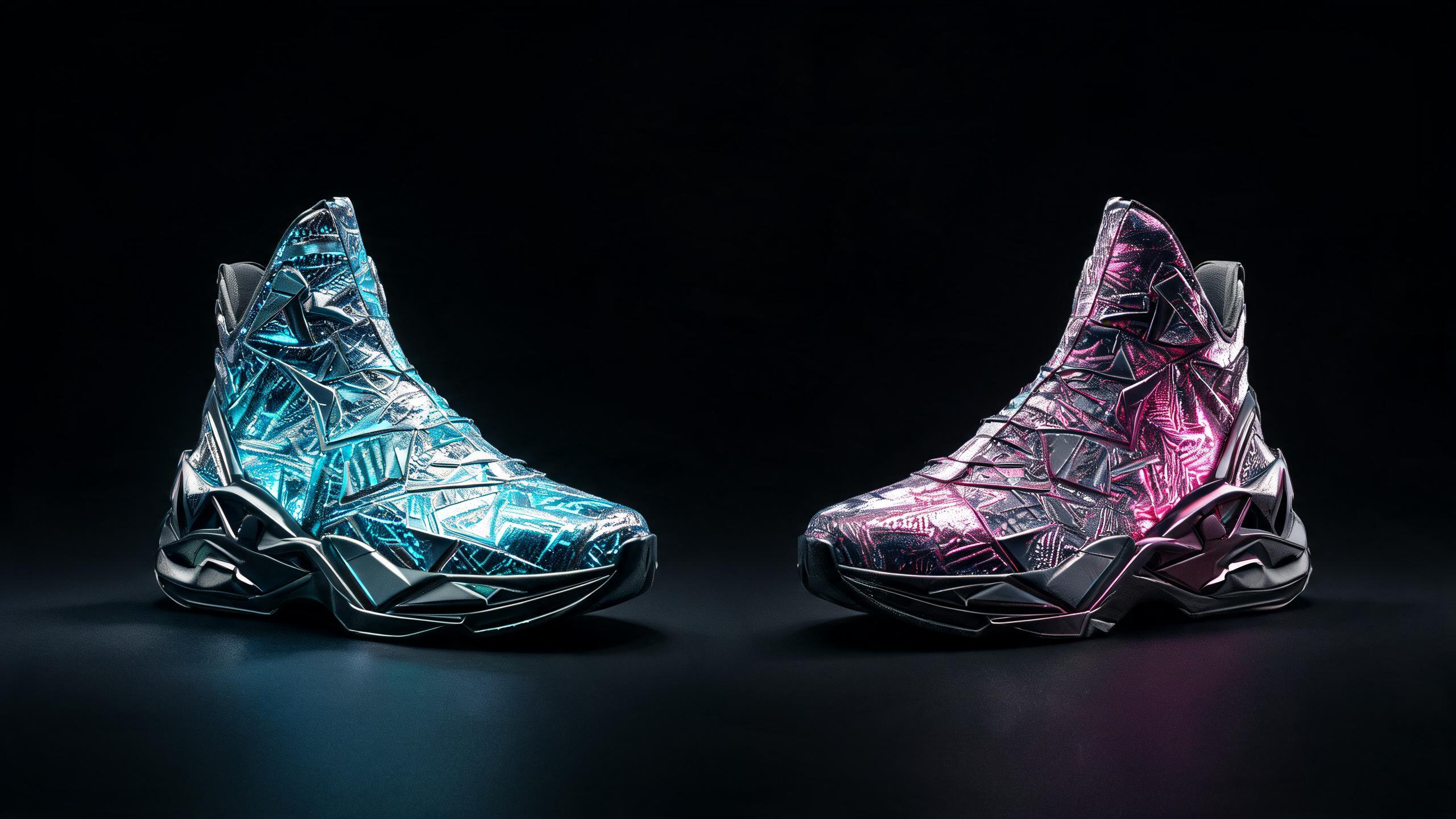
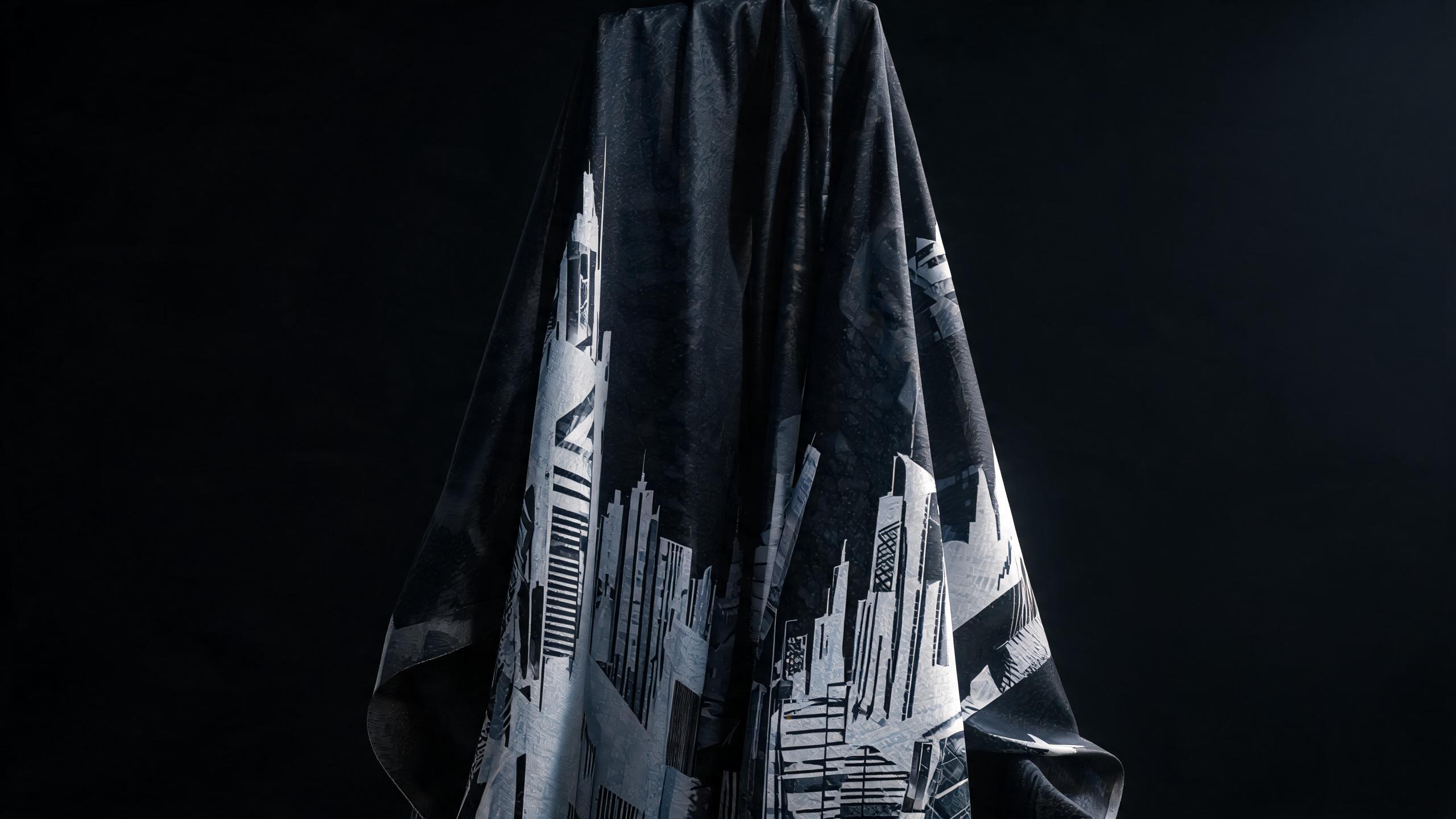
How to Use AI to Compare Luxury Aesthetics and Fast Fashion Style
A deep dive into luxury vs fast fashion AI styling comparison and what it means for modern fashion.
AI styling comparison measures structural differences between luxury and mass-market garment design. While traditional shopping relies on brand prestige or price tags, AI infrastructure analyzes the geometric proportions, textile density, and construction logic of a garment. By moving beyond metadata—labels, prices, and marketing descriptions—machine learning models identify whether a fast-fashion piece actually mimics the silhouette of a luxury item or merely copies a surface-level print. This transition from brand-based consumption to data-driven aesthetic analysis is rebuilding how we understand value in a wardrobe.
Key Takeaway: A luxury vs fast fashion AI styling comparison uses machine learning to analyze structural data—like textile density and geometric proportions—rather than brand labels. This identifies the specific construction logic and material quality that distinguish high-end apparel from mass-market garments.
Most fashion platforms function as search engines for inventory. They are designed to show you what is in stock, not what is right for your specific style model. This is the fundamental failure of modern commerce: it prioritizes the transaction over the identity. To conduct a meaningful luxury vs fast fashion AI styling comparison, you must stop looking at clothes as products and start viewing them as data points within a broader aesthetic system.
Why is traditional fashion comparison broken?
The current fashion industry operates on a model of planned obsolescence and trend-chasing. Retailers use basic recommendation algorithms that suggest items based on "customers who bought this also bought that." This is not personalization; it is a collaborative filtering mechanism that flattens individual taste into a demographic average. It treats a luxury buyer and a fast fashion buyer as two different people, when in reality, modern style is a hybrid.
When you compare luxury and fast fashion manually, you are limited by human bias. You perceive the "luxury" of a coat because of the logo or the price, but you may miss the fact that the shoulder construction is identical to a mid-market alternative. Conversely, you might buy a fast-fashion "dupe" thinking it looks the same, only for a computer vision model to reveal that the drape and light-reflectance of the fabric are fundamentally different, leading to a garment that will never sit correctly on your frame.
According to McKinsey (2024), generative AI could contribute up to $275 billion to the global fashion industry's operating profit by automating design and personalization. However, most of this value is currently trapped in the supply chain. The consumer-facing side remains primitive. A true AI-native system doesn't just find a "cheaper version"; it maps the visual DNA of luxury aesthetics to find structural matches across the entire market.
How does AI differentiate luxury construction from fast fashion?
Luxury fashion is defined by complex pattern-making, high-quality textiles, and specific silhouettes that are difficult to mass-produce. Fast fashion relies on simplification to speed up the manufacturing cycle. AI models trained on "High-Fidelity Visual Data" can see these differences in ways the human eye might miss in a low-resolution web thumbnail.
An AI system analyzes the "fall" of a fabric. It calculates the way a heavy wool crepe hangs compared to a polyester blend. In a luxury vs fast fashion AI styling comparison, the system looks for the "Aesthetic Vector"—the mathematical representation of a garment's style. If a luxury blazer has a specific peak lapel height and waist suppression ratio, the AI can scan thousands of fast-fashion entries to see which ones statistically align with those proportions.
| Feature | Luxury AI Logic | Fast Fashion AI Logic |
| Optimization Goal | Silhouette Integrity and Longevity | Trend Velocity and Inventory Turnover |
| Data Priority | Textile Texture and Construction Detail | Social Sentiment and Search Volume |
| Recommendation Bias | Aesthetic Consistency with Style Model | Micro-trend Replication and FOMO |
| Analysis Depth | Pattern-making and Drape Analysis | Surface-level Color and Print Matching |
As discussed in whether AI can replace your stylist, the difference lies in the training data. A system trained on the history of haute couture understands the "rules" of fashion, whereas a system trained on TikTok trends only understands the "noise."
What are the steps to execute a luxury vs fast fashion AI styling comparison?
To move beyond basic shopping and into intelligent style modeling, you must follow a structured process. This allows you to build a wardrobe that prioritizes aesthetic value over brand names.
Initialize Your Style Model — Before comparing garments, the AI must understand your "Dynamic Taste Profile." This is not a static quiz about whether you like "boho" or "minimalist." It is a living model that learns from your existing wardrobe, your discarded items, and your visual preferences. The AI needs to know your baseline before it can recommend how to mix luxury and mass-market pieces.
Ingest High-Fidelity Reference Imagery — Provide the system with the "ideal" version of the aesthetic you are targeting. If you are looking for the "Old Money" aesthetic or a specific architectural silhouette, upload imagery from luxury archives or high-end runway shows. This sets the "Luxury Standard" against which all other data points will be measured.
Execute Latent Space Comparisons — The AI maps your reference images into a "latent space"—a multi-dimensional map where similar styles sit close together. It then cross-references this map against a database of fast-fashion and mid-market items. The system isn't looking for a "copy"; it is looking for items that occupy the same coordinate in the style map. This solves the wardrobe crisis by finding pieces that fit your aesthetic logic regardless of their price point.
Analyze Material and Construction Proxies — Use the AI to scan product descriptions and visual data for "quality proxies." Luxury items often use natural fibers (silk, wool, cashmere) with specific weaves. The AI identifies fast-fashion pieces that use high-percentage natural blends or specific stitching techniques (like French seams or bound edges) that mimic luxury durability.
Synthesize a Hybrid Wardrobe Strategy — The final step is the "Output." Instead of a shopping list, the system provides a "Style Architecture." It tells you which items are worth the luxury investment (e.g., a coat where the silhouette is the primary value) and which can be substituted with fast fashion (e.g., a basic layer where the visual delta between high and low is negligible).
Why does data-driven styling outperform traditional trend-chasing?
Trend-chasing is a reactive behavior. It forces you to buy what is popular now, which inevitably leads to a closet full of garments that expire in six months. Data-driven styling is proactive. It builds a "Personal Style Model" that exists independently of the market cycle.
According to Gartner (2023), 80% of digital commerce leaders will utilize some form of generative AI for product discovery and styling by 2026. However, most of these tools will be designed to sell you more stuff. A true AI infrastructure—like the one being built at AlvinsClub—is designed to help you buy better stuff. It treats your wardrobe as a system of interchangeable parts, where the "luxury" or "fast fashion" label is secondary to how the item functions within your personal style DNA.
The industry currently relies on "stylists" who are often just glorified sales associates or influencers driven by commissions. They cannot process the millions of SKUs available across the global market. An AI can. It can compare the hemline of a $2,000 skirt to a $60 alternative in milliseconds, identifying whether the price gap is justified by design or merely by marketing overhead.
How can AI identify luxury value in a mass-market world?
The "Luxury vs Fast Fashion AI Styling Comparison" is ultimately about identifying "Value Density." Value density is the ratio of aesthetic/functional longevity to price. Luxury items typically have high density in design but high prices. Fast fashion has low density and low prices. The "sweet spot" is finding the anomalies: fast fashion items with high design density and luxury items with low design density (brand-padding).
Computer vision allows us to perform "Feature Extraction." We can strip away the branding and look at the "Topological Map" of a garment. Is the sleeve set at an angle that allows for movement? Is the waistline reinforced? These are the hallmarks of luxury that AI can now detect in high-resolution photography. This level of analysis was previously reserved for professional garment technicians. Now, it is a feature of your personal style model.
According to a study by Business of Fashion (2024), 73% of luxury consumers now prioritize "aesthetic consistency" over brand logos when using digital wardrobe assistants. This shift indicates that the consumer is becoming more intelligent, moving away from "conspicuous consumption" toward "algorithmic curation."
Is the future of fashion purely algorithmic?
The fear that AI will "kill" personal style is rooted in a misunderstanding of what AI is. AI is not a creator; it is an optimizer. It takes the "noise" of your disparate preferences and organizes them into a coherent "Taste Profile." It doesn't tell you what to wear; it shows you what you already want but haven't found yet.
When you use AI to compare luxury and fast fashion, you are essentially "debugging" your wardrobe. You are removing the errors—the impulse buys, the mismatched silhouettes, the poor-quality fabrics—and replacing them with a system that works. This is how we move toward a more sustainable fashion future. By buying only what fits the model, we reduce the waste inherent in the fast-fashion cycle.
The gap between luxury and mass market is closing, not because clothes are getting better, but because our ability to analyze them is getting sharper. The "luxury" of the future isn't a brand; it's the precision of your personal style model.
AlvinsClub uses AI to build your personal style model. Every outfit recommendation learns from you, moving beyond the binary of luxury vs fast fashion to find the logic that defines your look. Try AlvinsClub →
Summary
- AI evaluates garment quality by analyzing structural data like geometric proportions and textile density instead of relying on brand prestige or price tags.
- A luxury vs fast fashion AI styling comparison identifies whether mass-market items replicate the actual construction logic of high-end pieces or merely copy surface-level aesthetics.
- Machine learning models enable a transition from brand-based consumption to data-driven aesthetic analysis for determining the functional value of a wardrobe.
- Current fashion recommendation engines often prioritize transaction volume over individual identity by using collaborative filtering that flattens personal taste.
- Executing a comprehensive luxury vs fast fashion AI styling comparison requires viewing garments as interconnected data points within a systematic style model.
Frequently Asked Questions
How does a luxury vs fast fashion AI styling comparison work?
AI technology evaluates the structural differences between expensive garments and mass-market clothing by scanning geometric proportions and textile density. This data-driven approach allows users to see if a budget item truly matches the silhouette of a high-end piece or merely copies a surface-level print.
Can you use a luxury vs fast fashion AI styling comparison to find high-end dupes?
Machine learning models can accurately identify whether a cheaper garment replicates the construction logic of a designer item rather than just its color. These tools provide a technical way to source affordable alternatives that maintain a premium aesthetic through structural similarity and sophisticated design metrics.
What is the benefit of a luxury vs fast fashion AI styling comparison for shoppers?
This specialized analysis helps individuals move beyond brand marketing to understand the actual design value of their clothing choices based on construction. By focusing on architectural integrity rather than price tags, users can build a high-quality wardrobe that emphasizes visual impact and material quality.
How does AI analyze garment construction for luxury aesthetics?
Advanced algorithms look past metadata and logos to examine the physical properties of a garment, such as seam placement and fabric drape. By measuring these technical specifications, the software determines if a piece of clothing shares the sophisticated design DNA and geometric precision of a luxury brand.
Is it worth using AI to compare high-end fashion and mass-market brands?
Utilizing artificial intelligence to screen for design traits ensures that consumers are investing in pieces with superior silhouettes and lasting style. It provides an objective layer of shopping advice that prioritizes the visual impact of garment architecture over the perceived status of a label or marketing description.
Why does machine learning focus on garment proportions over brand labels?
Machine learning prioritizes structural elements because proportions and fit are the primary indicators of a high-end aesthetic in professional fashion design. Focusing on these metrics allows the software to provide an unbiased assessment of quality that marketing descriptions and luxury price points often obscure.
This article is part of AlvinsClub's AI Fashion Intelligence series.
Related Articles
- Nothing to Wear? Why AI Styling is Solving the Wardrobe Crisis
- Can AI Replace Your Stylist? The State of Personal Styling in 2026
- From Code to Couture: The Best AI for Virtual Fashion Shows in 2026
- From algorithms to outfits: a guide to top-rated AI fashion styling tools
- The 2026 Forecast: How AI is Redefining Personal Styling