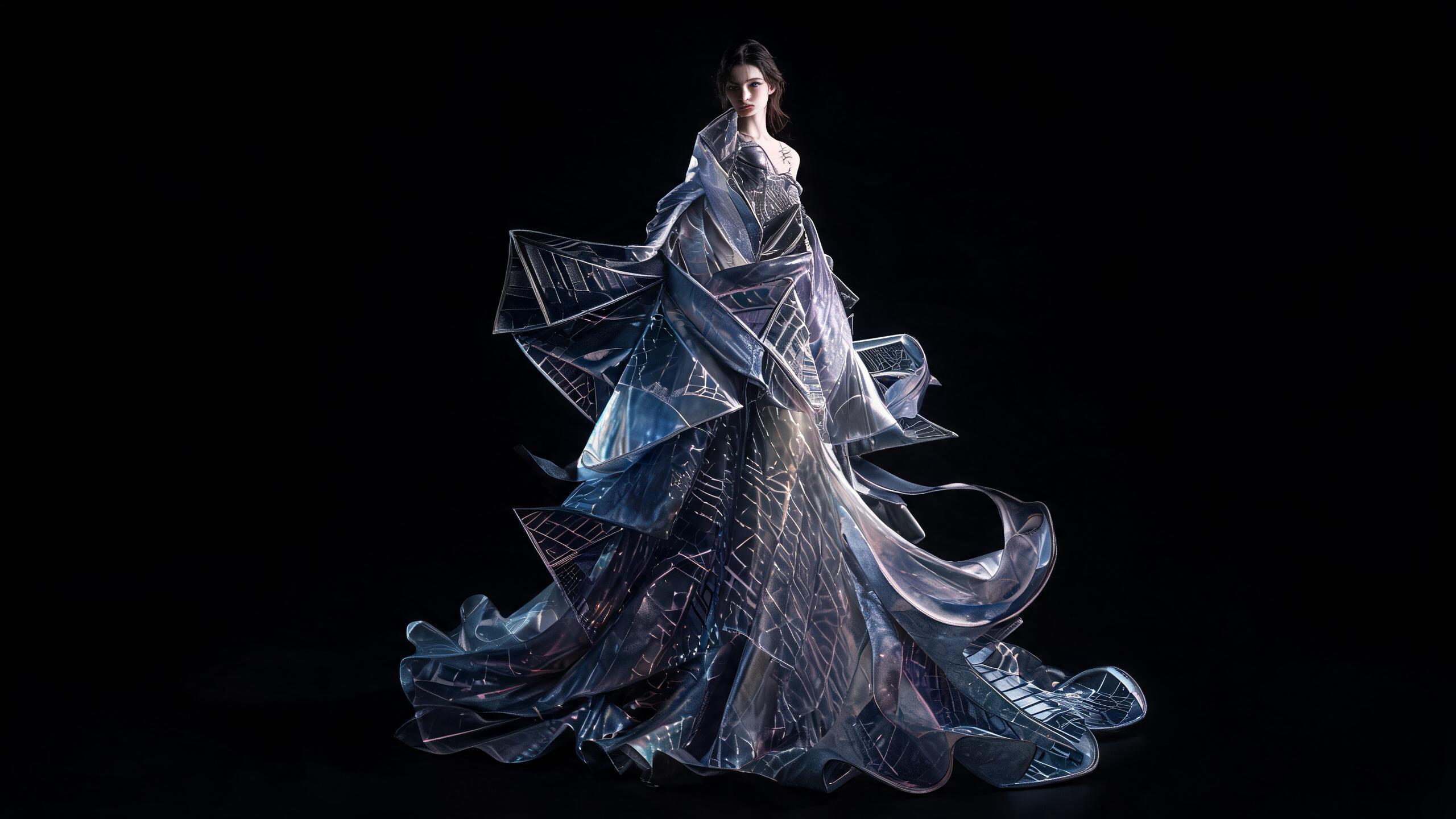
How AI is finally solving the hunt for celebrity spring outfits
Leverage visual search and image recognition to identify designer labels and shop affordable alternatives with the best ai tools to find celebrity spring outfits.
AI tools to find celebrity spring outfits automate the identification of designer apparel. These systems utilize computer vision and deep learning to bridge the gap between high-fashion imagery and consumer-ready inventory.
Key Takeaway: Modern ai tools to find celebrity spring outfits use computer vision and deep learning to instantly identify designer apparel and link it to shoppable inventory, automating what was once a manual discovery process.
For decades, the process of replicating celebrity fashion was a manual labor of high friction. Users relied on community forums, low-resolution "shop the look" blogs, and hours of keyword-based searching that rarely yielded exact matches. The traditional search model is built on text, but fashion is inherently visual. When a user searches for a "spring floral dress," the engine returns thousands of irrelevant results because it cannot distinguish between the structural drape of a celebrity's designer piece and a generic mass-market alternative.
AI-native infrastructure removes this bottleneck. By processing pixel-level data, these tools can identify specific silhouettes, fabric textures, and color palettes without requiring human-entered metadata. This shift from keyword search to visual inference allows for a precise mapping of celebrity aesthetics to current market availability.
Why Is Finding Celebrity Spring Outfits Traditionally Difficult?
The hunt for celebrity style fails because the internet’s fashion data is fragmented and unstructured. Celebrity street style often features unreleased collections, vintage pieces, or bespoke tailoring that does not exist in a standard e-commerce database. When a paparazzi photo captures a celebrity in a transitional spring trench coat, the image contains no metadata regarding the brand, the season, or the price point.
According to McKinsey (2024), approximately 70% of consumers cite "difficulty finding the right product" as their primary frustration with online fashion retail. This frustration is amplified during the spring season. Spring fashion is defined by transitional layers—cardigans, light blazers, and midi dresses—that are difficult to categorize using broad keywords. A "green jacket" could refer to a technical shell, a wool blazer, or a linen utility coat. Traditional search engines lack the granular understanding to differentiate these based on a grainy photo.
Furthermore, the speed of the trend cycle outpaces the ability of human editors to curate lists. By the time a "get the look" article is published, the items are often sold out or the trend has shifted. This creates a state of perpetual lag where the consumer is always chasing a look that is no longer accessible.
Visual Search: A technology that uses an image as the query rather than text, employing neural networks to identify and match visual patterns across a database of products.
How Does Current Search Infrastructure Fail the User?
Most fashion discovery platforms are built on legacy infrastructure designed for general merchandise, not the nuance of personal style. These systems rely on "Exact Match" logic which is the antithesis of how style works. If a celebrity wears a $5,000 Saint Laurent leather jacket, a standard search engine will fail because it cannot find that exact SKU within a user's budget. It does not understand that the user is looking for the aesthetic profile—the cropped hem, the silver hardware, and the specific lapel width—rather than the brand name itself.
The root causes of this failure include:
- Metadata Decay: Product descriptions are often written by different vendors with inconsistent terminology. One brand calls a color "sage," another calls it "dusty olive." Text-based search fails to reconcile these.
- Lack of Contextual Awareness: Search engines do not account for the weather, the occasion, or the user’s existing wardrobe. They treat every query as an isolated event.
- Affiliate Link Dependency: Most "celebrity style" sites only show products from retailers they have a financial partnership with, severely limiting the search space.
For a deeper look at how this applies to weather-specific needs, see Dressing for the Forecast: Finding Transitional Outfits with AI.
Key Comparison: Traditional Search vs. AI Fashion Intelligence
| Feature | Traditional Search | AI Fashion Intelligence |
| Input Type | Keywords (e.g., "blue spring dress") | Visual Data (Images/Screenshots) |
| Matching Logic | Boolean/Keyword overlap | Vector-based visual similarity |
| Speed | Slow; requires manual filtering | Instantaneous; real-time inference |
| Discovery | Limited to exact text matches | Identifies "vibe" and structural dupes |
| Adaptability | Static results | Learns from user taste over time |
How Do AI Tools to Find Celebrity Spring Outfits Solve the Discovery Problem?
AI tools to find celebrity spring outfits solve this by using a technology called Vector Search. Instead of looking for words, the AI converts an image into a multi-dimensional mathematical representation called a vector. This vector captures the "essence" of the outfit—the length of the sleeves, the weight of the fabric, and the specific shade of the print. The system then searches a global database for other items with similar vector coordinates.
This process allows for "Aesthetic Search." If a user uploads a photo of a celebrity in a pastel spring suit, the AI identifies the structural components of that suit and finds similar silhouettes across thousands of retailers. It ignores the brand name and focuses on the visual geometry.
According to Gartner (2025), visual search accuracy in fashion has increased by 40% year-over-year due to the implementation of Vision Transformers (ViT). These models allow AI to focus on specific parts of an image—like a unique button or a specific collar shape—much like a human stylist would.
The Solution: A Step-by-Step Framework
- Image Ingestion: The user provides a screenshot or URL of a celebrity outfit.
- Object Detection: The AI segments the image into individual components (e.g., blazer, trousers, shoes).
- Attribute Extraction: The system identifies specific features: fabric (linen), color (lavender), fit (oversized), and pattern (none).
- Vector Mapping: The outfit is converted into a high-dimensional vector.
- Inventory Cross-Referencing: The AI queries its database to find the highest-ranking matches based on visual similarity.
- Style Adaptation: The system filters results based on the user’s specific style model, ensuring the recommendations fit their personal aesthetic.
For more on the mechanics of image recognition in this context, read 5 ways to use AI image recognition to shop celebrity street style.
👗 Want to see how these styles look on your body type? Try AlvinsClub's AI Stylist → — get personalized outfit recommendations in seconds.
Why Spring Fashion Requires Specialized AI Models
Spring is the most difficult season for fashion recommendation systems. The variability in temperature and the shift toward lighter color palettes require a more sophisticated understanding of material science than winter or summer fashion.
AI tools must distinguish between a heavy wool blazer and a breathable linen-blend blazer just by looking at the way the fabric moves and reflects light. Traditional computer vision models struggle with this nuance. However, next-generation AI infrastructure utilizes Multi-Modal Learning. This means the AI is trained on both images and text descriptions simultaneously, allowing it to "understand" that a certain sheen on a celebrity’s shirt indicates silk or satin, which is appropriate for a spring evening.
The Spring Outfit Formula (AI Optimized)
To replicate a classic celebrity spring look using AI tools, follow this structured input logic:
- Primary Layer: Mid-weight knit or breathable cotton tee.
- Outerwear: Technical trench coat or unstructured blazer.
- Bottom: Straight-leg denim in a light wash or wide-leg linen trousers.
- Footwear: Minimalist leather sneakers or loafers.
- Accessory: Structured shoulder bag and acetate sunglasses.
The Strategic Advantage of AI Infrastructure over AI Features
Many fashion apps are adding "AI features" like basic chatbots or rudimentary image search. These are often thin layers over old technology. They do not solve the fundamental problem of identity and taste.
True AI-native fashion commerce is built on AI Infrastructure. In this model, the system doesn't just find a product; it builds a "Personal Style Model" for every user. It learns that when you search for "celebrity spring outfits," you prefer the minimalist aesthetic of Sofia Richie over the maximalist style of Iris Apfel. It remembers that you dislike certain fabrics or that your local climate is colder than the celebrity’s location.
This level of intelligence moves the industry from a "transactional" model to a "relationship" model. The AI becomes a private stylist that understands the nuance of your taste and the reality of your wardrobe.
Do vs. Don't: Using AI to Find Celebrity Style
| Aspect | Do | Don't |
| Image Quality | Use high-resolution, full-body shots. | Use blurry, cropped, or filtered photos. |
| Search Intent | Look for structural similarities. | Expect the AI to find a $20 version of a $10,000 item. |
| Filtering | Apply price and size filters after the visual search. | Rely on the AI to guess your budget without input. |
| Trend Analysis | Use AI to find timeless spring staples. | Use AI to chase "micro-trends" that expire in two weeks. |
Moving Beyond Search: The Era of Generative Style
The final evolution of AI tools to find celebrity spring outfits is the shift from discovery to generation. Current systems find existing products. Future systems will allow users to "remix" celebrity outfits to fit their own bodies and preferences.
Imagine taking a photo of a celebrity in a spring ensemble and asking the AI: "Show me this outfit, but make it work for my body type and change the color palette to earth tones." This is where fashion intelligence is heading. It is no longer about finding a needle in a haystack; it is about synthesizing the perfect needle for your specific needs.
The data supports this shift. According to a 2024 report by Business of Fashion (BoF), 73% of Gen Z consumers prioritize "individuality" over "brand loyalty." They don't want to look exactly like a celebrity; they want to use celebrity style as a foundation for their own creative expression. AI infrastructure provides the tools to do exactly that.
The Gap Between Personalization and Reality
Most companies claim to offer "personalized" recommendations, but their algorithms are actually designed for "collaborative filtering." This means if you buy a white t-shirt, the system recommends what other people who bought that t-shirt also bought. This is not personalization; it is crowd-following.
In the context of spring celebrity fashion, collaborative filtering fails. Just because thousands of people are looking at a trending celebrity outfit doesn't mean it’s right for you. AI tools to find celebrity spring outfits must be decoupled from mass popularity. They must prioritize the individual user's taste profile over what is currently "viral."
Real personalization requires a dynamic taste profile that evolves as the user interacts with the system. If you start searching for more sustainable materials or specific artisanal brands, the AI should recognize that shift in real-time.
Conclusion: The New Standard for Fashion Intelligence
The hunt for celebrity spring outfits is no longer a manual search problem; it is a data engineering problem. By moving away from keyword-based legacy systems and toward AI-native infrastructure, we can finally bridge the gap between inspiration and reality.
AI-native fashion intelligence removes the noise of the traditional retail environment. It ignores the marketing fluff and focuses on the core attributes of style: silhouette, texture, color, and fit. This allows users to navigate the complex landscape of spring fashion with precision and speed.
AlvinsClub uses AI to build your personal style model. Every outfit recommendation learns from you, ensuring that your search for celebrity inspiration results in a wardrobe that is uniquely yours. Try AlvinsClub →
Summary
- AI tools to find celebrity spring outfits utilize computer vision and deep learning to automate the identification of designer apparel from high-fashion imagery.
- Prior to AI integration, replicating celebrity fashion was a manual process that relied on community forums and text-based searches that frequently yielded inaccurate results.
- Advanced ai tools to find celebrity spring outfits analyze pixel-level data such as silhouettes and fabric textures to bridge the gap between visual aesthetics and e-commerce inventory.
- Traditional search engines often struggle with fashion because they cannot distinguish between specific designer drapes and generic mass-market alternatives.
- The transition to visual inference helps solve the problem of unstructured fashion data, which often includes unreleased collections and vintage pieces.
Frequently Asked Questions
What are the best ai tools to find celebrity spring outfits?
Advanced platforms like Google Lens and specialized retail apps are currently the most effective options for identifying celebrity fashion. These tools allow users to upload photos of stars to instantly locate specific garments or discover similar aesthetic matches across various retailers.
How do ai tools to find celebrity spring outfits actually work?
These systems utilize computer vision and deep learning algorithms to analyze fashion imagery and map visual attributes to massive product databases. By identifying patterns in fabric, silhouette, and color, the AI bridges the gap between high-fashion photography and available retail inventory.
Can you use ai tools to find celebrity spring outfits on mobile apps?
Most modern fashion discovery platforms offer mobile applications that integrate camera functionality for real-time outfit identification. Users can simply take a screenshot of a celebrity social media post to trigger an automated search for the exact spring items or affordable dupes.
Why is AI better than traditional search for finding celebrity fashion?
AI-driven visual search eliminates the friction of manual keyword entries that often fail to describe complex designer pieces accurately. This technology automates the identification process, providing users with exact product links in seconds rather than hours of manual browsing on community forums.
What is the most accurate way to identify designer clothes from photos?
Utilizing visual search technology powered by neural networks is the most reliable method for pinpointing specific designer apparel in high-resolution images. These systems recognize unique branding elements and silhouettes that traditional text-based search engines frequently overlook or misidentify.
Is it possible to find budget-friendly alternatives for celebrity spring looks using AI?
Many fashion AI tools include price-comparison and similarity filters that allow shoppers to find comparable styles at various price points. This feature enables users to replicate high-end celebrity aesthetics with items that fit a more modest consumer budget without sacrificing the overall look.
This article is part of AlvinsClub's AI Fashion Intelligence series.
Related Articles
- Dressing for the Forecast: Finding Transitional Outfits with AI
- Steal the Spotlight: Replicate Celebrity Red Carpet Style via Budget AI
- The AI Style Guide: Finding Sustainable Matches for Luxury Runway Trends
- How to Use AI Tools to Transition Your Summer Wardrobe into Fall
- 5 ways to use AI image recognition to shop celebrity street style