# How AI Helps Fashion Affiliates Create TikTok Shop Videos Without Samples
*Learn how virtual product visuals, AI-generated scripts, and compliant workflows help affiliates promote TikTok Shop items before receiving physical samples.*
# How AI Helps Fashion Affiliates Create TikTok Shop Videos Without Samples
> **Key Takeaway:** AI lets fashion affiliates create TikTok Shop videos without sending samples by turning product-listing photos into realistic promotional videos, provided the visuals accurately represent the actual product.
**AI-generated product videos let fashion affiliates promote TikTok Shop products without waiting for physical samples, but only when the product stays faithful to its listing photos.**
The search for **how to get TikTok Shop affiliate videos without sending samples** reflects a real operating problem: affiliates need a steady stream of product creative, while sellers cannot send free inventory to every creator who asks.
That tension is now shaping the next phase of TikTok Shop content. Affiliates want more products to test. Sellers want more videos without paying for repeated shoots, creator fees, shipping, and sample losses.
AI sits directly between those demands.
The wrong conclusion is that AI removes the need for product truth. It does not. The useful conclusion is sharper: **sample-free affiliate content works when AI handles presentation, while the product listing remains the source of truth.**
That distinction matters now because TikTok Shop rewards a volume-and-testing workflow. One polished video is rarely enough to determine whether a product, hook, offer, or audience will convert. Affiliates need multiple creative angles, and sellers need a way to produce them before creative fatigue makes the first concept stale.
This article examines what changed, why sample-free TikTok Shop affiliate videos matter, what AI fashion content can and cannot do, and where the opportunity is heading.
## What Happened to TikTok Shop Affiliate Content Without Samples?
The central shift is operational rather than cinematic: **fashion affiliates can now start with product-page assets instead of waiting for physical inventory.**
A conventional affiliate workflow looks like this:
1. An affiliate discovers a product.
2. The affiliate requests a sample.
3.
The seller reviews the request.
4. The seller ships the product.
5. The affiliate waits for delivery.
6.
The affiliate films, edits, captions, and posts.
7. The seller waits to see whether the content performs.
Every step creates delay or cost. The seller pays in inventory and shipping. The affiliate pays in time and production effort.
Neither side knows whether the resulting video will produce useful sales data.
AI-generated product video changes the starting point. An affiliate or seller can provide a product page link or upload product photos, then generate a short vertical video built around the item’s existing visual information.
The important distinction is between **rendering a product presentation** and **claiming personal ownership of a product**.
A compliant sample-free video can show a product on an AI-generated model, explain visible characteristics from the listing, and direct viewers to the product page. It should not imply that the creator personally received, wore, tested, or reviewed the item unless that actually happened.
That line is not a minor disclosure detail. It separates product advertising from fabricated personal testimony.
### What Does “Without Samples” Actually Mean?
“Without samples” can describe several different affiliate workflows:
- **Seller-generated creative:** The seller creates videos from its own product photos and gives affiliates approved assets.
- **Affiliate-assisted creative:** An affiliate uses listing images to produce a product-focused video without claiming first-hand use.
- **AI model presentation:** Product images are placed into an AI-generated fashion scene or model presentation.
- **Concept testing:** A seller creates multiple hooks and formats before sending samples to selected creators.
- **Dropship and print-on-demand promotion:** The promoter creates content for products that are not physically held.
These workflows are not identical. A seller owns the product information in the first case. An affiliate may be creating promotional content in the second.
A dropshipper faces a higher risk of mismatch because the product may change between supplier listing, fulfillment, and customer delivery.
The practical rule is simple:
> **Do not present an AI-generated experience as a real product experience. Present the product accurately, label the content as AI-generated when posted, and check every render before publishing.**
### Why Fashion Is Especially Exposed to Product Drift
Fashion products contain visual details that AI systems can alter easily:
- Neckline shape
- Sleeve length
- Button count
- Logo placement
- Fabric texture
- Pattern scale
- Garment length
- Color temperature
- Jewelry size
- Chair upholstery and stitching
- The relationship between accessories and the main product
A viewer may not notice a minor background change. They will notice when a necklace becomes a different shape or when a dress changes from fitted to loose.
This is why sample-free production cannot mean “generate anything that looks attractive.” The video must remain tied to the source listing.
The most useful workflow treats the product page as a visual specification. The generated model, location, movement, pacing, and voiceover can vary. The product itself should vary as little as possible.
For a deeper look at assessing product information from images, see How AI Helps Verify a Clothing Listing From a Photo. The same principle applies to affiliate creative: better source interpretation produces safer product presentation.
### See it: real Alvin's Club Studio sample videos
[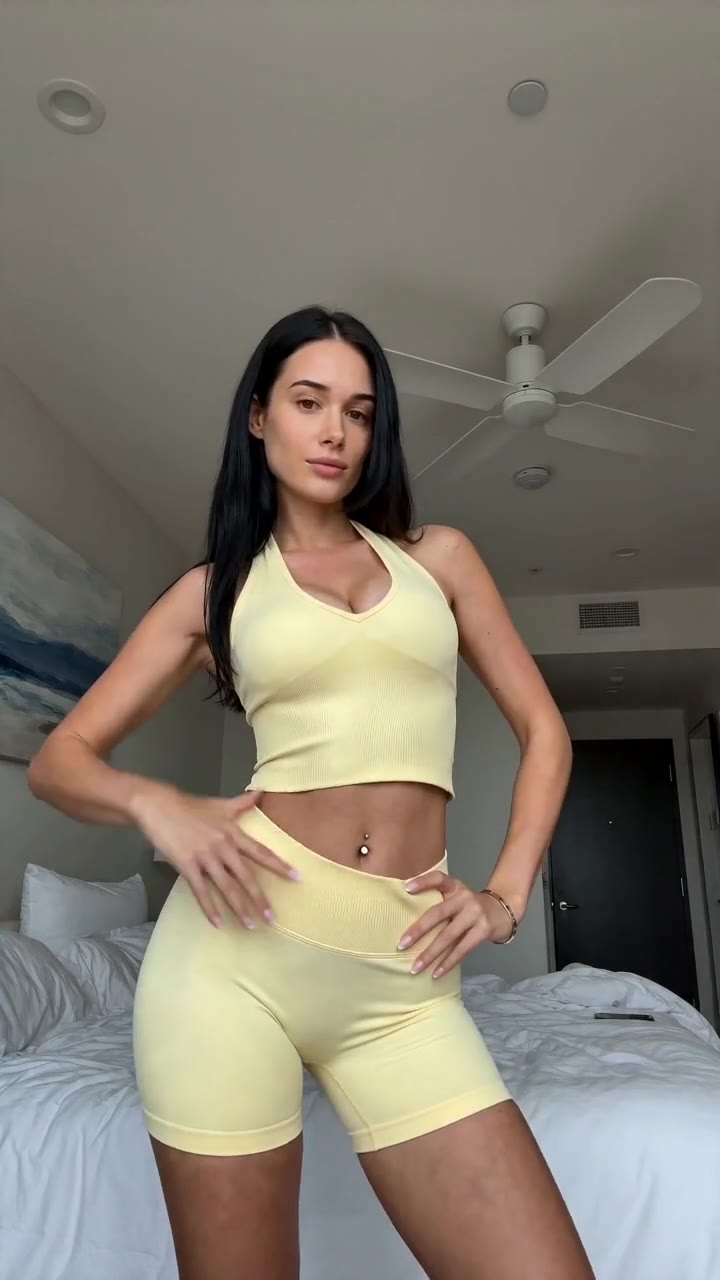](https://studio.alvinsclub.ai/examples/apparel-3-b438de8f.mp4)
*▶ Sunny yellow halter neck top try-on*
[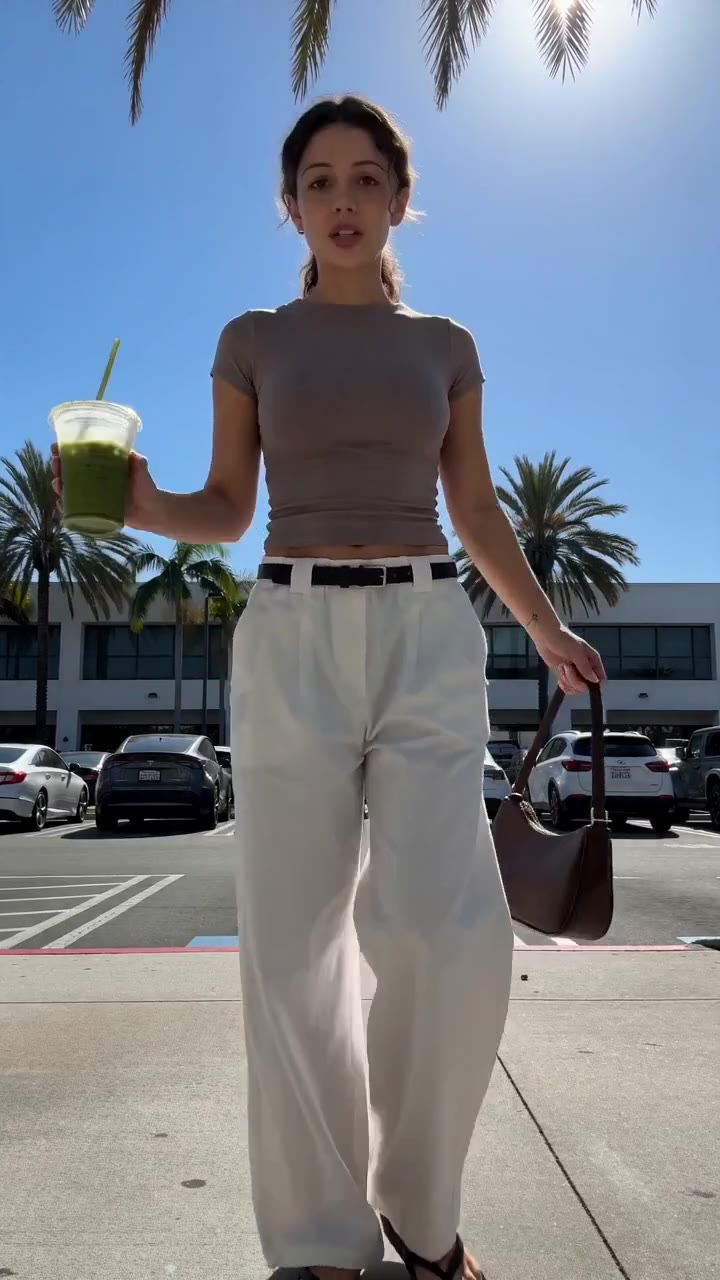](https://studio.alvinsclub.ai/examples/apparel-1-7a18676b.mp4)
*▶ Chic white wide-leg trousers styling*
[See all samples and make your first video free →](https://studio.alvinsclub.ai/samples?utm_source=hashnode&utm_medium=blog&utm_campaign=studio)
## Why Does Getting TikTok Shop Affiliate Videos Without Sending Samples Matter?
The old sample model assumes that every product needs a physical handoff before content can begin. That assumption breaks when a catalog contains more products than a seller can afford to distribute.
The cost is not only the item itself. A sample workflow also includes:
- Packaging
- Shipping
- Tracking
- Customer support
- Returns or replacement
- Affiliate communication
- Creator scheduling
- Production delays
- Unusable content
- Follow-up requests
Even when the product is inexpensive, the operational overhead can make broad testing unattractive.
### The Sample Is a Bottleneck, Not a Creative Strategy
Sending a sample is a fulfillment decision. It does not guarantee a strong hook, a useful demonstration, or a sale.
A creator can receive the product and still produce:
- A slow opening
- A generic “look at this” script
- Poor product framing
- No clear buyer
- Weak captions
- No variation for testing
- A video that copies the seller’s existing content
The sample gets the product into the creator’s hands, but it does not solve the creative system around it.
AI video helps separate those decisions. Sellers can test product angles before committing inventory to creators. Affiliates can produce an initial content set from available listing assets.
Physical samples can then go to the creators whose audience and content style justify deeper collaboration.
That is a better allocation of scarce inventory.
### Why One Video Per Product Is an Incomplete Test
A single video combines too many variables:
- Opening line
- Model appearance
- Product framing
- Video pacing
- Background
- Voiceover
- Caption
- Call to action
- Audience context
- Posting conditions
If the video performs poorly, the seller cannot tell which variable failed. The product may be viable while the creative was weak.
A testing workflow needs multiple structured variations. For example:
| Variable | Version A | Version B | Version C |
|---|---|---|---|
| Opening | Product benefit | Buyer problem | Visual reveal |
| Model setting | Indoor wardrobe | Street-style scene | Close product focus |
| Voiceover | English | Spanish | Brazilian Portuguese |
| Product angle | Fit | Personalization | Gift use |
| Pace | Fast cuts | Moderate demonstration | Slow detail focus |
The point is not to create random volume. The point is to isolate creative variables.
A product that receives one video receives one opinion. A product that receives several disciplined video concepts generates evidence.
### Why Sample-Free Content Helps Dropshippers and Print-on-Demand Sellers
Dropshippers and print-on-demand sellers often face a practical limitation: they cannot film inventory they do not physically hold.
That does not remove their responsibility to verify the listing. It increases it.
A sample-free workflow is strongest when:
1. The seller has reliable product photos.
2. The AI output is checked against those photos.
3.
The video avoids unverified claims.
4. The listing clearly explains material, size, color, and customization.
5. The published post identifies AI-generated content where required or appropriate.
Personalized jewelry illustrates the point. A seller can create a video around names, initials, dates, or birthstones without physically holding every possible combination. But the visual must not imply a specific engraving or stone configuration that the customer cannot order.
The content should demonstrate the customization concept, not fabricate an order history.
## What Does AI Add to Fashion Affiliate Video Production?
AI adds speed at the production layer. It does not replace merchandising judgment.
A finished shoppable video needs more than a moving product image. It needs a buyer, a reason to care, a clear product view, an intelligible script, and a format that matches the platform.
The practical AI workflow includes:
1. **Input:** Product page link or product photos.
2. **Product interpretation:** Identify visible product attributes.
3. **Concept selection:** Choose a buyer problem, use case, or visual angle.
4. **Script:** Write a short spoken explanation.
5. **Model presentation:** Place the product on an AI-generated model or in a product scene.
6. **Voiceover:** Produce narration in English, Spanish, or Brazilian Portuguese.
7. **Captions:** Add readable on-screen language.
8. **Hashtags:** Provide relevant tags without pretending they guarantee distribution.
9. **Review:** Compare the render with the original listing.
10. **Publication:** Label the content as AI-generated when posted.
The key improvement is that these steps are packaged into a product-selling workflow. A general video generator still leaves the operator with the hardest work: prompts, script construction, editing, product checking, and discarding weak outputs.
For sellers, the useful unit is not “an AI clip.” It is **a finished, reviewable shoppable video**.
### Why Finished Output Matters More Than Generation
A raw generation is not a marketing asset. It becomes an asset only after it passes four checks:
- The product is recognizable.
- The product remains consistent with the listing.
- The spoken and written claims are supportable.
- The opening gives the viewer a reason to continue.
This is where many generic AI workflows fail. They optimize for visual novelty, while commerce content needs visual fidelity.
A fashion video with a beautiful model but inaccurate garment construction is not a successful output. It is a liability with better lighting.
### What Can AI Change Safely?
AI can vary the presentation around the product:
- Model persona
- Setting
- Camera movement
- Opening structure
- Voiceover language
- Caption style
- Product use case
- Video pacing
- Wardrobe context
- Gift or occasion framing
AI should not freely change:
- Color
- Pattern
- Material appearance
- Product dimensions
- Customization details
- Brand marks
- Hardware
- Shape
- Functional claims
The seller’s job is to approve the boundary before posting.
> 👗 **Selling online? Turn any product link into a ready-to-post shoppable video** — no shoot, no samples. [Try Alvin's Club Studio free →](https://studio.alvinsclub.ai/?utm_source=hashnode&utm_medium=blog&utm_campaign=studio) Your first video is free, then from $3 a video.
## How Should Affiliates Create TikTok Shop Videos Without Samples?
A reliable workflow starts with the product listing and ends with manual approval.
### Step 1: Choose Products That Can Be Explained Visually
The strongest sample-free products have visible value. Examples include:
- Personalized necklaces
- Initial rings
- Birthstone jewelry
- Distinctive dresses
- Statement chairs
- Furniture with visible construction
- Products with clear before-and-after organization
- Products with an obvious gifting use case
Products that depend on invisible performance claims require more caution. If the main selling point is comfort, durability, scent, or feel, product photos alone cannot prove the experience.
The video can describe visible design features. It should not invent sensory evidence.
### Step 2: Audit the Listing Before Making Creative
Extract the claims that are actually supported:
- Product type
- Visible color
- Customization options
- Dimensions listed by the seller
- Intended use
- Compatible audience
- Available variations
- Delivery or ordering instructions shown on the page
Avoid adding unsupported claims such as “premium,” “luxury,” “perfect fit,” or “will last for years” unless the seller has a clear basis for them.
A product page is not automatically accurate. It is the source material, not an infallible authority. Sellers should confirm that the images and description agree before turning them into promotional content.
### Step 3: Pick One Buyer and One Message
Short videos become vague when they target everyone.
A personalized necklace can be framed for:
- A birthday gift
- A mother’s gift
- A couple’s keepsake
- A birthstone gift
- A daily initial necklace
- A personalized holiday purchase
Each angle changes the opening, visuals, and voiceover.
The product remains the same. The buyer context changes.
### Step 4: Use a Proven Video Structure
A short commerce video can follow this sequence:
1. **Hook:** State the buyer problem or reveal the product.
2. **Product view:** Show the item clearly.
3. **Reason to care:** Explain the visible benefit or use case.
4. **Proof from the listing:** Show customization, construction, or design detail.
5. **Action:** Tell the viewer where to inspect the available options.
The structure should be short enough to understand without sound. Captions carry the message when audio is muted.
### Step 5: Generate Multiple Concepts, Not Random Variations
A seller should vary the reason for watching, not just the model’s pose.
Useful concept families include:
- “A personalized gift that uses their actual initial”
- “A simple way to make a basic outfit feel finished”
- “A chair detail that changes the look of a home office”
- “A product-page find shown on a real-looking model”
- “Three ways to style the same piece”
- “What to check before ordering this variation”
The content remains truthful because the creative changes the presentation rather than the product specifications.
### Step 6: Check Every Render Against the Source
Use a checklist:
| Review area | Pass condition | Reject condition |
|---|---|---|
| Color | Matches the listing images | Shade changes materially |
| Shape | Matches the product silhouette | AI adds or removes structure |
| Details | Hardware, stones, buttons, and logos are consistent | Details morph or disappear |
| Customization | Options remain accurately described | Unavailable engraving appears |
| Model use | Product is worn or shown plausibly | Product floats, clips, or merges |
| Script | Claims come from the listing | Voiceover promises unverified results |
| Captions | Text matches narration and product | Captions add unsupported claims |
| Disclosure | AI-generated content is labeled where relevant | Viewer could mistake simulation for personal use |
AI-generated content should be treated like a draft with production value, not like automatically verified footage.
### Step 7: Publish Variations With a Testing Plan
Do not publish five videos that say the same thing in the same way. Build a matrix around:
- Audience
- Hook
- Product benefit
- Visual context
- Voiceover
- Pacing
Then track which creative earns useful signals. A high view count alone does not explain whether the product, hook, or audience worked.
The aim is to learn which presentation earns product-page interest and sales activity.
## What Is the Key Comparison Between Samples and AI-Generated Videos?
The choice is not “samples or AI forever.” The stronger operating model uses each for a different job.
| Workflow | Best use | Main advantage | Main risk | Recommended control |
|---|---|---|---|---|
| Physical sample first | Creator reviews and demonstrations | Real tactile experience | Cost, delay, limited scale | Send to selected creators after initial screening |
| AI video from listing assets | Early creative testing and catalog coverage | Fast production without inventory shipment | Product drift or misleading presentation | Compare every render with source images |
| Seller-owned product footage | Demonstrations and proof | Strongest physical evidence | Requires filming and editing | Build reusable footage libraries |
| Hybrid workflow | Scale plus selected real reviews | Combines testing speed with physical proof | Requires process discipline | Label AI content and reserve samples for validated opportunities |
The hybrid model is the sensible position. AI handles breadth. Physical samples handle depth.
A seller does not need to choose between every product receiving a sample and no creator ever receiving one. The seller can first identify promising products and creative angles, then invest samples where the expected value is higher.
That turns samples from a default expense into a targeted production resource.
## What Does This Mean for AI Fashion?
The impact extends beyond TikTok Shop. AI is changing how fashion products are interpreted, staged, and tested before production budgets are committed.
Fashion commerce traditionally separates merchandising from creative. A buyer selects a product. A creative team makes an asset.
A media buyer distributes it. AI compresses those steps into a faster feedback loop.
The product page becomes the starting dataset. The creative system turns that data into multiple buyer contexts. Performance results then influence which presentation deserves more investment.
### Product Pages Are Becoming Creative Inputs
A product page used to function mainly as a destination. Increasingly, it functions as source material for:
- Scripts
- Product demonstrations
- Model scenes
- Gift guides
- Comparison videos
- Styling concepts
- Search-driven captions
- Affiliate briefs
That makes image quality and listing consistency more valuable. A poorly photographed product creates weaker AI output. Conflicting color descriptions create risky scripts.
Missing customization information limits useful creative.
Sellers now need to treat the product page as both a conversion page and a production brief.
This connects to the broader question of how shoppers organize fashion information. Our guide on How to Build a Digital Wardrobe Faster With AI and Your Own Style explores how structured product information can support more personalized fashion workflows. The same structure helps sellers produce clearer commerce content.
### AI Models Become Presentation Infrastructure
An AI model is not merely a replacement for a human creator. It is a repeatable presentation layer.
A seller can show the same product across different visual contexts:
- Minimal studio
- Casual home
- Office setting
- Gift-opening scene
- Street-style outfit
- Seasonal wardrobe
- Personalized product close-up
This is valuable because products are purchased in contexts, not in isolation. A chair is not only a chair; it is part of a workspace. A necklace is not only a necklace; it is a gift decision.
A garment is not only a garment; it is an outfit solution.
AI makes those contexts cheaper to test. It does not make every context truthful automatically.
### The Winner Will Be the Seller With Better Review Discipline
The easy part of AI content is generation. The durable advantage is inspection.
Fashion sellers need a review process that combines:
- Image comparison
- Claim verification
- Variation review
- Disclosure
- Platform compliance
- Human judgment
A seller that publishes inaccurate AI videos at scale creates customer confusion at scale. That raises returns, weakens trust, and makes performance data less useful.
The operational winner is not the seller producing the most renders. It is the seller producing the most **usable, accurate, differentiated** renders.
## What Are the Biggest Risks of Sample-Free TikTok Shop Videos?
Sample-free production has clear advantages, but it does not remove the risks of affiliate marketing.
### Risk 1: Implying First-Hand Experience
A video should not say:
- “I wore this all day”
- “I tested the quality”
- “This feels soft”
- “Here is how it fits me”
- “I ordered this and…”
unless the person or creator actually did those things.
A generated model is not a real product reviewer. The script should use product-focused language instead:
- “This design features…”
- “The listing offers…”
- “This option is made for…”
- “Choose the personalization…”
- “See the available variations…”
### Risk 2: Showing a Product the Customer Cannot Receive
AI can produce a visually attractive version of a product that is not actually sold. The mismatch can happen through:
- Unavailable colors
- Different proportions
- Extra stones
- Incorrect text
- Imaginary pockets
- Changed chair dimensions
- Altered hardware
- Unlisted accessories
The answer is not to avoid AI. The answer is to make source comparison mandatory.
### Risk 3: Hiding the Synthetic Nature of the Video
AI-generated content should be labelled as AI-generated when posted. The label protects clarity between simulated presentation and physical review.
Disclosure also helps sellers maintain a consistent standard across affiliates. If one video looks like a real customer experience while another clearly uses a generated model, viewers should not be left to guess what happened.
### Risk 4: Optimizing for Views Instead of Product Understanding
A dramatic scene can earn attention while failing to explain what the product is. Fashion commerce needs both.
A video should answer at least one buyer question:
- What does it look like?
- Who is it for?
- How can it be customized?
- What outfit or room does it suit?
- What variation should the viewer inspect?
- What makes this product relevant to the buyer?
Views without product comprehension are weak evidence.
### Risk 5: Producing Volume Without Learning
More videos do not automatically create better decisions. If every video changes the hook, model, setting, pacing, and message at once, the results become difficult to interpret.
A testing plan should change a limited number of variables per batch. That creates a clearer connection between creative choice and outcome.
## What Should Fashion Affiliates Predict About the Next Phase?
The next phase will not be defined by whether AI can produce a model wearing a product. That capability is already obvious.
The important developments will be operational.
### Prediction 1: Sample Requests Will Become More Selective
Sellers will stop treating every sample request as an equal opportunity. Initial AI content will help identify:
- Which products attract attention
- Which product angles are understandable
- Which audiences respond
- Which creators deserve physical inventory
- Which products need better listings before promotion
Samples will move later in the funnel, after basic creative evidence exists.
### Prediction 2: Product Listings Will Be Judged as Creative Infrastructure
Images, titles, descriptions, variant names, and customization fields will influence not only conversion but also how many accurate creative concepts a seller can produce.
A weak listing creates weak source material. A strong listing gives AI more reliable information to work with.
### Prediction 3: Affiliate Briefs Will Become More Structured
Instead of sending creators only a product link, sellers will provide:
- Approved product claims
- Prohibited claims
- Visual references
- Buyer segments
- Hook options
- Disclosure guidance
- Required product details
- Sample-free and sample-required content types
This makes affiliate production easier to scale without turning every post into a legal review.
### Prediction 4: AI Content Will Shift From Novelty to Testing Infrastructure
The first wave focused on whether AI video looks real. The next wave will focus on whether it helps sellers make better decisions.
That means measuring:
- Creative coverage
- Product accuracy
- Time from listing to first video
- Number of viable concepts
- Cost per approved asset
- Conversion differences by angle
- Sample allocation efficiency
The seller’s question will become less “Can AI make a video?” and more “Which product presentation deserves further investment?”
### Prediction 5: Human Review Will Become a Commerce Requirement
Automation increases the number of assets that can be produced. It also increases the number of assets that can be wrong.
Human review will remain necessary for:
- Product truth
- Customization accuracy
- Fit representation
- Claims
- Brand consistency
- Disclosure
- Platform rules
The future is not hands-off publishing. It is faster production followed by disciplined approval.
## Our Take: Sample-Free Affiliate Videos Are the Screening Layer
The strongest position is clear: **fashion affiliates should not wait for samples to test every product, but they should not use AI to fake product experience.**
AI-generated product videos are best used as a screening layer. They let sellers and affiliates explore product angles, audiences, scripts, and visual contexts before committing to shipping inventory or booking production.
That changes the economics of affiliate content. The seller can cover more products. The affiliate can test more concepts.
The creator who eventually receives a sample can start with a clearer brief. The product page gets more chances to become useful creative.
But the system works only when product fidelity stays ahead of visual spectacle.
A good sample-free video says: here is what the product looks like, here is who it may suit, and here is why you should inspect the listing.
A bad one says: this imaginary person used a product that the seller never supplied, in a form the customer cannot order.
The difference is not the presence of AI. The difference is operational control.
## How Can Sellers Create TikTok Shop Videos Without Sending Samples Today?
Alvin’s Club Studio is built for this specific workflow. Paste a product page link or upload one to three product photos, and Studio produces a finished vertical eight-, twelve-, or fifteen-second video on an AI model, with script, voiceover, caption, and hashtags in about ten minutes.
Studio is designed for selling products rather than general AI video production. It supports self-serve workflows for clothing, personalized jewelry, chairs, and furniture, with other categories handled through its managed programme. Sellers can create multiple product presentations, review each render for accuracy, and label AI-generated content when posting.
The pricing model is pay per video: the first video is free without a card, followed by short-video pricing and lower rates in credit packs. Failed renders and stopped scripts are free, and credits never expire.
**AI fashion intelligence is most useful when it turns product information into accurate, testable creative without pretending that a generated model is a real customer.** Alvin’s Club Studio turns a product link into a ready-to-post shoppable video in about 10 minutes — no shoot, no samples. [Make your first video free →](https://studio.alvinsclub.ai/?utm_source=hashnode&utm_medium=blog&utm_campaign=studio)
The sample is no longer the first step for every product. It is a targeted investment after the creative has earned the right to move forward.
## Summary
- AI-generated videos can help fashion affiliates promote TikTok Shop products without waiting for physical samples.
- The key to **how to get TikTok Shop affiliate videos without sending samples** is using AI for presentation while treating the product listing photos as the source of truth.
- Sample-free content benefits sellers by reducing shipping, sample losses, repeated shoots, and creator fees.
- TikTok Shop’s volume-and-testing model requires affiliates to produce multiple creative angles, hooks, offers, and audience concepts.
- **How to get TikTok Shop affiliate videos without sending samples** depends on maintaining visual accuracy, because AI does not eliminate the need for product truth.
## Key Takeaways
- **Key Takeaway:**
- **AI-generated product videos let fashion affiliates promote TikTok Shop products without waiting for physical samples, but only when the product stays faithful to its listing photos.**
- **how to get TikTok Shop affiliate videos without sending samples**
- **sample-free affiliate content works when AI handles presentation, while the product listing remains the source of truth.**
- **fashion affiliates can now start with product-page assets instead of waiting for physical inventory.**
## Frequently Asked Questions
### What is an AI-generated TikTok Shop product video?
An AI-generated TikTok Shop product video is a promotional clip created from listing photos, product details, scripts, voiceovers, or digital presenters instead of physical inventory. Fashion affiliates can use these videos to demonstrate product features while keeping the content aligned with the seller’s listing.
### How does AI create fashion affiliate videos from product photos?
AI tools can animate product images, generate scenes, add captions, and produce voiceover scripts based on the product listing. The affiliate supplies accurate product information and reviews the final video to ensure the clothing’s color, fit, material, and design are not misrepresented.
### Can TikTok Shop affiliates promote products without receiving samples?
TikTok Shop affiliates may be able to promote products without receiving samples when sellers provide usable listing assets or permit image-based content. Affiliates should follow TikTok Shop policies, disclose promotional relationships, and avoid claiming personal use or first-hand product experience.
### Is it worth using AI videos for TikTok Shop fashion products?
AI videos can be worthwhile for testing more products quickly and reducing the cost of requesting or storing samples. Their performance depends on accurate visuals, strong hooks, clear calls to action, and whether viewers trust the content enough to consider purchasing.
### Why does product accuracy matter in AI-generated TikTok videos?
Product accuracy matters because viewers may report or return items that look different from the video or listing. Affiliates should verify colors, patterns, clothing details, sizing information, and available variations before publishing AI-generated promotional content.
### What TikTok Shop rules apply to AI-generated affiliate content?
TikTok Shop affiliate content must follow platform rules for advertising disclosure, intellectual property, misleading claims, and product representation. AI-generated videos should not show impossible results, invent product benefits, use unauthorized brand assets, or imply that the creator personally tested an item.
### How can fashion affiliates make AI product videos look realistic?
Fashion affiliates can improve realism by using high-resolution listing images, consistent product angles, natural motion, accurate fabric descriptions, and a human-reviewed script. Showing the item in simple lifestyle scenes is safer than generating dramatic try-ons that could change its shape or fit.
### Can AI replace physical samples for TikTok Shop affiliate marketing?
AI can reduce the need for physical samples during product discovery and creative testing, but it cannot fully replace hands-on verification. Samples remain valuable when an affiliate needs to confirm fit, fabric quality, sizing, comfort, or claims that require personal experience.
## Related on Alvin's Club Studio
- [Make TikTok Shop videos from a product link](https://studio.alvinsclub.ai/for/tiktok-shop-sellers?utm_source=hashnode&utm_medium=blog&utm_campaign=studio)
- [What AI UGC videos cost](https://studio.alvinsclub.ai/learn/ai-ugc-video-pricing?utm_source=hashnode&utm_medium=blog&utm_campaign=studio)
- [TikTok Shop affiliate videos without samples](https://studio.alvinsclub.ai/learn/tiktok-shop-affiliate-videos-without-samples?utm_source=hashnode&utm_medium=blog&utm_campaign=studio)
---
### About the author
Building Alvin's Club Studio — an AI agent that turns a product link into a shoppable video for TikTok Shop, Shopify and DTC sellers. Writing about what makes product videos sell.
**Credentials**
- Founder at Alvin's Club (Echooo E-Commerce Canada Ltd.)
- Writes on shoppable video and e-commerce growth at blog.alvinsclub.ai
[X / @alvinsclub](https://x.com/alvinsclub) · [LinkedIn](https://www.linkedin.com/company/alvin-s-club/) · [alvinsclub.ai](https://www.alvinsclub.ai)
---
*From the [Alvin's Club Studio](https://studio.alvinsclub.ai/?utm_source=hashnode&utm_medium=blog&utm_campaign=studio) team — an AI agent that turns a product link into a ready-to-post shoppable video. First video free, then from $3.*
---
## Related Articles
- How to Build a Digital Wardrobe Faster With AI and Your Own Style
- How AI Helps Verify a Clothing Listing From a Photo
- How to Import Your Clothes Into an AI Wardrobe
- Use Pinterest Visual Search to Recreate Any Outfit
- The 2026 Guide to Sharper, More Stylish Demna AI Outputs
- Does This Dress Run True to Size? Traditional vs AI Fit Checks
- Demna AI vs Traditional Sale Alerts: Which Finds Fashion Deals Faster?
- [The Best AI Wardrobe Apps for Shopping Your Closet](https://blog.alvinsclub.ai/the-best-ai-wardrobe-apps-for-shopping-your-closet)
- How Accurate Are AI Outfit Recommendations Compared With Stylists?
- Demna AI vs Pinterest: Which Connects Your Closet Better?
- The Best AI Stylist Apps That Link Looks to Online Purchases
- Is Demna AI Worth It? A Practical Pricing Comparison for Designers