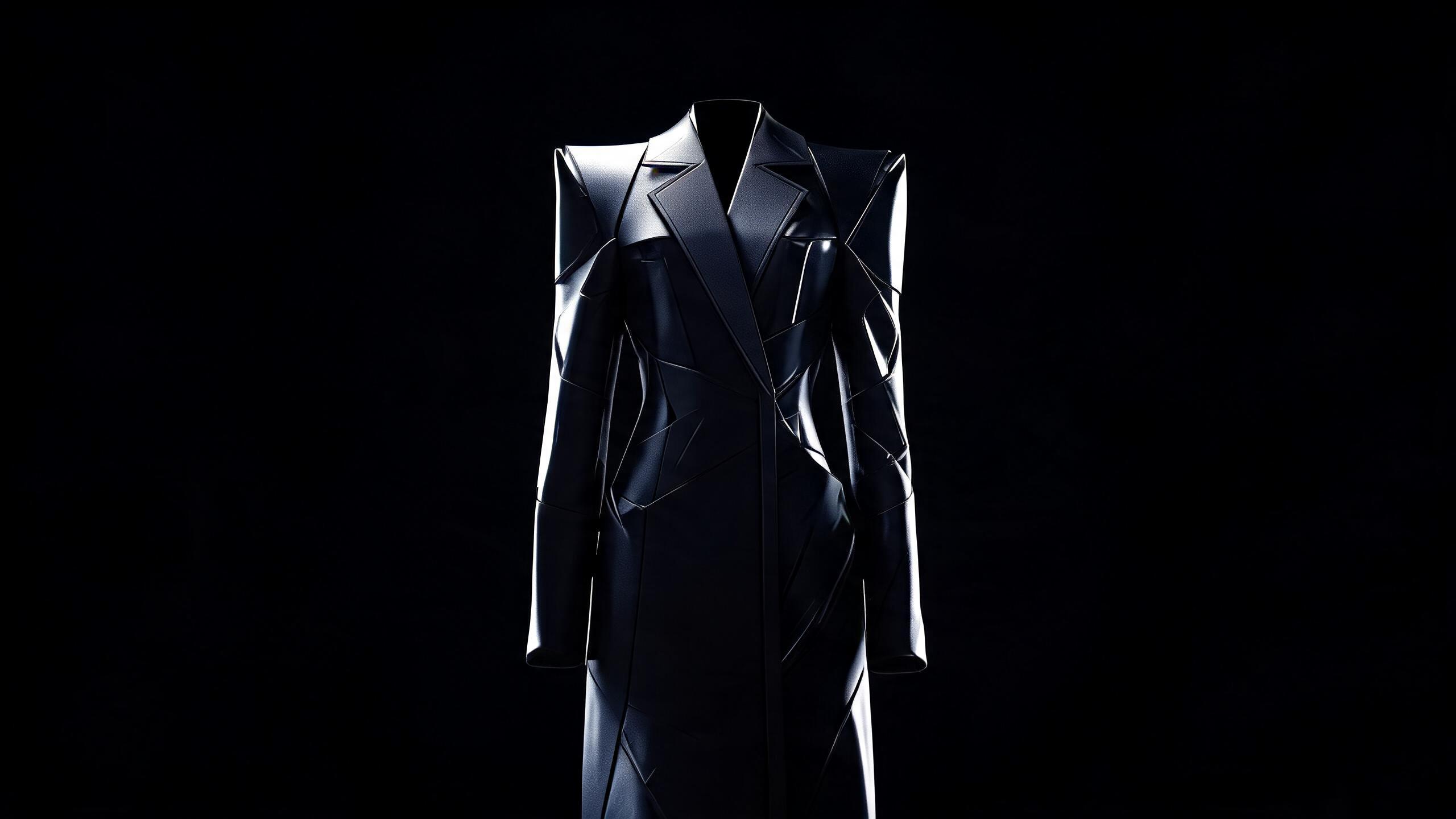
How AI Could Shape Christian Siriano’s Spring 2027 Aesthetic

Explore how generative design, digital tailoring, and predictive trend analysis could influence Siriano’s silhouettes, fabrics, and runway storytelling.
Christian Siriano Spring 2027 collection refers to the designer’s forthcoming Spring 2027 runway line, whose official designs, theme, and release details have not yet been publicly confirmed. AI’s role in shaping its aesthetic is therefore prospective rather than documented, with generative tools expected to support concept development, visual research, and material experimentation—not replace Siriano’s authorship.
Christian Siriano’s Spring 2027 collection will be shaped less by trend prediction than by AI-assisted interpretation of individual identity, occasion, and cultural mood.
Key Takeaway: The Christian Siriano Spring 2027 collection could use AI to translate individual identity, occasion, and cultural mood into designs, emphasizing personalized interpretation over conventional trend prediction.
What Could Define the Christian Siriano Spring 2027 Collection?
The Christian Siriano Spring 2027 collection remains in the future, so any analysis must separate confirmed information from informed projection. No finished runway, lookbook, official palette, or verified design statement for the collection is available to assess. The useful question is not what the collection will definitely contain, but which forces will shape its likely aesthetic direction.
Siriano’s work has long occupied a distinctive position between theatrical eveningwear, precise tailoring, red-carpet visibility, and inclusive fashion communication. That combination gives the Christian Siriano Spring 2027 collection an unusually rich design problem: preserve spectacle while making the clothes feel more personal, more adaptable, and more relevant to how people actually dress.
AI enters this picture as an interpretive system rather than an automatic designer. It can identify relationships across silhouettes, materials, color behavior, consumer response, image archives, occasion patterns, and individual taste. It cannot replace the judgment that turns those relationships into a coherent collection.
The central shift is this:
AI fashion intelligence: A system that models individual taste and contextual behavior to produce more relevant fashion recommendations, rather than simply repeating popular products or seasonal trends.
This distinction matters because fashion forecasting traditionally begins with broad signals: runway imagery, retail performance, cultural references, search behavior, and editorial direction. An AI-native approach begins with the person and works outward.
For the Christian Siriano Spring 2027 collection, that could produce an aesthetic built around several tensions:
- Drama versus daily wear
- Sculpture versus movement
- Individuality versus recognizable brand codes
- Artificial intelligence versus human authorship
- Occasion dressing versus wardrobe continuity
- Visibility versus personal privacy
The strongest result would not look like “AI fashion.” It would look like a collection with sharper emotional accuracy.
Why Does the Christian Siriano Spring 2027 Collection Matter Beyond One Runway?
A major collection does more than introduce clothes. It establishes a visual vocabulary that retailers, stylists, editors, image-makers, and consumers interpret across an entire season.
Christian Siriano’s design language is especially influential because it operates across multiple fashion contexts. A single idea can appear as couture-scale volume on a runway, streamlined tailoring in editorial imagery, and a more accessible proportion in occasionwear. That translation process turns a collection into a system of references.
The Spring 2027 collection will likely be judged through several simultaneous lenses:
- Runway impact: Does the collection create memorable silhouettes and images?
- Wearability: Can its design ideas survive outside the runway environment?
- Brand continuity: Does it remain recognizably Siriano?
- Cultural relevance: Does it respond to current attitudes toward identity, beauty, glamour, and technology?
- Commercial translation: Can the core ideas become products that people understand and use?
- Styling flexibility: Can individual pieces operate across different bodies, occasions, and wardrobes?
A collection can succeed in one category and fail in another. A highly theatrical runway may produce strong editorial images but weak wardrobe integration. A commercially safe collection may sell effectively while generating little cultural memory.
AI changes the relationship between these categories. When applied correctly, it can reveal where a dramatic design idea has practical demand, which details create attachment, and which combinations are consistently rejected by a particular audience.
That does not mean designing by vote. A designer who treats every signal as an instruction produces diluted fashion. The better model uses data to expose patterns, then uses creative judgment to decide which patterns deserve elevation.
How Could AI Change Fashion Trend Analysis for Spring 2027?
Trend analysis often collapses different kinds of information into one vague category called “what is next.” AI can separate those signals.
A system examining the Christian Siriano Spring 2027 collection could distinguish among:
- Emerging behavior: what people are beginning to wear or search for
- Persistent behavior: what remains relevant across seasons
- Editorial amplification: what appears important because image-makers repeat it
- Commercial demand: what people actually purchase or retain
- Cultural symbolism: what a silhouette communicates beyond its physical form
- Brand-specific opportunity: where Siriano’s design vocabulary can add something distinct
This classification prevents a common forecasting error: treating visibility as demand. A look can dominate social feeds because it is visually unusual while having little relevance to everyday wardrobes. Another design can receive less public attention but become a durable purchase because it solves an actual dressing problem.
An AI model can compare these signals without reducing them to a single score. For example, a particular neckline might show high editorial presence, moderate retail conversion, and strong repeat wear among customers with formal social calendars. That suggests a different opportunity than a neckline with high image engagement but low wardrobe persistence.
The relevant output is not “this trend is up.” It is a more precise statement:
A certain design element performs well for a specific person, occasion, climate, body preference, and wardrobe context.
That is the level at which fashion recommendation should operate.
What Would a More Advanced Trend Model Track?
A future-facing model could map fashion through several layers:
| Signal layer | What it measures | Relevance to Spring 2027 |
|---|---|---|
| Visual | Color, shape, proportion, texture, styling | Identifies recurring aesthetic patterns |
| Behavioral | Saves, returns, repeats, substitutions, purchases | Separates interest from commitment |
| Contextual | Occasion, climate, location, time, dress code | Connects design to real use |
| Personal | Fit preferences, confidence, taste boundaries | Prevents generic recommendations |
| Temporal | Seasonal persistence and lifecycle | Distinguishes durable shifts from brief spikes |
| Brand | Existing design codes and audience response | Protects creative continuity |
This model would make trend analysis more useful to designers and consumers alike. It would also reduce the dependence on broad labels such as “romantic,” “minimal,” or “futuristic,” which often conceal more than they explain.
Will the Collection Move Toward More Personalized Drama?
The likely future of occasionwear is not less drama. It is more precisely targeted drama.
Large sleeves, sculpted hips, asymmetric trains, sharp shoulders, high shine, and engineered draping can create powerful fashion images. Yet not every wearer wants the same type of visual impact. One person wants architectural volume; another wants a clean line with a dramatic back; another wants color intensity without added shape.
AI could help identify these distinctions and inform how a collection is presented, styled, and translated into product families. The runway may still feature a singular, high-impact silhouette. The surrounding system can then show how that idea changes across different wearer preferences.
For example, one core design concept might produce:
- A sculptural gown for formal evening events
- A shorter dress with controlled volume
- A tailored jacket with an exaggerated shoulder
- A soft blouse carrying the same sleeve architecture
- A minimal column dress with a dramatic back treatment
This is not merely a merchandising strategy. It is a way to preserve a design idea while allowing it to live in different wardrobes.
The relevant principle is modular drama: visual intensity that can be adjusted without losing its identity.
Why Does Modular Drama Matter?
Traditional runway logic often presents each look as a complete statement. Consumers, however, experience fashion as a sequence of decisions. They ask whether a piece works with existing shoes, whether it can be worn in more than one setting, whether the silhouette feels authentic, and whether the visual impact is comfortable to inhabit.
A personal style model can answer these questions with greater precision than a generic recommendation engine. It can understand that the same person may want a dramatic look for a gala, restrained elegance for a wedding, and a single statement element for dinner.
This is where the Christian Siriano Spring 2027 collection could become especially relevant. Siriano’s strength in occasionwear gives him the opportunity to show that high-impact design does not need to be locked to one level of theatricality.
👗 Retailers plug Alvin's Club in and see personalization land in weeks, not quarters. See how →
How Might Silhouette Evolve in the Christian Siriano Spring 2027 Collection?
Silhouette will likely become more fluid between ceremony and everyday life. The strongest shapes may not belong exclusively to gowns, cocktail dresses, or tailored separates. Instead, they may migrate across categories.
Several silhouette movements deserve attention.
Controlled Volume
Volume is unlikely to disappear, but it may become more deliberate. Instead of adding fullness everywhere, designers can concentrate volume at one point:
- A rounded sleeve with a narrow torso
- A raised hip balanced by a clean neckline
- A full skirt paired with a compact jacket
- A train that detaches or folds into a shorter shape
Controlled volume creates visual drama without overwhelming the entire outfit.
Extended Vertical Lines
Long, uninterrupted lines remain powerful because they create clarity in an image and a sense of movement on the body. A Spring 2027 direction could emphasize narrow columns, elongated jackets, low-seam dresses, and floor-skimming layers.
The important shift is not simply length. It is the relationship between verticality and mobility. A long silhouette needs engineered openings, flexible construction, or layered movement to remain functional.
Asymmetry as Personalization
Asymmetry can communicate individuality without relying on novelty for its own sake. One shoulder, offset draping, uneven hems, and angled closures create multiple visual entry points.
AI can identify which forms of asymmetry resonate with different styling preferences. A wearer who avoids exposed shoulders may respond to an asymmetric hem or wrapped waist instead. Personalization turns asymmetry from a runway gesture into a choice architecture.
Soft Structure
The opposition between tailoring and fluidity is becoming less useful. Modern formalwear increasingly combines internal structure with an exterior that moves. A jacket can hold a strong shoulder while using a soft fabric.
A gown can maintain architectural geometry while allowing the body to move naturally.
This balance suits Siriano’s design territory. It allows glamour to feel less rigid without abandoning precision.
What Role Will Color Play in the Spring 2027 Aesthetic?
Color forecasting becomes weak when it treats color as a universal prediction. A color does not have one meaning across all contexts. Its effect changes according to fabric, surface treatment, proportion, styling, lighting, and the wearer’s relationship to it.
An AI-assisted color model could analyze color at a more useful level:
- Color family: the underlying hue relationship
- Value: how light or dark the color appears
- Chroma: how intense or muted it feels
- Surface: whether the material absorbs, reflects, or diffuses light
- Placement: whether color dominates the outfit or acts as an accent
- Emotional association: how the wearer interprets it
- Occasion compatibility: where the color feels appropriate or difficult
For the Christian Siriano Spring 2027 collection, this opens several possible directions without reducing the analysis to a speculative palette.
Luminous Neutrals
Soft ivory, mineral gray, chalk, warm stone, and pale metallics can create a sense of light without relying on saturated color. These shades support sculptural construction because they reveal folds, pleats, seams, and volume through shadow.
Dark Romance
Black, ink, deep plum, and red-black tones can preserve Siriano’s connection to evening drama while moving away from predictable gothic references. The effect depends on finish: matte crepe communicates differently from lacquered satin or transparent organza.
Acidic Accents
A controlled use of sharp green, electric blue, vivid orange, or synthetic yellow could create tension inside a more restrained collection. The strength comes from proportion. A single acidic accessory or lining can alter the energy of an otherwise quiet look.
Tonal Color Stories
Tonal dressing allows construction to become the primary event. When the color relationship is close, the eye follows texture, proportion, and movement. This approach works especially well for a designer whose work depends on shape.
The likely opportunity is not choosing one “hero” color. It is creating a color architecture in which each hue supports a different mode of self-presentation.
Is Sustainability the Main Driver of Spring 2027 Design?
Sustainability should not be treated as an aesthetic trend. It is a design constraint, production issue, and information problem.
A garment’s environmental impact depends on multiple variables, including fiber choice, dyeing, finishing, manufacturing, transport, use, repair, and end-of-life treatment. A visually “natural” collection can still rely on complex materials or production methods that create significant impacts. Conversely, a synthetic material can offer durability or performance benefits in a specific application.
AI can support better decisions by connecting material data with design intent. A system could help compare:
- Material performance under repeated wear
- Construction complexity
- Repairability
- Deadstock availability
- Supplier constraints
- Expected care requirements
- Garment longevity
- Customer return patterns
- Potential reuse or resale pathways
The important point is that sustainability cannot be solved by labeling a collection “conscious.” It must be visible in the architecture of the product.
What Might Circular Design Look Like in a Siriano Context?
Circular design does not require abandoning glamour. It can appear through:
- Detachable sleeves, trains, bows, or overskirts
- Reversible garments with distinct visual identities
- Modular evening pieces that separate for later use
- Durable closures designed for repair
- Pattern layouts that reduce material waste
- Materials selected for known recovery pathways
- Construction that allows alteration across body changes
For formalwear, modularity has particular value because occasion garments often sit dormant between uses. A detachable element can transform the garment’s role without requiring an entirely new purchase.
This is a more serious approach than simply adding recycled material to a conventional design. It treats the garment as a long-lived system rather than a fixed image.
How Could AI Improve Fit and Body-Aware Design?
Fit is not a single measurement problem. It involves body dimensions, posture, movement, fabric behavior, construction, personal comfort, and the wearer’s desired visual effect.
A standard size chart cannot capture all of these variables. Two people with similar measurements may prefer different ease, rise, sleeve length, neckline exposure, or shaping. A good recommendation system must model preference alongside anatomy.
For the Christian Siriano Spring 2027 collection, AI could support body-aware styling and product development in several ways:
- Shape recognition: Identify preferred proportions rather than assigning simplistic body categories.
- Fit feedback: Learn from alterations, returns, saved items, and repeated wear.
- Movement analysis: Evaluate how garments behave while walking, sitting, dancing, or reaching.
- Preference mapping: Distinguish fit problems from taste boundaries.
- Outfit balancing: Recommend complementary shapes rather than isolated products.
- Confidence signals: Understand what the wearer repeatedly chooses when appearance matters.
The distinction between body typing and body-aware design is critical. Body typing places a person into a category and prescribes rules. Body-aware design observes how shape, movement, proportion, and preference interact.
Outfit Formula for a Personalized Spring 2027 Occasion Look
- Top: Softly structured asymmetric blouse in a luminous neutral
- Bottom: High-waisted column skirt with a controlled side opening
- Shoes: Minimal pointed-toe pump or sculptural low heel
- Accessories: One architectural earring, compact clutch, and a single tonal accent
This formula preserves a Siriano-like balance between polish and drama without requiring a full runway silhouette. An individual style model could then adjust the proportions: shorten the skirt, soften the shoulder, replace the heel, or introduce a stronger color accent.
For readers comparing manual styling with AI-assisted guidance, the analysis in Traditional vs AI-Powered Brunch Outfit Ideas for Spring illustrates the broader difference between generic outfit logic and recommendations built around personal context.
What Does AI Personalization Actually Add to Fashion?
Personalization is frequently used to describe simple sorting. A platform recommends products based on category, browsing history, or prior purchases, then calls the result individualized.
That is not a personal style model.
A genuine personal style model should represent relationships among preferences. It should understand that a person may prefer:
- Dramatic silhouettes in formal settings
- Minimal shapes for work
- Saturated color only in accessories
- Natural fabrics near the skin
- Strong shoulders but relaxed trousers
- Heels for events but flat shoes for daily use
- Novelty in texture rather than print
These preferences are not independent. They form a system.
A conventional recommendation engine asks: What item resembles what this person clicked?
An AI stylist should ask: What combination supports this person’s identity, context, wardrobe, comfort, and current intention?
Key Comparison: Generic Recommendation Versus Personal Style Intelligence
| Approach | Primary input | Typical output | Main weakness |
|---|---|---|---|
| Popularity ranking | Aggregate clicks and sales | Widely viewed products | Confuses popularity with relevance |
| Collaborative filtering | Similar user behavior | Products liked by comparable users | Misses individual context |
| Rule-based styling | Fixed fashion rules | Predefined outfit formulas | Treats people as categories |
| Image similarity | Visual resemblance | Items that look similar | Ignores occasion and wardrobe |
| Personal style model | Taste, behavior, context, fit, and wardrobe | Adaptive outfit recommendations | Requires continuous learning |
| AI stylist | Personal style model plus dialogue and feedback | Contextual, evolving guidance | Must earn trust through accuracy |
The difference is not cosmetic. It changes what fashion commerce is capable of doing.
Which Consumer Behavior Will Matter Most by Spring 2027?
The most important behavioral shift is the movement from product discovery toward identity management.
People do not only ask whether a garment looks good. They ask:
- Does this represent me?
- Can I wear it without feeling disguised?
- Does it work with what I already own?
- Will I reach for it again?
- Can I adapt it across settings?
- Does the styling reflect how I want to be perceived?
- Is the purchase solving a real wardrobe need?
These questions are difficult for traditional retail systems because they are relational. The value of one dress depends on shoes, outerwear, calendar, body comfort, social environment, and the wearer’s emotional state.
AI can model these relationships more effectively than static catalogs. The challenge is data quality. A click does not always indicate desire.
A saved image may represent aspiration, research, or a reference for an entirely different purchase.
What Signals Reveal Real Preference?
The strongest style signals often come from behavior after discovery:
- Repeatedly wearing a garment
- Combining one piece with different items
- Returning to a silhouette across seasons
- Rejecting a recommendation for a consistent reason
- Altering an item after purchase
- Choosing one color family in formalwear and another in casualwear
- Saving complete outfits rather than isolated products
A system that learns only from clicks will misunderstand the user. A system that learns from repeated decisions can begin to distinguish fleeting curiosity from durable taste.
This is why personal style intelligence requires memory. The stylist must remember not only what the person liked, but why a recommendation failed.
Could the Collection Reject Trend-Chasing?
The Christian Siriano Spring 2027 collection has an opportunity to challenge the most persistent weakness in fashion technology: the assumption that relevance equals recency.
Trend-chasing produces a shallow loop:
- Detect a visible pattern.
- Replicate the pattern.
Distribute it widely. 4. Measure engagement. 5. Interpret repetition as validation.
This system rewards sameness. It also creates a distorted view of personal style because consumers are shown what is receiving attention rather than what fits
Summary
- The Christian Siriano Spring 2027 collection is not yet confirmed, with no official runway, lookbook, color palette, or verified design statement available.
- AI could shape the collection by interpreting individual identity, occasion, cultural mood, silhouettes, materials, color behavior, and consumer response.
- The Christian Siriano Spring 2027 collection will likely balance theatrical eveningwear and precise tailoring with more personal, adaptable clothing.
- Siriano’s established focus on red-carpet visibility and inclusive fashion communication creates a design challenge centered on preserving spectacle while reflecting everyday dressing.
- AI would function as an interpretive tool for modeling taste and context, while human judgment would remain essential to transforming insights into a coherent collection.
Key Takeaways
- Key Takeaway:
- AI fashion intelligence:
- Drama versus daily wear
- Sculpture versus movement
- Individuality versus recognizable brand codes
Frequently Asked Questions
What is the Christian Siriano Spring 2027 collection expected to look like?
The Christian Siriano Spring 2027 collection is expected to explore expressive occasionwear, sculptural silhouettes, and personalized interpretations of identity. Because the collection has not been officially revealed, its colors, fabrics, and final runway designs remain speculative.
How could AI influence the Christian Siriano Spring 2027 collection?
AI could influence the Christian Siriano Spring 2027 collection by helping interpret cultural moods, individual preferences, and different styling occasions. Siriano’s creative direction would still determine how those insights become garments, rather than allowing technology to replace design judgment.
Is it worth following predictions about the Christian Siriano Spring 2027 collection?
Following predictions about the Christian Siriano Spring 2027 collection can be useful for understanding possible fashion directions and emerging conversations around AI-assisted design. Readers should treat forecasts as informed analysis, not confirmed details about the final collection.
Can AI create Christian Siriano’s Spring 2027 designs?
AI can generate visual concepts, suggest combinations of color and form, and help explore alternative design ideas for Christian Siriano’s Spring 2027 collection. Human creativity remains essential for evaluating wearability, craftsmanship, emotional impact, and the designer’s signature perspective.
Why does personalization matter for the Christian Siriano Spring 2027 collection?
Personalization matters because modern fashion increasingly connects clothing with individual identity, body diversity, occasion, and cultural context. For the Christian Siriano Spring 2027 collection, AI-assisted interpretation could help support more responsive ideas while preserving the drama and inclusivity associated with Siriano’s work.
Related on Alvin's Club
About the author
Building the AI fashion agent at Alvin's Club — personal style models, dynamic taste profiles, and private AI stylists. Writing about where AI meets fashion commerce.
Credentials
- Founder at Alvin's Club (Echooo E-Commerce Canada Ltd.)
- Writes weekly on AI × fashion at blog.alvinsclub.ai
X / @alvinsclub · LinkedIn · alvinsclub.ai
This article is part of Alvin's Club's AI Fashion Intelligence series — the AI fashion agent that influences demand before shopping happens.