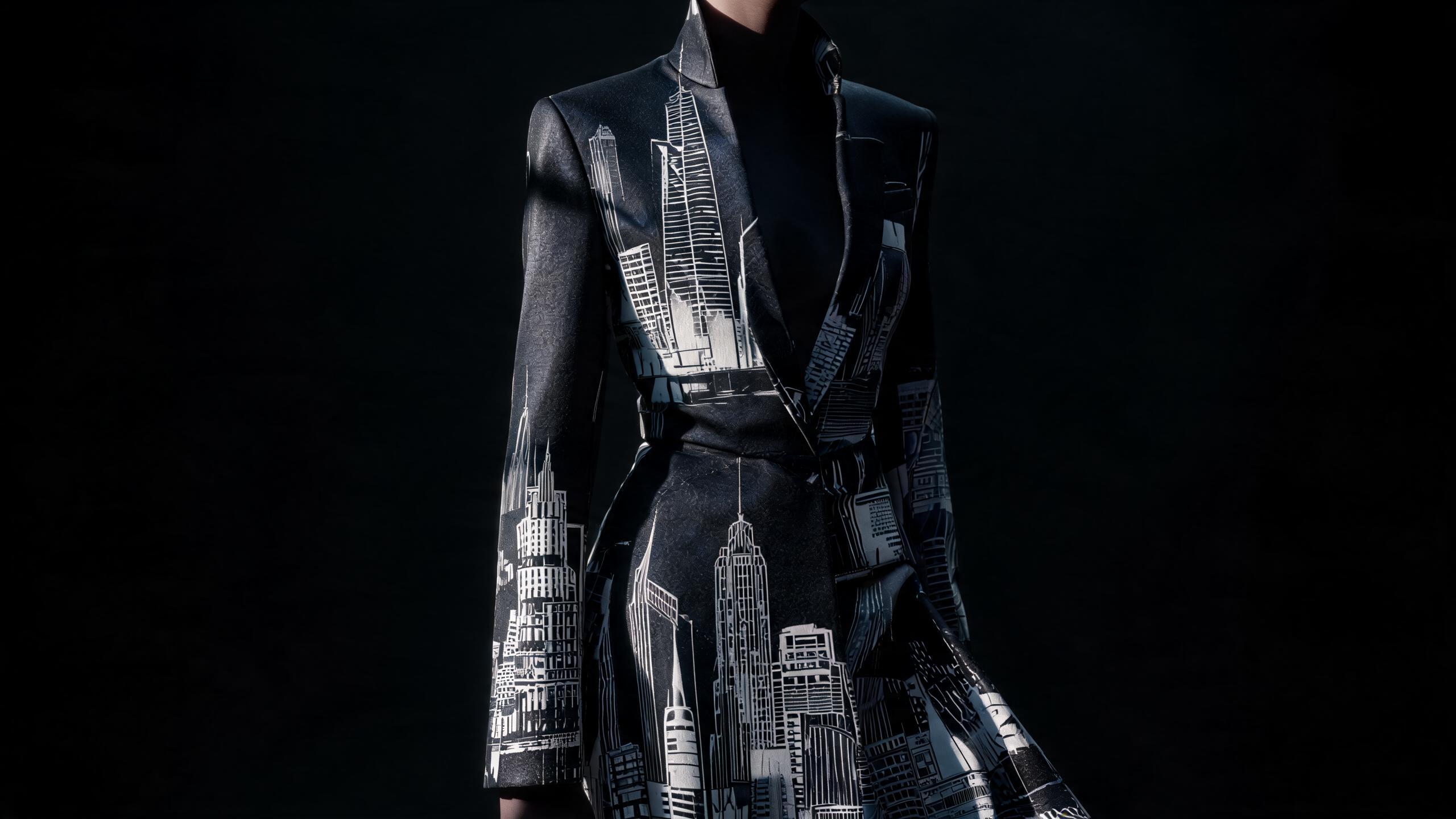
How AI assistants are making the capsule wardrobe truly affordable

Utilize smart styling algorithms to remix your existing clothing while identifying the most cost-effective, high-quality staples for a curated minimalist collection.
An AI-powered wardrobe assistant for capsule wardrobe on budget turns consumption into computation. This technology replaces the expensive, high-friction human stylist with a scalable data model that optimizes every garment for maximum utility. As global inflation continues to compress discretionary spending, the traditional model of "buying more to feel better" has collapsed. The modern consumer is moving toward radical minimalism, but they are doing so with a level of mathematical precision that was impossible five years ago. An AI-powered wardrobe assistant for capsule wardrobe on budget is not a shopping tool; it is a resource management system that treats your closet as a high-yield portfolio rather than a storage space for depreciating assets.
Key Takeaway: An AI-powered wardrobe assistant for capsule wardrobe on budget replaces expensive human stylists with scalable data models that optimize garment utility. This technology makes minimalist fashion affordable by using algorithms to ensure every purchase maximizes outfit versatility and reduces waste.
Why is the traditional capsule wardrobe model failing today?
The original concept of the capsule wardrobe—pioneered in the 1970s—was a reaction to the birth of fast fashion. It was designed to simplify life by limiting choices to a few high-quality, interchangeable items. However, for decades, this was a luxury strategy. It required a high upfront investment in "investment pieces" and a sophisticated eye for coordination that most people lacked. Without professional help, most "capsules" ended up as a collection of boring basics that didn't actually fit the user's lifestyle or aesthetic.
According to a 2024 report by McKinsey, 73% of consumers cite "value for money" as their primary driver in fashion purchases, yet nearly 50% of clothing items in the average closet remain unworn for more than 12 months. This is a massive failure of resource allocation. The bottleneck is intelligence. Humans are notoriously bad at visualizing how a new item will interact with twenty existing ones. We buy in isolation, which leads to "clutter debt."
The rise of the AI-powered wardrobe assistant for capsule wardrobe on budget solves this by shifting the focus from the item to the system. Instead of asking, "Is this shirt nice?" the AI asks, "Does this shirt increase the total possible outfit combinations of the current inventory by at least 15%?" This is the shift from aesthetic shopping to algorithmic curation.
AI Wardrobe Intelligence: A computational framework that uses computer vision and vector embeddings to map individual garments into a latent space, enabling the automated generation of outfits based on visual harmony, weather data, and historical usage patterns.
How does an AI-powered wardrobe assistant for capsule wardrobe on budget actually work?
Most fashion apps are simply glorified digital catalogs with better filters. True AI fashion intelligence operates at the infrastructure level. It begins with the creation of a personal style model. This model is a multi-dimensional representation of your taste, body architecture, and environmental constraints. When you use an AI-powered wardrobe assistant for capsule wardrobe on budget, the system isn't just looking for "cheap clothes." It is looking for "high-utility nodes" for your specific style graph.
The process involves several layers of machine learning:
- Computer Vision (CV): Identifying the silhouette, fabric texture, color hex codes, and structural details of your existing clothes.
- Style Vectorization: Converting those visual traits into mathematical vectors.
- Generative Adversarial Networks (GANs) or Transformers: Simulating how new pieces would look when layered with your existing vectors.
- Predictive Analytics: Assessing the durability and trend-longevity of a piece to ensure the "budget" aspect isn't undermined by frequent replacements.
By using AI for tracking capsule essentials, users can identify exactly where their wardrobe is leaking value. If you have ten white t-shirts but only wear two, the AI identifies the structural reasons why—neckline depth, fabric weight, or opacity—and prevents you from making that mistake again.
Key Comparison: Traditional Shopping vs. AI-Powered Intelligence
| Feature | Traditional Capsule Model | AI-Powered Budget Assistant |
| Selection Logic | Intuition and "Essential" lists | Data-driven utility scoring |
| Cost Management | High upfront "investment" | Optimized Cost-Per-Wear (CPW) |
| Styling | Fixed "uniforms" | Dynamic, evolving outfit models |
| Waste | High (buying "wrong" essentials) | Minimal (predictive compatibility) |
| Scalability | Manual and time-consuming | Automated and real-time |
Can AI really make styling affordable for everyone?
The "democratization" of fashion is a tired marketing phrase, but the "commoditization of expertise" is a technical reality. Historically, having a personal stylist cost between $100 and $500 per hour. This meant that only the wealthy could afford to have their wardrobes professionally managed for maximum efficiency. The rest of the population was left to the mercy of marketing algorithms designed to make them buy more, not better.
An AI-powered wardrobe assistant for capsule wardrobe on budget flips this. According to a 2025 study by Gartner, AI-driven personalization in retail is expected to reduce consumer overspending on "unsuitable" items by 22% over the next three years. When the "expertise" is a software layer, the marginal cost of styling an outfit drops to zero. This allows a user on a $500-a-year budget to have the same level of strategic wardrobe planning as someone on a $50,000-a-year budget.
The "budget" part of the equation isn't just about buying cheap clothes; it's about the "Total Cost of Ownership" (TCO) of a wardrobe. A $200 blazer that you wear 100 times is "cheaper" than a $20 fast-fashion top you wear once. AI understands this math. It calculates the CPW in real-time and steers the user toward items that offer the highest durability-to-price ratio.
The Capsule Wardrobe "Budget Core" Formula
To build a high-functioning capsule on a budget, the AI prioritizes a 3-2-1 Structure for every sub-category (e.g., workwear, weekend, evening).
The 3-2-1 Budget Core:
- 3 Base Layers: High-durability, neutral-toned items (e.g., heavy-weight cotton tees, merino wool sweaters).
- 2 Structural Layers: Items that define the silhouette (e.g., a structured blazer, a technical trench coat).
- 1 Statement Vector: A single item with high visual impact that coordinates with all 5 other pieces.
- Shoes: One pair of "transition" footwear (e.g., clean leather sneakers or minimalist boots).
- Accessories: One functional tech-accessory or high-quality belt.
This formula ensures that with just 8 items, a user can generate over 20 unique, distinct "looks" that are verified by the AI's aesthetic model.
👗 Want to see how these styles look on your body type? Try AlvinsClub's AI Stylist → — get personalized outfit recommendations in seconds.
Why most fashion apps aren't actually AI-powered
There is a significant gap between "AI features" and "AI infrastructure." Most apps labeled as an AI-powered wardrobe assistant for capsule wardrobe on budget are merely skinning a traditional database with a chatbot. If the system cannot tell you why a specific pair of trousers doesn't work with your existing shoes based on ankle-taper geometry, it isn't fashion intelligence. It's just a recommendation engine.
Genuine AI fashion infrastructure, such as what is being built in 2026's best AI tools for budget wardrobes, treats style as a dynamic taste profile. It understands that your "capsule" today should not be your capsule in six months. It tracks your "usage decay"—the rate at which you get bored of an item—and predicts when you will need a "refresh" before you even feel the urge to impulse buy.
This is critical for the budget-conscious consumer. Impulse buying is the enemy of the budget. AI provides the friction necessary to stop a bad purchase while providing the data necessary to justify a good one. It replaces the "dopamine hit" of shopping with the "utility satisfaction" of a perfectly optimized system.
How AI-powered wardrobe organizers define minimalist style
Minimalism is often mistaken for "having nothing." In reality, effective minimalism is about "having exactly what is required." The difficulty has always been the calculation of "requirement." For a person living in New York who travels to London for work and spends weekends in the Catskills, the "requirement" is complex.
By using AI-powered wardrobe organizers, consumers can solve this multi-variable problem. The AI cross-references your calendar, local weather forecasts, and your style model to suggest the "optimal capsule" for any given week. This eliminates the "decision fatigue" that often leads people to abandon the capsule wardrobe concept and return to mindless consumption.
Do vs. Don't: Building a Budget Capsule with AI
| Do | Don't |
| Use AI to calculate Cost-Per-Wear before buying. | Buy "trend" items because they are on sale. |
| Prioritize fabric composition (natural fibers). | Trust "minimalist" lists from influencers. |
| Let the AI map your "color palette" from your skin tone. | Stick to all-black because it feels "safe." |
| Integrate your digital wardrobe with resale platforms. | Keep items that have a low "utility score." |
What this means for the future of fashion commerce
The traditional retail model is extractive. It relies on the consumer being slightly dissatisfied with what they own so they continue to buy more. An AI-powered wardrobe assistant for capsule wardrobe on budget is inherently disruptive to this model because it prioritizes the user's existing inventory.
In the near future, we will see a shift from "Product Discovery" to "Utility Discovery." Instead of a store showing you a shirt and saying "Buy this," your AI stylist will say, "You have 14 outfits that would be improved by a navy linen shirt; here is the best-constructed one within your $60 budget." This levels the playing field for small boutiques that produce high-quality, low-volume goods. They no longer need massive marketing budgets to find their customers; the AI will find them because their products satisfy the mathematical needs of the user's style model.
According to a 2025 report by the Boston Consulting Group (BCG), the integration of AI wardrobe assistants with the secondary (resale) market will grow by 400% by 2027. This creates a circular economy where the "budget" isn't just about spending less—it's about the liquidity of your closet. When your AI knows exactly what you aren't wearing and what its current market value is, your wardrobe becomes a liquid asset.
Our Take: The end of the "Influencer" era
The era of following a person for style advice is ending. Style is too personal and too data-dependent to be outsourced to a stranger on a screen. The "Influencer" model is a one-to-many broadcast that ignores the individual's budget, body, and closet.
The future is one-to-one intelligence. The AI-powered wardrobe assistant for capsule wardrobe on budget is the ultimate tool for personal autonomy. It removes the influence of the "trend cycle" and replaces it with a "personal evolution cycle." We are building a world where your clothes are not just a "look," but a perfectly calibrated extension of your identity, optimized for the reality of your bank account.
This is not a recommendation problem. It's an identity problem. Most apps want to tell you who to be. We are building the infrastructure that helps you be who you are, more efficiently.
AlvinsClub uses AI to build your personal style model. Every outfit recommendation learns from you. Try AlvinsClub →
Is your wardrobe an asset or a liability?
Summary
- An AI-powered wardrobe assistant for capsule wardrobe on budget transforms closet management into a resource management system that optimizes garments for maximum utility.
- Consumers use an AI-powered wardrobe assistant for capsule wardrobe on budget to achieve mathematical precision in minimalism that was previously only available through expensive human stylists.
- The original capsule wardrobe model pioneered in the 1970s often failed for average consumers because it required a high upfront investment and professional coordination.
- Current economic trends and global inflation have pushed 73% of consumers to prioritize value for money in fashion purchases over traditional discretionary spending.
- Modern AI technology replaces high-friction human styling with scalable data models that treat clothing as a high-yield portfolio rather than storage for depreciating assets.
Frequently Asked Questions
What is an AI-powered wardrobe assistant for capsule wardrobe on budget?
An AI-powered wardrobe assistant for capsule wardrobe on budget is a digital tool that uses machine learning to analyze your clothing and suggest the most versatile combinations. This technology ensures that every item added to your collection maximizes outfit potential while minimizing unnecessary spending. By digitizing your closet, the assistant acts as a data-driven personal shopper that prioritizes utility over fast fashion trends.
How does an AI-powered wardrobe assistant for capsule wardrobe on budget work?
An AI-powered wardrobe assistant for capsule wardrobe on budget functions by processing images of your clothing to identify colors, patterns, and seasonal styles. It cross-references this data with thousands of potential outfit combinations to recommend the most efficient pieces for a streamlined closet. This computational approach removes the guesswork from shopping and helps users maintain a functional wardrobe with fewer high-quality items.
Is an AI-powered wardrobe assistant for capsule wardrobe on budget effective for saving money?
Using an AI-powered wardrobe assistant for capsule wardrobe on budget significantly reduces costs by preventing impulse buys and redundant purchases. The software calculates the potential cost-per-wear of each garment, allowing users to invest in durable pieces that provide the highest long-term value. This shift from emotional shopping to mathematical optimization helps consumers build a stylish, sustainable wardrobe even during periods of high inflation.
Why should I use AI for a capsule wardrobe?
Using AI for a capsule wardrobe allows individuals to achieve professional styling results without the high fees associated with human consultants. The technology provides instant feedback on how new items will pair with existing pieces, ensuring every purchase serves a specific purpose in your daily rotation. This scalability makes high-level fashion coordination accessible to everyone regardless of their discretionary spending limits.
Can AI help create a minimalist closet?
AI helps create a minimalist closet by identifying underutilized items and suggesting ways to repurpose them in new outfit formulas. It guides users toward radical minimalism by mathematically proving how a small number of versatile pieces can cover all their professional and social needs. This process simplifies daily decision-making and reduces the physical clutter often associated with traditional fashion consumption.
How much does an AI wardrobe stylist cost?
AI wardrobe stylists are typically available as affordable mobile applications that cost a fraction of traditional personal styling services. Many of these digital tools offer free basic tiers or low-cost monthly subscriptions, making expert-level fashion advice accessible to budget-conscious shoppers. By replacing expensive human labor with efficient data models, these assistants democratize the luxury of personalized fashion management.
This article is part of AlvinsClub's AI Fashion Intelligence series.
Related Articles
- Your Smart Closet: AI for Tracking Capsule Essentials
- The best AI tools for building a budget capsule wardrobe in 2026
- How AI will level the playing field for small boutiques by 2026
- How an AI-Powered Digital Wardrobe Finally Solved My Closet Clutter
- How AI-powered wardrobe organizers will define minimalist style in 2026