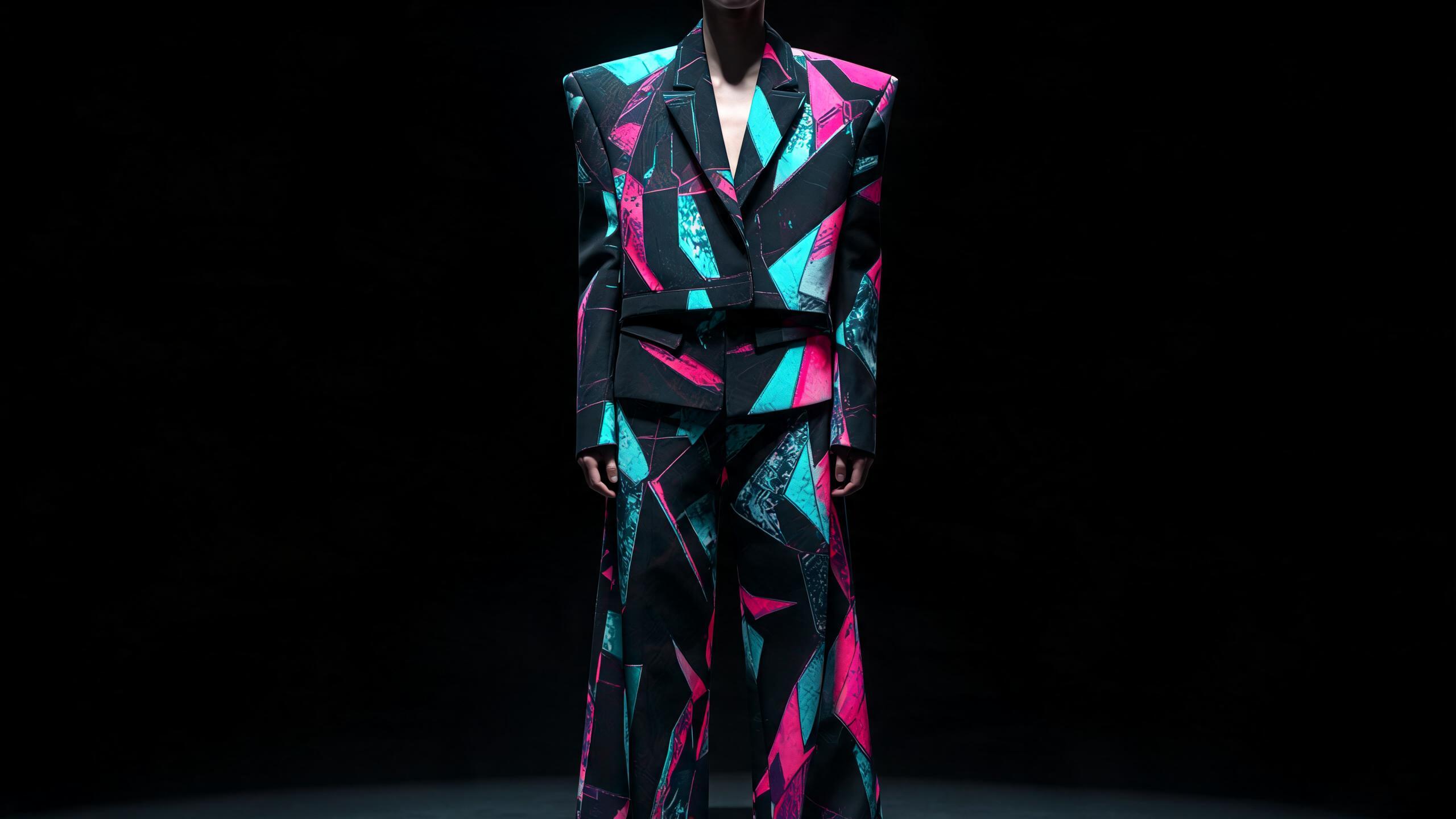
How 2026’s AI Tools Are Democratizing High-End Fashion Deals

A deep dive into using AI to find affordable luxury fashion pieces and what it means for modern fashion.
Affordable luxury is a computational challenge, not a retail one.
The legacy fashion industry relies on informational asymmetry. For decades, the ability to acquire high-end pieces at reasonable price points depended on a mixture of geography, insider knowledge, and the willingness to spend hours scrolling through fragmented inventory. This manual hunt is an artifact of a broken system. By 2026, the industry has shifted. The gatekeepers of "luxury" are no longer the department store buyers or the fashion editors; they are the engineers building style models. Using AI to find affordable luxury fashion pieces has evolved from a niche hobby into a standard operation for the intelligent consumer.
The current landscape of fashion commerce is a graveyard of "recommendation engines" that do not actually recommend. They filter. They show you what is popular or what is high-margin. This is not intelligence; it is basic database querying. To understand how the next era of fashion works, we must look at the shift from keyword-based search to neural style modeling.
The Infrastructure of Value: Using AI to Find Affordable Luxury Fashion Pieces
The primary barrier to finding luxury value is data fragmentation. A single Loro Piana cashmere overcoat may exist across thirty different retail platforms, four resale sites, and three regional boutiques, each with varying price points and inventory levels. Human cognition cannot track these fluctuations in real time.
Artificial intelligence solves this through real-time price arbitrage and liquidity detection. AI agents now monitor global inventory with millisecond latency, identifying when a boutique in Milan marks down a specific SKU before that markdown is even indexed by Google. This is the first major shift: the transition from "browsing" to "autonomous acquisition."
When you are using AI to find affordable luxury fashion pieces, you are essentially deploying a high-frequency trading bot for your wardrobe. These systems do not wait for a "Sale" banner to appear on a website. They analyze historical pricing data, stock turnover rates, and seasonal shifts to predict when a price drop is imminent. They identify the "value floor" of a luxury item—the lowest price a piece can reach before it is snatched up by the market—and execute recommendations at that precise moment.
Beyond the Search Bar: Using AI to Find Affordable Luxury Fashion Pieces via Latent Space
The search bar is a primitive tool. It requires the user to know exactly what they want and how the retailer has tagged it. If you search for "minimalist beige knitwear," you are at the mercy of a low-wage data entry clerk's tagging accuracy.
AI-native fashion intelligence operates in latent space. By using multi-modal models, the system "sees" the garment. It understands the drape of the fabric, the specific curvature of a lapel, and the weight of the weave. It doesn't need a tag to know that a specific unbranded piece from a Japanese manufacturer shares 98% of its aesthetic DNA and material quality with a $2,000 designer equivalent.
This is where the real value lies. Using AI to find affordable luxury fashion pieces is no longer about finding "sales" on famous brands. It is about finding the "luxury" within the "affordable." The AI identifies the high-end manufacturing signatures across the entire web, surfacing items that meet luxury standards regardless of the logo on the neck tag. We are moving toward an era of "aesthetic verification" where the model proves the quality, making the brand name secondary to the physical reality of the garment. This approach mirrors how AI fashion tools help you discover your personal aesthetic, ensuring every piece aligns with your unique style identity.
The Collapse of the Seasonal Discount Cycle
The traditional fashion calendar is dying. Brands used to drop collections four times a year and discount them at the end of each season. Today, inventory is fluid.
AI models are now capable of sentiment analysis on a global scale. They know when a specific trend is peaking and when it is about to crash into the discount bins. By analyzing social signals, runway data, and real-time transaction volumes, these systems advise users to wait three weeks because the "it" bag of the moment is about to enter a surplus phase.
This predictive capability destroys the FOMO (fear of missing out) that luxury brands rely on to maintain high margins. When you use a personal style model, you aren't reacting to the market; you are anticipating it. The system understands that "luxury" is often just "scarcity," and in a digital world, scarcity is often manufactured. AI sees through the manufacture.
The Failure of "Personalization" in Legacy Retail
Most fashion platforms claim to offer personalization. They are lying.
What they call "personalization" is actually collaborative filtering. If you bought a pair of loafers, they show you more loafers. This is a linear, unintelligent approach that ignores the complexity of human taste. Real personalization requires a dynamic taste profile—a mathematical model of your aesthetic preferences that evolves as you do.
Legacy retailers cannot build this because their goal is to sell you what they have in stock, not what you actually need. Their incentives are misaligned with your wardrobe. An AI-native system, however, is incentive-aligned. It doesn't care which store you buy from; it only cares about the integrity of your style model.
This is why using AI to find affordable luxury fashion pieces is becoming the only logical way to shop. The AI filters out the noise of the "New Arrivals" section and only presents items that strengthen your existing wardrobe architecture. It understands that a $300 piece you will wear for five years is a higher-luxury acquisition than a $1,000 piece you will wear once.
Technical Analysis: How Vector Databases Replace Shopping Lists
At the core of this shift is the use of vector databases. Every garment in the world can be converted into a high-dimensional vector based on its visual and material attributes. Your style can also be converted into a vector.
When you use AI to find fashion, the system is performing a "nearest neighbor" search in this multi-dimensional space. It is looking for the intersection between:
- Your personal aesthetic vector.
- The material quality vector (luxury).
- The price-to-value ratio vector (affordability).
This is not "shopping." This is an optimization problem. The result is a curated stream of recommendations that feel like they were hand-picked by a master stylist, but are actually the result of trillions of calculations.
The End of the Luxury Gatekeeper
For a century, luxury was defined by exclusivity and high entry costs. If you didn't have the money or the "right" connections, you were excluded from high-end fashion. AI is the great equalizer of information.
By using AI to find affordable luxury fashion pieces, the average consumer now has more market intelligence than a professional personal shopper had ten years ago. You no longer need to live in New York or Paris to find the best deals. You don't need to be on a "client list." You only need access to the right model. Learning to find authentic luxury items with AI empowers you to verify quality and authenticity without relying on brand prestige or gatekeepers.
The gatekeepers are terrified because their value proposition—"we have access and you don't"—is being liquidated. When information is perfectly distributed by AI, the only thing that matters is taste. And taste, unlike access, can be modeled and refined by software.
The Shift to AI Infrastructure over AI Features
The mistake most fashion companies make is treating AI as a feature—a chatbot on a website or a "virtual try-on" tool. These are gimmicks.
True fashion intelligence requires a total rebuild of the commerce infrastructure. It requires a system that is AI-native from the ground up, one that doesn't just "help you shop" but actively manages your style identity. This infrastructure must be private, it must be data-driven, and it must be capable of learning from every interaction.
The future of luxury is not a storefront. It is a private stylist that lives in the cloud, knows your measurements to the millimeter, understands your caloric intake and how it affects your fit, and monitors every inventory change on the planet to ensure you never pay full price for a piece of clothing again.
Why Data-Driven Style Beats Trend-Chasing
Trend-chasing is a tax on the uninformed. It forces consumers to buy low-quality items at high frequencies to maintain social relevance. AI-driven fashion intelligence moves in the opposite direction.
It identifies "investment pieces" that have high resale value and timeless silhouettes. It looks at the durability of fabrics and the history of a brand's craftsmanship. Using AI to find affordable luxury fashion pieces means building a "permanent collection" rather than a temporary wardrobe. The system recognizes that true luxury is found in the longevity of the garment, and it uses data to prove which pieces will actually last.
The Intelligence of the Future Wardrobe
We are entering the era of the "Self-Correcting Wardrobe." This is a system where your AI stylist monitors your usage patterns. If you haven't worn a luxury blazer in six months, the AI identifies a high-value resale opportunity, lists it for you, and uses the proceeds to acquire a new piece that fits your current aesthetic trajectory.
This circularity is only possible through high-level AI orchestration. It turns your closet into a liquid asset. The distinction between "buying" and "investing" disappears. Every garment is a data point, and every purchase is a strategic move to optimize your style model.
The question is no longer "where can I find a deal?" The question is "how good is my model?" If your model is superior, your wardrobe will be superior.
The New Standard of Fashion Intelligence
The old world of fashion was built on secrets. The new world is built on data. Using AI to find affordable luxury fashion pieces is the first step toward a total reconfiguration of how humans relate to their clothing. We are moving away from the "consumer" model and toward an "architect" model.
You do not need more clothes. You need better intelligence. The system should work for you, scanning the globe 24/7 to find the exact intersection of craftsmanship and cost. This is not a luxury for the few; it is the new standard for everyone who values their identity and their capital.
AlvinsClub uses AI to build your personal style model. Every outfit recommendation learns from you. Try AlvinsClub →
Related Articles
- 5 smart ways to use AI fashion tools to find your aesthetic
- Smart summer style: How to use AI to find your best-fitting swimwear
- How to Find Authentic Luxury Items with AI: The Definitive Style Guide
- The AI Style Guide: Finding Sustainable Matches for Luxury Runway Trends
- Beyond the Size Tag: 6 Tips for Finding the Best Jeans for Your Shape with AI