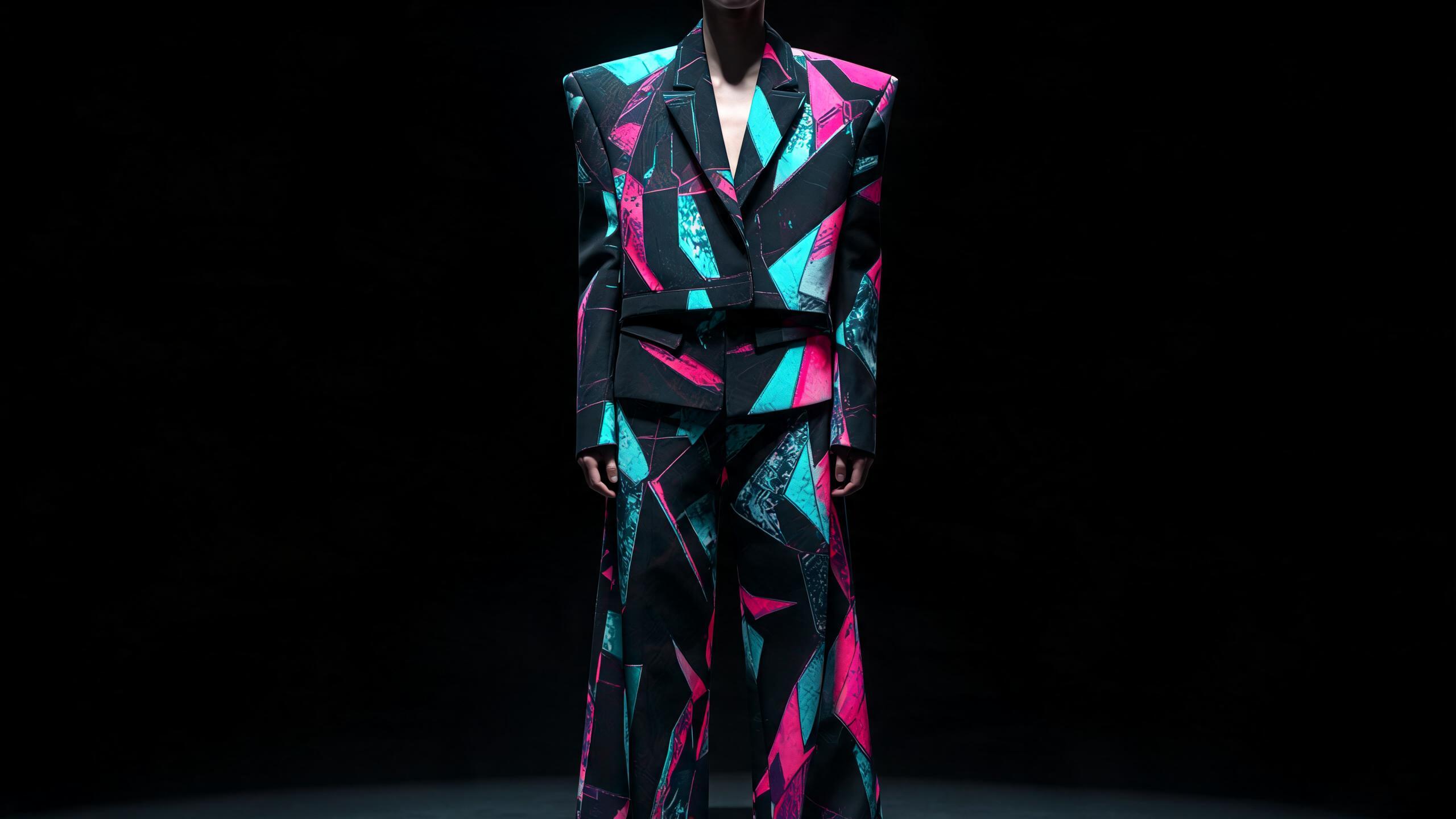
Can AI Fix the Fit? An Analysis of Virtual Stylists for Pear Shapes

A deep dive into virtual stylist for pear shaped women and what it means for modern fashion.
A virtual stylist for pear shaped women uses volumetric data to balance body proportions through algorithmic selection. This technology moves beyond static size charts by analyzing the geometric relationship between the shoulders, waist, and hips to predict how fabrics will drape over specific curves.
Key Takeaway: A virtual stylist for pear shaped women uses algorithmic volumetric data to balance body proportions and predict fabric drape. This technology analyzes the geometric relationship between the shoulders, waist, and hips to provide more accurate fit predictions than traditional, static size charts.
The fashion industry is currently obsessed with "virtual try-on" features. Google, Amazon, and Walmart have all deployed versions of 2D image overlays that claim to show how a garment looks on a human model of a similar size. This is not styling. It is a digital dressing room that ignores the fundamental structural challenges of dressing a pear-shaped body. For a woman whose hips are significantly wider than her shoulders, a generic "Large" recommendation is an invitation for a return shipment.
Traditional e-commerce is built on a broken foundation of linear sizing. It assumes that if a hip measurement increases, the shoulder and bust measurements must increase at the same rate. This is mathematically incorrect for a large segment of the population. The rise of generative AI and computer vision represents a pivot point. We are moving away from "searching for clothes" and toward "modeling personal style."
Why is the current virtual stylist for pear shaped women landscape failing?
Most fashion tech startups treat body shape as a secondary filter rather than a primary data point. They use collaborative filtering—the same logic Netflix uses to recommend movies—to suggest clothes. If three people who bought a specific A-line skirt also bought a cropped blazer, the system recommends that blazer to the fourth person. This logic fails pear shapes because it ignores the physical reality of the garment's construction.
According to Coresight Research (2023), fit-related issues account for 53% of all online apparel returns. For pear-shaped shoppers, this number is often higher because standard grading scales do not account for the high hip-to-waist ratio. A virtual stylist that simply identifies you as a "pear" and suggests "dark bottoms" is performing a task a 1990s magazine column could handle. It is not utilizing the power of a modern style model.
The current failure lies in the lack of physics-based modeling. A true virtual stylist for pear shaped women must understand fabric tension. It needs to know that a heavy denim with 0% stretch will pull across the thighs while remaining gape-y at the waist. Most apps are just "recommenders." They are not "stylists" because they do not understand the three-dimensional relationship between body and textile.
How does a personal style model differ from a virtual fitting room?
A virtual fitting room is a visualization tool; a personal style model is an intelligence layer. Visualization tools show you what you might look like in a dress. A personal style model understands why that dress works for your specific pear-shaped proportions and uses that data to find the next ten items you should own.
This distinction is critical for professional contexts. As explored in our analysis of how AI is finally solving the professional workwear struggle for pear shapes, the goal is not just to fit into a suit, but to use AI to engineer a silhouette that communicates authority. A virtual fitting room cannot tell you that a specific peak lapel on a blazer will visually broaden your shoulders to balance your hips. An AI style model can.
| Feature | Traditional Virtual Try-On | AI-Native Style Model (AlvinsClub) |
| Data Source | Static 2D Images | Dynamic Volumetric Taste Profiles |
| Primary Goal | Visualizing a single item | Building a long-term style identity |
| Logic Engine | Basic filters (Size, Color) | Deep learning on fit and fabric drape |
| Feedback Loop | None (Transactional) | Continuous (Learns from every interaction) |
| Body Awareness | Standardized S/M/L templates | Precise geometric ratio analysis |
Can AI solve the return crisis for pear shaped shoppers?
The return crisis is a data problem masquerading as a logistics problem. Retailers lose billions every year because they cannot accurately predict how a garment will interact with a non-standard body shape. According to McKinsey (2024), AI-driven personalization can reduce return rates by up to 25% by improving fit accuracy and customer expectations.
For pear-shaped women, the return cycle is often driven by "bracket shopping"—ordering the same item in three different sizes because the brand's sizing is inconsistent. This is an inefficient use of capital and carbon. A virtual stylist for pear shaped women that utilizes a personal style model eliminates the need for bracketing.
By analyzing the "return patterns" of thousands of users with similar hip-to-waist ratios, the AI can flag a garment as "high-risk" for a pear shape before the purchase is even made. It moves the point of failure from the customer's doorstep to the digital backend. We are reaching a point where the AI knows a pair of trousers won't fit you better than you do. This is the difference between a fashion feature and fashion infrastructure.
Why is a dynamic taste profile better than a static style quiz?
The "style quiz" is the most overused and least effective tool in fashion tech. It asks you five questions about your favorite colors and your body shape, then puts you in a bucket for life. Your style is not static. Your body is not a fixed coordinate. A pear-shaped woman in her 20s has different structural and aesthetic needs than a pear-shaped woman in her 50s.
We have previously discussed how AI styling will transform the over-50 pear-shaped silhouette, noting that style evolution is a continuous data stream. A dynamic taste profile updates in real-time. If you start engaging with more structured, architectural pieces, the AI should recognize this shift and adjust its recommendations for your body type accordingly.
Static quizzes fail to capture the nuance of personal preference. One pear-shaped woman might want to emphasize her curves with bodycon knits, while another might prefer to disguise them with wide-leg trousers and structured tops. A virtual stylist for pear shaped women must be an expert in both "Fit" (the technical) and "Style" (the emotional). Most current tools only attempt the former, and they do it poorly.
What is the technical future of AI-driven body-type styling?
The next phase of fashion intelligence is the "Style LLM." Just as Large Language Models predict the next word in a sequence, a Style Model predicts the next garment in an outfit based on a deep understanding of aesthetic "grammar" and physical constraints.
For the pear-shaped demographic, this means the AI will understand "visual weight." It will recognize that a chunky loafer provides the necessary visual anchor for a wide-leg pant, preventing the wearer from looking bottom-heavy. This requires a level of computer vision that can segment an image into its component parts and analyze the "flow" of the silhouette.
We are also seeing a shift toward "private AI." Your style data is personal. The future of office style is not a central fashion hub that knows everything about everyone, but a private AI stylist that lives on your device and learns your specific quirks. It understands that you hate polyester, that your left hip is slightly higher than your right, and that you only wear gold jewelry. This level of granularity is what will finally make the "virtual stylist for pear shaped women" a reality rather than a marketing slogan.
How does AI infrastructure replace the traditional stylist?
The traditional personal stylist is a luxury reserved for the 1%. Even then, a human stylist is limited by their own biases and the depth of their memory. An AI-native infrastructure, like the one we are building at AlvinsClub, is unbiased and has an infinite memory. It can scan millions of SKUs across thousands of brands in seconds to find the one pair of jeans that actually accounts for a 13-inch difference between waist and hip.
Fashion doesn't need more "influencer-curated" collections. It needs better infrastructure. It needs a way to map the world's inventory to the world's bodies. When we talk about a virtual stylist for pear shaped women, we are talking about a sophisticated matching engine. It is about reducing the friction between a human body and the clothes designed to cover it.
The current industry model is: Make a garment, market it to everyone, and hope it fits someone. The AlvinsClub model is: Understand the user's model, scan the world's garments, and select only what works.
Our take: Fashion is an identity problem, not a recommendation problem
Most people believe they have "nothing to wear" because they are buying clothes for a body type they don't have or a lifestyle they don't lead. For pear-shaped women, this frustration is compounded by a retail industry that treats their proportions as an "exception" rather than a standard.
We predict that within the next three years, the concept of "searching" for clothes will become obsolete. You won't go to a website and type "trousers for pear shape." Why the virtual fashion assistant is the 2026 must-have for professional women will simply present you with a daily feed of curated options that are already vetted for fit, fabric, and aesthetic alignment.
This is not a trend-chasing exercise. It is data-driven style intelligence. The "virtual stylist for pear shaped women" is the first step toward a world where the garment is secondary to the individual's personal style model. We are building the engine that makes that possible.
AlvinsClub uses AI to build your personal style model. Every outfit recommendation learns from you. Try AlvinsClub →
Summary
- A virtual stylist for pear shaped women uses volumetric data and algorithmic selection to balance body proportions by analyzing geometric relationships between shoulders, waist, and hips.
- Current 2D image overlay technologies often fail to address the structural challenges of pear-shaped bodies because they ignore the specific drape of fabric over curves.
- Traditional e-commerce relies on linear sizing models that incorrectly assume bust and hip measurements increase at the same rate, leading to poor fits for non-standard body types.
- Generative AI and computer vision are shifting the fashion industry from basic product searches toward advanced modeling of personal style based on three-dimensional body data.
- Most fashion tech startups fail to provide an effective virtual stylist for pear shaped women because they treat body shape as a secondary filter rather than a primary data point for recommendation algorithms.
Frequently Asked Questions
What is a virtual stylist for pear shaped women?
A virtual stylist for pear shaped women is an AI-driven tool that uses volumetric data to recommend clothing that balances wider hips with narrower shoulders. These platforms analyze geometric relationships between body measurements to move beyond traditional static size charts.
How does a virtual stylist for pear shaped women analyze body proportions?
Proportion analysis works by utilizing algorithms to calculate the ratio between the shoulders, waist, and hips to ensure a proper fit for specific silhouettes. By processing these data points, the system can suggest garments that draw the eye upward and harmonize the overall figure.
Can you use a virtual stylist for pear shaped women to predict fabric drape?
Advanced virtual styling tools predict fabric drape by using volumetric measurements to simulate how different textiles will rest on specific curves rather than relying on flat images. This predictive modeling allows shoppers to see if a fabric will cling to the hips or flow away from the body before checking out.
Is it worth using an AI stylist for curvy body types?
Utilizing an AI stylist is worth the effort for curvy body types because it provides a personalized shopping experience that filters out garments that typically fail to accommodate bottom-heavy figures. These digital consultants save time and reduce return rates by focusing on silhouettes proven to flatter specific physical proportions.
Why does virtual try-on technology struggle with pear shapes?
Virtual try-on technology often struggles with pear shapes because basic 2D image overlays fail to account for the three-dimensional depth and volume of wider hips compared to the upper body. Newer volumetric systems solve this issue by creating a geometric map that accounts for how different clothing materials interact with a physical form.
What is the best way to balance body proportions using AI tools?
The best way to balance body proportions using AI tools is to input accurate shoulder-to-hip measurements so the algorithm can identify pieces that add structure to the upper body. This selection process excels at finding a-line skirts and structured jackets that create a more symmetrical visual appearance for different figures.
This article is part of AlvinsClub's AI Fashion Intelligence series.
Related Articles
- How AI is finally solving the professional workwear struggle for pear shapes
- The Future of Office Style: AI Stylists vs. Traditional Personal Styling
- How to use AI stylists to redefine your personal style in your 50s
- Finding Your Fit: A Guide to Better Personalized Plus-Size Recommendations
- Can AI solve the return crisis? Virtual fitting rooms for swimwear brands